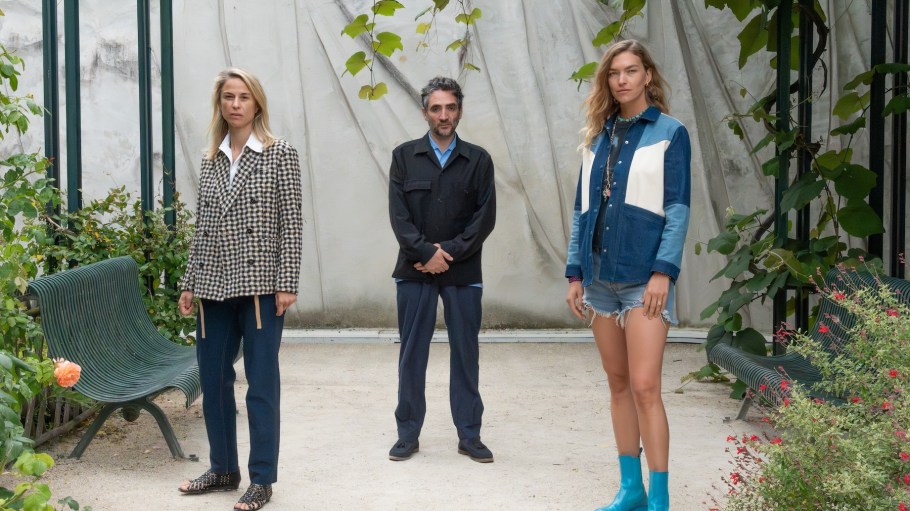
Soilonic is trying to make a digital token that isn’t just imaginary money.
The Web3 fintech startup has announced a $50 million investment commitment from Global Emerging Markets (GEM) to launch $SOILO—the world’s first token backed by regenerative farmland and redeemable for potting soil. Built on the Solana blockchain, the cryptocurrency is “designed to transform the economics of soil regeneration worldwide.”
“Soilonic doesn’t speculate on land; it rewards those who regenerate it,” said founder Benjamin Eymères. “We’re building a financial infrastructure where the soil becomes a global asset class.”
Related Stories
Each $SOILO token is backed twofold: Real-world environmental proof and a physical guarantee. The former sees regenerative farmers share verified data about the health of their soil. That data acts as the “green value” behind the token. Farmers also get half of the revenue whenever new tokens are sold. The latter means that every token can, at minimum, be redeemed for one kilogram of nutrient-rich potting soil.
In other words, there’s actual dirt behind the digital coin.
“Regenerative farming needs strong economic incentives,” said co-founder Arizona Muse. “With Soilonic, we link environmental healing to financial reward—a necessary alignment for the planet, for farmers and for human health.”
Soilonic was born in 91530 Le Marais—the regenerative farm and living lab founded by Eymère and Victoire de Pourtalès in 2020. The movement “rooted in soil” emerged from the realization that restoration wasn’t just urgent, it was also undervalued in financial systems.
“We started around the idea of the soil and how you can create a community with the farmers linking it with the art world but also with the creative world in general,” co-founder de Pourtalès added. “It’s about creating a digital AOC, a way for farmers to gain recognition and value for how they care for the land, rather than just where it’s located.”
To understand how the soil can be transformed—and what the value of the soil actually is—Eymère said the team “values a very good soil that the farmer would steward for us and that we could always redeem into an actual kilogram of soil for our flowers, like a potting soil,” he explained. “This is what we want to achieve with Soilonic.”
Soilonic is backed by Solana, a general-purpose blockchain and “one of the most widely used blockchains in the world,” according to Amira Valliani, the Solana Foundation’s head of Decentralized Physical Infrastructure (DePIN).
“Blockchain creates this massive internet capital market for climate related products that anyone in the world can invest in,” Valliani said during the panel, noting that means individuals across the globe can invest in these assets. It allows for value redistribution based on certified data, supporting the idea of a “creators economy, applied to climate.”
She also stressed that the technology itself is merely a tool; referring to her experience working during the Arab Spring under the Obama administration, Valliani said the “people who use technology and who build it are the ones that are ultimately going to figure out what it’s used for.”
Solana’s currency (SOL) operates on a consensus model that combines proof-of-history (PoH) with proof-of-stake (PoS), which uses hashed timestamps to verify when transactions happen. In turn, Solana can process a lot more of these transactions per second—while charging lower transaction fees than rivals like Ethereum or Aptos. In November 2021, the SOL cryptocurrency surged dramatically (growing 11,000 percent) with a market capitalization exceeding $75 billion, the World Economic Forum reported at the time.
In 2024, SOL remained one of the largest cryptocurrencies by market cap, according to Coinbase. The open-source project, now run by the Solana Foundation based in Geneva, has a current market capitalization of $122.11 billion, per the cryptocurrency exchange company.
“Sometimes the problem is that you own a share of the company, but you want to own the product of the company,” Eymère said, regarding how he entered the URL universe. “Web3 sort of answers those questions: If we are a community together and we collectively own one item, which represents what the community wants this item to represent, then collectively, we can create value.”
The GEM Token Fund is a digital asset investment firm that invests in blockchain and Web3 issuers or emerging market digital assets. The organization sources and structures investments through capital commitments—including the $100 million to MoviePass for its platform, the Bermuda-domiciled investment vehicle said. It’s sponsored by the Global Emerging Markets (GEM) Group. The $3.4 billion alternative investment group specializes in emerging markets, including structured finance and venture growth, across sectors such as consumer products and technology.
“A lot of artists are working around the idea of alchemy, around the living, the whole idea of transformation. What’s so interesting is that they’re also using digital work to speak about it,” de Pourtalès said. “I think that it’s very important to give [the ground better] understanding—a poetry to what’s happening within the ground.”
Each $SOILO token has a minimum redeemable value guaranteed to be 1 kilogram of nutrient-rich potting soil. The physical backing creates a new standard for traceable, meaningful digital value by providing a physical foundation for the crypto asset. The nominal reserve functions alongside the impact reserve, where farmers commit verified soil health data, feeding the token’s environmental claim. Eymère’s and de Pourtalès’ regenerative farm and cultural center, 91530 Le Marais, is in charge of creating this physical soil reserve to support long-term trust and redemption utility.
The tokens are worm-shaped—named Soilo—to drive home the soil theme.
“Worms are very affectionate and totally misunderstood,” Muse said during the panel. “They’re not slimy and weird. They’re actually very affectionate beings and communicate with cuddles.”
Soilonic’s worm supply, if you will, is capped at 2.1 billion tokens, Eymère said—a symbolic nod to Bitcoin’s fixed supply, just scaled and linked to regenerative farming cycles. The project also claims to have over 91,000 hectares of regenerated land acting as a reserve to ensure investors can trust that the tokens genuinely link back to something physical and tangible. To that end, Soilonic said independent groups will check the farmers’ data to keep things honest on all sides of the (albeit crypto) coin. BlockyDevs, a Web3 development studio, will handle the smart contract traceability and token integrity.
“We’re creating a system where soil can finally be valued for what it really is—and the services that it really provides us and our planet,” said Muse. “Soilonic works with agricultural certifiers—the ones who have been in existence for years, who already know how to quantify healthy soil, healthy farming practices—so that we can trust that they are measuring farmers in the right way.”