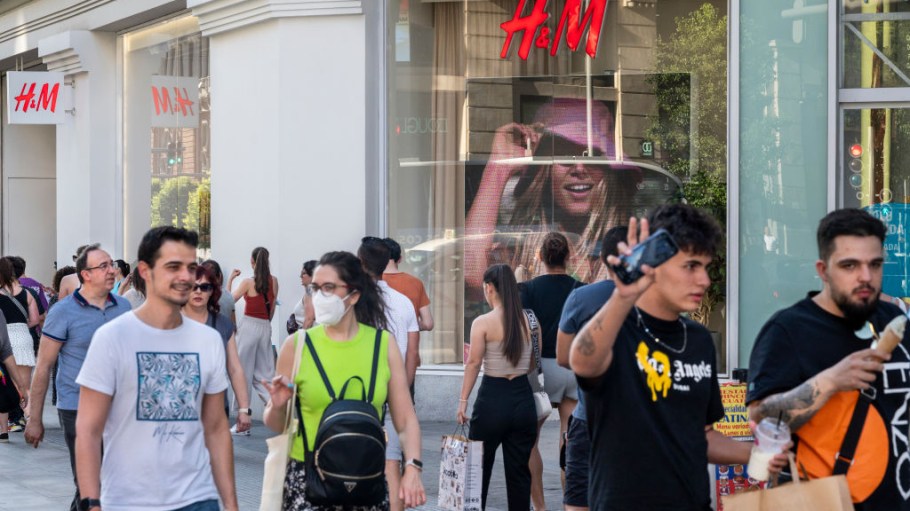
Brazil is known for its high customs duties, and the devaluation of the national currency makes now a good time for Shein and H&M to invest in South America’s biggest economy.
Brazilian import duty rates can run as high as 35 percent. And while the import tax has eased somewhat for many categories in recent years, the auto and textiles industries are still higher because the Brazilian government wants to protect local production. Data from the Brazilian Textile and Fashion Industry Internationalization Program indicated that apparel and textiles exports totaled $1.14 billion last year.
Related Stories
For some companies, setting up shop in Brazil helps them avoid high taxes if they want to go big in a country with an attractive consumer base, as long as they can afford it.
Now, a devalued currency gives Shein and H&M more financial runway to make an even bigger splash in Brazil. Shein is partnering with 2,000 garment factories in Brazil to localize production in a move that would create 100,000 new jobs over the next three years and help the country burnish its textile and manufacturing credentials.
Shein’s $150 million investment, the Temu rival said, will help manufacturers update their production models to the Chinese fast-fashion e-tailer’s production requirements.
Shein first got into Brazil in 2020. Marcelo Claure, the chairman of Shein in Latin America, said the Christian Siriano collaborator has seen increasing consumer demand, and that localizing the supply chain will both support and contribute to the local economies as well as benefit consumers and small businesses.
H&M said 2025 will bring the launching branded stores and an e-commerce platform serving the Brazilian market. The Swedish fast-fashion giant will start in major cities dotting Southeast Brazil before expanding elsewhere in the nation of “over 210 million” residents, it said Monday, pointing to the population’s “strong appreciation for fashion.”
The Monki owner entered the Latin American market in 2012 in Mexico, and has since expanded to Peru, Uruguay, Chile, Colombia, Ecuador, Guatemala, Panama and Costa Rica.
“We’ve had good development in Latin America and see great potential in Brazil. This is a very exciting step, and we look forward to bringing H&M’s concept of fashion, quality and sustainability at the best price to many customers in the country,” said Helena Helmersson, CEO of H&M Group, which is partnering with Dorben Group, a partner to LATAM luxury brands, to execute the expansion.
Spanish fast-fashion competitor Zara, owned by Inditex, also has a presence in Brazil. But fast fashion isn’t the sole sector eyeing growth in the South American nation. Last year, Babies “R” Us entered the Brazilian market via a licensing agreement between its parent WHP Global and Ragabesh & Co. They’re looking to run at least 20 freestanding locations across Brazil.
And the Brazilian market has been an outperformer for footwear and even intimates companies relying on sugarcane-based foam. Footwear brands such as Allbirds and Deckers are championing the foam alternative as an eco-friendly option, while intimates firm Gelmart International created a bra cup from sugarcane for Walmart’s exclusive Kindly line.
Foreign investment in Brazil has been on a growth trajectory.
“The country experienced soaring levels of foreign direct investment [FDI] last year. According to the Central Bank, FDI was recorded at $90.6 billion, which was 93 percent higher than in 2021,” according to a report last month in Benoit Properties. It noted Brazil’s strong infrastructure, booming tourism and diverse market.
And in the past few decades, Brazil has become a large consumer market where most people are between 25 and 54 years old. But high taxes drive up prices for foreign brands, meaning shopping at Western-styled local malls is expensive. Key cities such as Sao Paulo and Rio de Janeiro house most of the upscale open-air tourist markets.
Locals are looking for value and attractive prices, making fast fashion a safe bet. Brazilian consumers are also digitally savvy.
A Santander Trade report on the Brazilian consumer said that following the 2014 recession and the Covid-19 pandemic, Brazilian spending habits have evolved and consumers now “tend to save as much as they can” when shopping. Inflation has also been a recurring challenge for the country.
“Additionally, even though consumers usually remain loyal to their favorite brands, they only do it if the price is right,” the report said, noting that 19 percent of consumers shop around to find retailers selling a specific brand’s products at lower prices and 14 percent wait for sales. Brazilians tend to do product research and look for deals before making a purchase.”
The country also has the “largest and most developed e-commerce market in Latin America, ranking 15th in the [world] for e-commerce sales in 2021,” the Santander report said, citing ecommerceDB.com data estimating the value of products sold online at $26 billion in 2021.
In addition to e-commerce, Brazilian consumers also tend to shop at popular discount chains and in shops called atacarejo, which combine retail and wholesale.
Digital marketing firm Wordbank LLC divides the Brazilian consumer into four distinct groups. The Adventurer is focused on experience instead of consumerism. The Intellectual is interested in cultural experiences and travel. The Party-Goer is an aspirational image-conscious, tech-savvy consumer who follows the latest trends on social media. And the Believer values trust, wants quality, and makes purchasing decisions based on sentiment.