The maker behind “impossibly strong” tights is going vertical.
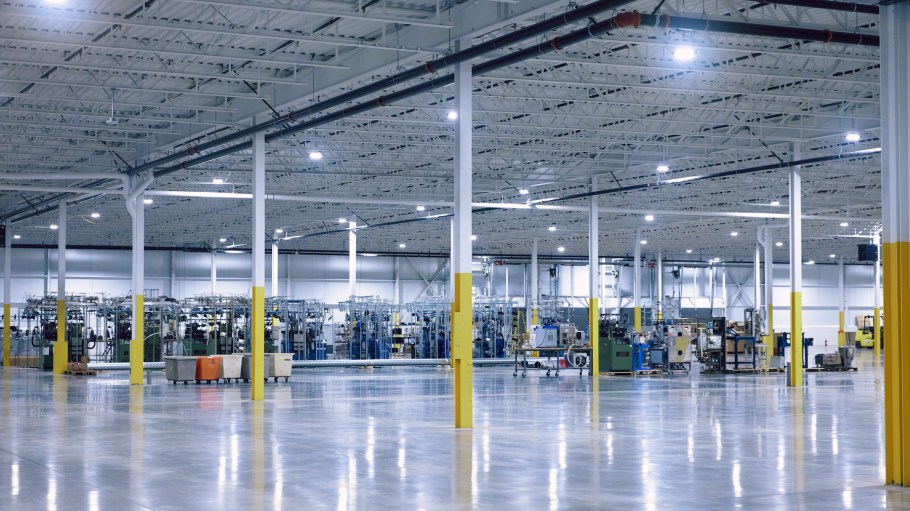
SRTX, best known for its first technology, the patent-pending Sheertex Rip-Resist knit, has inaugurated its new global headquarters: a 300,000-square-foot fully vertical facility in Montreal. The space, which previously served as an industrial cable spooler, is more than double the size of its first facility and marks a pivotal move in the brand’s commitment to vertical integration.
Going vertical was significant for three reasons: fast prototyping, IP protection and cost, according to founder Katherine Homuth, who realized these benefits after breaking a few machines overseas and waiting far too many weeks for samples.
Related Stories
“I decided that at least for prototyping, we should do it domestically—it was so fast—and then once we figured out what that final product was going to be, I realized that we had something valuable that needed to be protected,” Homuth told Sourcing Journal.” “All those things, we never could have done if it was hands-off, if it was someone else [making] the product.”
Not to mention, the move has given SRTX enough control of its supply chain that Homuth believes the startup is in the position to become the first fully circular apparel brand, as SRTX does its own extrusion and can ultimately take back the product and recycle it into that extrusion process.
“We’re not quite there yet in terms of technology, but we do have all of the capabilities to do it that other brands don’t really have,” she said. “It’s been one of those, you make a decision and realize all the benefits over time that this is just so incredible.”
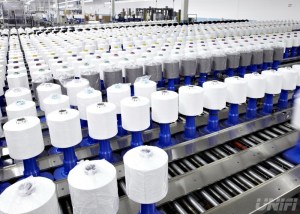
This expansion positions SRTX to oversee the entirety of its production process, including the in-house extrusion of the high-performance polymer ultra-high molecular weight polyethylene (UHMWPE)—aka, the polymer that makes Sheertex effectively indestructible. The goal is to take this PFAS-free and naturally recyclable polymer and make it available outside its traditional markets (bullet-proof vests and fishing lines, for example) through apparel-grade quality and mass-market pricing. Expect to see the polymer—which enables garments to be stronger, lighter, hydrophobic and traceable—threatening nylon’s chokehold on the industry.
“Building a high-end brand that sells the only tights that don’t rip isn’t that interesting to me,” Homuth said. “I liked the idea of really changing this industry, making it more sustainable and democratizing access to this technology. And I don’t believe that you can do that alone.”
The certified B Corp will not only use its extruded fibers for its unbreakable tights, but will also begin introducing new ingredient technologies to the industry—like membranes and fabrics—utilizing UHMWPE.
“If fiber is like spaghetti—you like squish out little spaghetti noodles—then membrane is like lasagna,” Homuth explained. “It’s a flat sheet that’s basically waterproof. If you think of fabrics, they’re not very waterproof, right, there’s all those little holes in it, whereas a membrane is more like a sheet of plastic. So, we’re really producing three ingredients for apparel: a fiber, sheets of fabric, and this lasagna-like plastic sheet that can be used in a waterproof jacket.”

SRTX claims that it’s one of the only companies to achieve such vertical integration, particularly in relation to UHMWPE. Regarding financial investment, the H&M-backed firm raised more than $200 million in both equity and debt to achieve vertical integration. The debt financing has been used to finance the physical machinery, while the equity finances the business and R&D operations.
Though SRTX’s Sheertex and Watertex products have been pretty successful in North America, remaining in Montreal was “paramount” to the brand. Homuth emphasized that this choice transcends mere business strategy; it represents a heartfelt commitment to bringing manufacturing back to North America. Plus, the expansion generated an additional 100 jobs, with plans to increase employment to nearly 500 in the next few years.
“Keeping our global headquarters in Montreal is more than a strategic decision,” she said. “It is an effort to produce a North American factory that is a beacon for others looking for a roadmap in bringing manufacturing back to North America through vertical integration and best-in-class automation. Montreal’s rich textile history is not only a backdrop for our operations, but it is woven into the very fabric of SRTX’s identity. This city has inspired us, nurtured our growth and provided a home for our innovative spirit.”