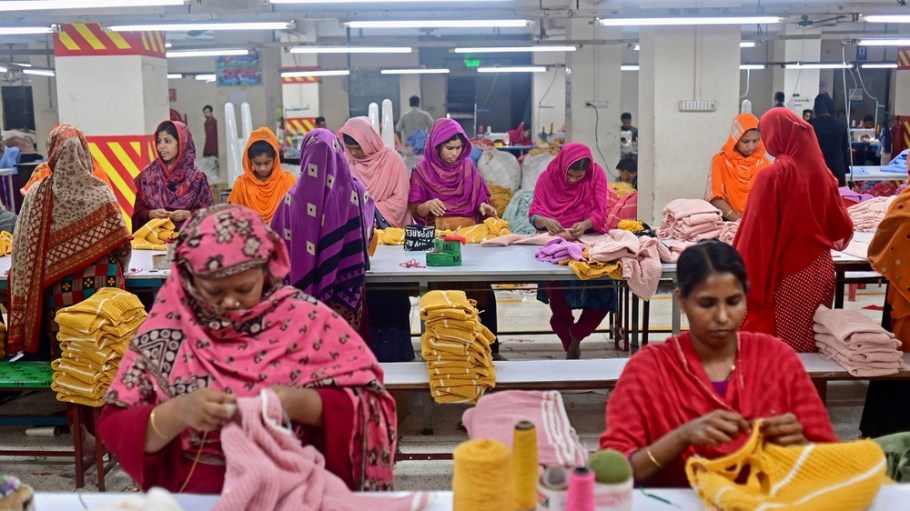
A group of labor rights organizations warned Monday that the governance structure of a tripartite monitoring initiative overseeing garment factory safety in Bangladesh needs to change, or risk being responsible as gains made after the calamitous collapse of Rana Plaza, which killed more than 1,130 workers in 2013, “backslide into disaster.”
There wasn’t one inciting incident but rather a “slow progression” of red flags that prompted the callout, said Ineke Zeldenrust, international coordinator at the Clean Clothes Campaign, which co-authored the memorandum with Maquila Solidarity Network and the Worker Rights Consortium, its fellow witness signatories to a landmark binding agreement that was forged with Western brands and retailers like H&M Group and Zara owner Inditex in the aftermath of the tragedy. When the RMG Sustainability Council, or RSC, took over the now-International Accord on Health and Safety in the Textile and Garment Industry’s inspection and monitoring duties in 2020, it was with the expectation that it would hew to the same moral and operational principles.
Related Stories
But despite signals that the Clean Clothes Campaign threw up as early as that year to caution the Bangladesh Garment Manufacturers and Exporters Association—a trade group for factory owners and a member of the RSC’s board—about overstating the scheme’s ability to protect workers with “false claims,” there is little to indicate that much has changed, she said. A commitment to boiler safety, which was incorporated into the Accord after a series of deadly explosions, then left in the hands of the RSC at the BGMEA’s request, for instance, has been besieged by “endless delays,” leaving five in six of the 1,600 Accord-covered factories without “meaningful” inspections of apparatuses that are highly susceptible to corrosion, leakage and faulty wiring.
The boiler program logjam is a prime example of what the memorandum regards as the excessive employer influence in the RSC that is loosening hard-won worker safety protections. Just last month, 30 workers were injured following a boiler blast at HD Apparel, an Accord-covered factory in Gazipur brought in Inditex. The supplier, Zeldenrust said, had not undergone a single boiler inspection that could have circumvented the accident. The problem with boiler inspections, she said, is that they require closing down the entire factory as the machinery cools down and then restarts, relinquishing at least a day’s worth of work. Any facility being squeezed by production demands and deadlines would be inclined to push back.
Comprised of 18 members, the RSC board was set up to have equal representation, with six seats allocated to employers’ associations, six to brands and six to trade unions and other workers’ representatives. While decisions are supposed to be made by consensus, Zeldenrust said that the reality is that business interests—the same ones that pushed to eject the Accord and those like it from Bangladesh following a groundswell of nationalist and anti-colonialist fervor—often bubble to the top, eroding the program’s effectiveness and placing lives at risk.
Another indication of factory owners’ sway is what she calls the RSC’s “consistent” failure to enforce the withdrawal of so-called utilization declarations—a type of customs license controlled by the BGMEA and its knitwear counterpart, the Bangladesh Knitwear Manufacturers and Exporters Association—from standards-violating factories that have escalated to the final stage of non-compliance, resulting in their immediate termination.
Terminations have decreased over the years due to what the Clean Clothes Campaign and others say are “weakened” escalation processes, undergirded by “vague and subjective“ standards, and a reluctance to expel profoundly unsafe factories. At the same time, the memorandum noted, for every axed factory from the RSC’s assumption of control through June 2023, the trade groups failed to withdraw UDs within the required four weeks from termination—or, in the case of at least 30 factories, for more than six months. Of the 57 factories blacklisted by the RSC until October 2024, at least 44 (77 percent) were still dispatching shipments to customers around the world more than 60 days after their date of termination, according to records.
‘They are death traps’
More than a dozen Accord brand signatories, including Aldi South, Asos, Uniqlo owner Fast Retailing, LPP and Inditex, also received goods from these facilities, according to the workers’ organizations’ findings. Some of them, the memorandum said, have continued receiving shipments more than a year after the factories’ termination by the Accord.
“If a factory is made ineligible under the Accord, it’s failed every step of the escalation to make a remedy and it’s so dangerous for workers that no Accord brands are allowed to buy there anymore,” Zeldenrust said. “They are death traps. That’s the only conclusion you can draw. The role of the BGMEA, as part of the RSC, is to not give those factories a utilization declaration or license to export, so they shouldn’t be able to export for anybody.”
Fast Retailing said that the RSC has confirmed that none of the factories it has used has been terminated, or is subject to termination, by either the RSC or the Accord, though it has requested further documentation “to be sure.” Likewise, LPP said that the factories it employs are “subject to strict Accord control” and that any factory not listed by the Accord is automatically struck from its sourcing network.
A spokesperson for Asos said that while the e-tailer will investigate and take any necessary action, it “wanted to emphasize” that if the RSC had implemented the program correctly, the offending factories would not have been allowed to export. The enforcement blind spot and the delayed implementation of the boiler program, the person said, also raises questions about the potential for employer interference under the RSC’s governance structure.
Aldi South declined to comment due to the tight deadline, while Inditex did not respond to emails seeking the same. A BGMEA member of the RSC board, who asked not to be named in order to be able to speak freely, said that the report has not made it to “my list of priorities for the next quarter” and called it political nonsense.
There is plenty to occupy Bangladesh’s leadership in the meantime: Both the BGMEA and Bangladesh stand at a historical inflection point. The country, currently helmed by an interim government led by Nobel Peace Prize laureate Muhammad Yunus, is struggling to rebuild itself after a democratic uprising last year dethroned then-prime minister Sheikh Hasina and her Awami League party following 15 years of iron-fisted rule. The BGMEA, facing infighting amid allegations of corruption and mismanagement, is under administration until it elects a new board of directors, potentially in April.
But Zeldenrust said that it’s precisely this timing that makes overhauling the RSC board a must. “Why does the RSC keep the same BGMEA leadership that was in power before?” she asked, adding that Shafiul Islam Mohiuddin, a former BGMEA president and lawmaker from the Dhaka-10 constituency who was also a co-chairman of the RSC, was arrested last month for murder.
Power plays
The advent of mandatory human rights due diligence in the form of European Union legislation, which calls for the type of rigorous grievance mechanism that the Accord provides, is also a reason for reform, she said. But even this is under attack. Speaking to RSC employees in 2023, the Centre for Policy Dialogue, a Dhaka-based think tank, found that they faced indirect pressure from employers and government agencies that prevented them from conducting independent assessments and actively resolving complaints.
The RSC, in its own reporting, too, has cited multiple cases of employers asking staff to dispense with the protocol of informing the brands about the allegations. Writing in a note in September, the RSC described this as an attempt by those employers “to disrupt the tripartite communication model to protect the reputation of the factory with the sourcing brand companies.”
The fault lies not with RSC staff but with the employers abusing their power, Zeldenrust said. But if the RSC cannot execute the program as agreed, the Accord and the 200-plus brands that have endorsed it will “not be able to fulfill their contractual obligations.”
Joris Oldenziel, executive director of the Accord, which has now expanded into Pakistan, said the organization was still reviewing the memorandum and so is unable to offer commentary at this time. A representative from H&M Group, a member of the Accord’s steering committee, said that it remains committed to improving fire and building safety in Bangladesh and that it has always supported tripartite structures that “ensure the clear involvement of trade unions, accountability of brands and the engagement of the industry in Bangladesh.”
Otto Group, another steering committee member said, however, that the issues mentioned in the document do not align with its “findings and knowledge of the situation” and that the Accord and RSC will soon be addressing this in a future statement. Other brand members, including C&A, Inditex and Calvin Klein and Tommy Hilfiger parent PVH Corp. either declined or did not respond to requests for comment.
Zeldenrust doesn’t have definite ideas of what a new governance structure should look like but she thinks that any reset should begin from the premise that the Accord should manage its operations—much like it did before a flurry of lawsuits sought to undermine it—in preparation for eventual governmental regulatory oversight that is free from industry meddling.
“I think the memo is saying, ‘Look, you need to not tinker around the edges anymore. You need to go to and change the root cause of the problem,’” Zeldenrust said. “I think there is an opportunity now to re-engage with the Bangladesh interim government, and then, of course, with the new government, and to put this program back on the road where it was before.”