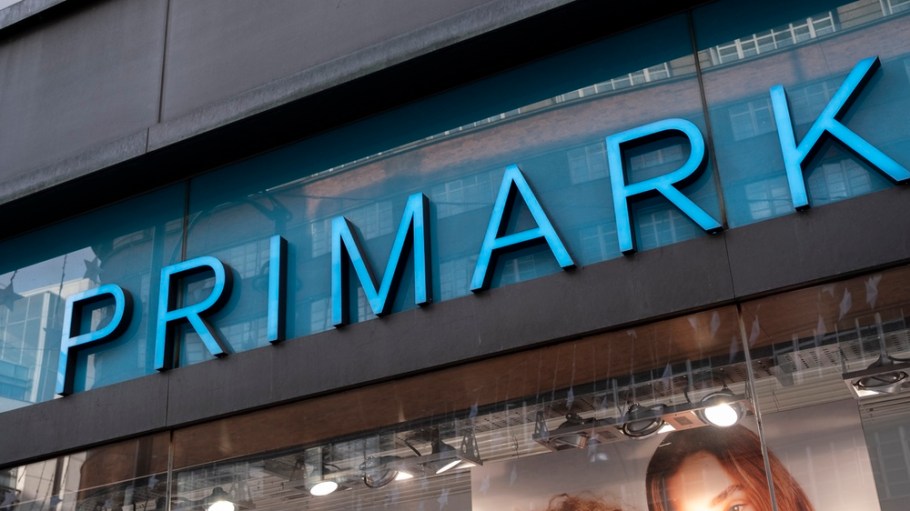
New store openings across the U.S. and Europe are helping Primark with sustainable growth as it expands into new markets, while strategic initiatives a year ago at the struggling fast-fashion chain Asos are starting to show some green shoots.
Primark
The store rollout across Europe and the U.S. at value retailer Primark is expected to provide it with mid-single digit sales growth in 2025, its parent company Associated British Foods (ABF) said on Tuesday.
“Our low-cost model is as strong as ever, as we maintain our relentless focus on delivering great-value clothing and a unique store experience. This is underpinned by a step up in investment in strategic initiatives across digital, product and brand,” ABF CEO George Weston said. “Significant white space for new stores remains across Europe and the US, which we expect to help drive sustainable growth over the medium and long term.”
Related Stories
For the year ended Sept. 14, revenue grew 6 percent to 9.45 billion pounds ($12.32 billion), helped by strong performance across key growth markets in the U.S., France, Spain, Italy, and Central and Eastern Europe, as well as in the U.K., Primark’s largest market. Revenue a year ago was 9.01 billion pounds ($11.42 billion). Adjusted operating profit rose 14 percent to 511 million pounds ($666.3 million) versus 448 million pounds ($567.8 million) in 2023.
The company said key categories in women’s, men’s and kidswear performed well as product offerings were broadened and deepened, while at the same time expanding the assortment in home and accessories. In women’s wear, growth was led by performance and leisurewear, knitwear and nightwear. The Rita Ora and Paula Echevarria collaborations were cited as strong contributors to growth. Sales of menswear were particularly strong in leisurewear, and “good growth” was seen in shirts.
The company said total like-for-like sales rose 1.2 percent—up 2.1 percent in the first half through carefully-selected price increases and up 0.5 percent in the second half. As of Sept. 14, the company operated 451 stores across 17 markets, and opened 22 new stores, while closing three in the year.
Looking to other new territories, ABF signed an agreement with the Alshaya Group to explore the possibility of opening stores in the Gulf Cooperation Council (GCC) markets across Bahrain, Kuwait, Oman, Qatar, Saudi Arabia and the United Arab Emirates.
Asos PLC
A year ago, fast fashion e-tailer Asos gave itself 12 months to get profitable, and now it has ended Fiscal Year 2024 with signs of progress.
“We achieved our key priorities for the year, significantly reducing our inventory position, while generating positive adjusted EBITDA and free cash flow,” José Antonio Ramos Calamonte, CEO, said. “Our product is now in the strongest position it has been in years, with the right level of newness to excite customers, and we have fundamentally improved our profitability through a relentless focus on operational efficiency.”
While he said there’s still much work to do, the CEO also noted that efforts have been rewarded with new product sales jumping 24 percent year-over-year over the last three months. Moreover, it’s “back to fashion” initiative has resulted in lower inventory levels. The company also plans to double its Test & React program to 20 percent of own-brand sales. Other items on the agenda include launching a loyalty program and Topshop.com, the Topshop and Topman joint venture with Heartland.
For the year ended Sept. 1, the pre-tax loss widened to 379.3 million pounds ($494.5 million) from a loss of 296.7 million pounds ($376.1 million) a year ago. Revenues fell 18 percent to 2.91 billion pounds ($3.79 billion) from 3.55 billion pounds ($4.5 billion) in the same year-ago period. The e-tailer also reduced its net debt to 297.1 million pounds ($387.4 million) from 319.5 million pounds ($405 million) a year ago.
The company expects that Fiscal Year 2025 will be driven by a “significant increase” in its full-price sales mix, and at least a 300 basis point increase in gross margin to better than 46 percent.