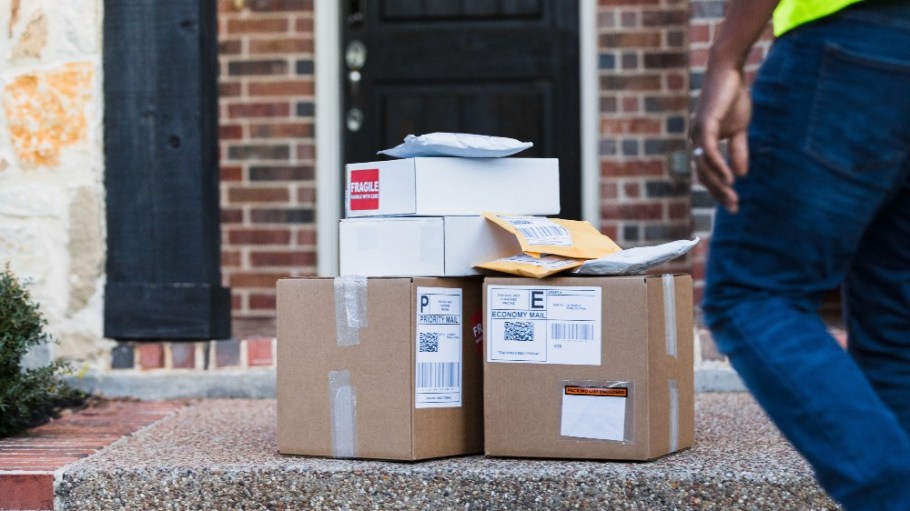
Porch piracy is on the rise across the U.S.—and the problem is typically underscored during the holiday season, with millions of parcels being flown and freighted from coast to coast.
Tens of millions of packages are stolen from apartments, condos and homes each year, and the thefts are costing American consumers billions of dollars.
According to security research firm Security.org, thieves pilfered $12 billion worth of packages from residences over the past year. As many as 58 million Americans have been victims of such crimes over the past 12 months, and about one-quarter of the group’s 11,163 U.S. survey respondents said they’d experienced porch piracy at some point in their lives.
Related Stories
It’s no wonder, then, that nine out of 10 also said they were worried about packages being stolen this holiday season—and 28 percent said they were “very” or “extremely” concerned.
“It might not be a dangerous crime, but it’s something that still conjures up fear and frustration. There’s a lot of emotions,” Security.org senior editor of industry research Corie Colliton told Sourcing Journal.
“People are very worried about this issue around the holidays,” and their feelings are likely justified, she said. “This has actually happened to people before; 13 percent of Americans have had a package stolen that had a gift for someone else.”
According to the group’s research, factors like geography and home type play into porch piracy statistics.
The group’s data showed the five most affected states in the country being largely rural; 12 percent of Kentucky respondents said they’d had a package stolen in the past three months, followed by North Dakota (11 percent), Nebraska (10 percent), Iowa (10 percent) and Alaska (10 percent).
By contrast, four out of the five states with the lowest rates of package theft—Connecticut (1 percent), Michigan (1 percent), Utah (1 percent), Georgia (1 percent) and New Jersey (1 percent)—are among the 20 most densely populated states in the nation. Colliton found the trend both notable and puzzling, as the rate of package theft is generally higher in urban areas.
Not surprisingly, though, apartment dwellers are at the greatest risk for porch piracy, with 8 percent of respondents reporting having had a package stolen within the past three months. Apartment mailrooms or foyers can serve as a one-stop-shop for thieves, allowing them to hit multiple residences at once. Comparatively, 5 percent of condo or townhouse tenants and 3 percent of Americans who live in single-family homes are at risk of having their packages stolen.
While 86 percent of U.S. consumers said they employ at least one method to prevent package theft—and 55 percent use two or more strategies—Colliton said she “found it interesting that a lot of people still don’t take any steps to avoid the problem.”
Rather than scheduling shipments for delivery when they’re home, which 45 percent of respondents said they do, or employing a doorbell camera, like 38 percent of survey takers, 14 percent “said they don’t do anything to defend themselves against package theft, even though they are concerned about it.”
Home security advisory group SafeWise found that even more shoppers—one in four—take a lax approach to deterrence, despite more than half saying they’re worried about packages being stolen.
But experience is shown to spur action. More than eight in 10 people enacted a deterrent or preventative measure after falling prey to a package thief, from adding a security camera or video doorbell (32 percent) to contacting neighbors (25 percent), using package tracking (23 percent), reporting the theft to law enforcement (23 percent) or making an insurance claim (11 percent).
“People are more aware that this is going on, and they are taking more action in advance to try to not let those packages get stolen in the first place,” said Rebecca Edwards, the group’s lead safety reporter.
SafeWise estimated that porch pirates cost Americans nearly $16 billion last year. “What blows my mind is that the average value of a stolen package, according to our survey results, is $100 or less. So, the sheer volume to get that amount of dollar loss is incredible,” Edwards said. The group estimated that about 260,000 packages were stolen each day last year.
But researchers also found that the upward trend in package theft may actually be leveling out. While a whopping 120.5 million packages were nabbed from porches across the U.S. in 2023, the increase from 2022 was just 1 million, representing a slowdown from years past. “It really is in line with population fluctuations, so it’s not statistically significant that the crime itself is increasing,” she added.
According to Edwards, Americans spent $1.2 trillion on e-commerce last year, “so that $16 billion is barely 1 percent of the shopping” that took place over the 12-month period. “This is a huge crime, but I think one of the reasons that people are not raging in the streets about it is that, in perspective, it’s kind of a drop in the bucket.”
Tracking porch piracy is also an imperfect science, and it’s tough to truly gauge the scope of the issue, she added. “The thing about package theft is it’s kind of a guessing game to quantify it, because Amazon doesn’t give you data on how many people are telling them that their packages got lost or stolen, and you’re not really getting that from any of the major carriers,” she said. The U.S. Postal Service (USPS) launched a survey this year to better understand consumer experiences with stolen packages.
For its most recent report, SafeWise aggregated data from the FBI, third-party studies and its own nationwide survey of 2,500 U.S. shoppers to get a “clearer picture of what’s really going on.”
Using that data, the group ranked the nation’s top worst cities for package theft in 2024, starting with New York City, which saw about $1 billion in losses and about 60 percent of households targeted by porch pirates last year. Philadelphia saw about $500 million in losses, while Chicago led the pack for most per-capita incidents, with 728 out of every 1,000 households hit by thieves. Washington, D.C., Houston, Tex., Atlanta, Ga., Charlotte, N.C., Dallas-Fort Worth, Tex., Boston, Mass. and Cleveland, Oh. rounded out the Top 10 worst cities for porch piracy.
“Our ranking this year was not based solely on the number of packages stolen or the number of package theft incidents; we really ranked based on the financial loss. That was looking at this from a different perspective than we really looked at it before,” Edwards said.
The study highlighted some unexpected findings resulting from this methodology, including the fact that cities with the highest financial losses weren’t always those with the highest volume of package theft incidents. Differences in online shopping habits contribute to the value of the packages stolen, she said.
Also notable was the finding that certain areas were disproportionately subject to repeat targeting. Cleveland topped the list of cities with the most repeated incidents, with porch pirates striking an average of 1,400 times per every 1,000 households.
“It’s definitely a crime of opportunity—however, we have found that if you’ve been hit once, three out of four people are hit again,” Edwards explained. “If a porch pirate had a good score at a certain location, they might go back, because they’re keeping track. This is a crime—more than many others—where we see that people are hit multiple times.”
That may be especially true during the holiday season. “Typically, there is a spike this time of year. I think it correlates to the extra number of packages that are being delivered,” she added. “And on top of there being a higher volume, people are in different routines right now,” from traveling out of state to simply being away from home for shopping and holiday parties.
“There are just more opportunities for the thieves, and everybody knows that,” Edwards said.
But shoppers, retailers and logistics providers aren’t taking the crimes lying down, and a new class of innovators is bringing technological solutions to the issue of porch piracy.
James Moore, CEO and co-founder of startup PorchPals, aims to change the narrative and offer consumers a way to protect their purchases. His company now offers shipper-agnostic package insurance—that is to say, for subscribers of PorchPals, any package shipped from any retailer or brand will be covered, up to $2,000 worth of product annually.
“Package insurance is not foreign to any of us. We’ve all paid package insurance one time or another, but it’s on a per-package basis. What is foreign is having your packages—no matter where you order them from, or have them shipped from—covered as soon as it hits your porch,” he said.
Originally, Moore and his co-founder, NFL player Adoree’ Jackson, structured the PorchPals program differently. Instead of insuring packages, they sought to assign neighborhood ambassadors, who would collect packages within a certain radius to ensure they weren’t stolen from consumers’ homes while they were away from home.
They quickly realized that the program opened ambassadors up to safety concerns and greater-than-expected liability. That’s when they decided to pivot to an insurance model. Moore said that in the future, he hopes PorchPals can form partnerships with credit card companies and brands to reach a greater number of consumers.
While PorchPals uses insurance and technology to cover packages stolen after delivery, other technology-enabled solutions aim to tackle porch piracy before a package ever arrives on a consumer’s doorstep.
In 2023, UPS Capital, UPS’s financial services arm, launched a technology-powered program called DeliveryDefense under its InsureShield product line last year. The product uses artificial intelligence to show retailers a location confidence score, which they can use to make decisions about whether to use a secure UPS drop-off instead of delivering to a shopper’s residence.
Archita Prasad, president of UPS Digital, said mixing AI with human intelligence has proven successful in mitigating porch piracy.
“AI-driven insights allow shippers to anticipate theft or fraud risks based on historical data and real-time analytics. They can make smart, strategic decisions to protect their business and customers,” Prasad told Sourcing Journal.
“What’s so great about DeliveryDefense is that shippers can choose to route packages to a UPS Access Point, add a signature requirement, update their returns processes or add shipping insurance for extra protection,” she added. “These are all better customer experiences than a stolen package or filing a claim, and the options give shippers a lot more power to serve their customers and protect their business.”
According to Prasad, 92 percent of Americans live within five miles of a UPS Access point. To date, shippers using DeliveryDefense have seen what Prasad calls “real reduction in package theft.” She noted that one retail customer has saved $4.1 million annually by using DeliveryDefense to reduce instances of theft and fraud.
And major logistics players aren’t the only ones at work where piracy-prevention technology is concerned. Startup Naurt is also using AI to assuage consumers’ and logistics providers’ concerns around porch piracy. The company equips delivery drivers with hyper-specific data on millions of addresses throughout the United States and the United Kingdom, advising them of where to park and which entrance of a building to go through for the most efficient delivery.
Maximizing delivery efficiency has come with a pleasantly surprising side effect: preventing bad actors from swiping parcels because they aren’t properly secured. Jack Maddalena, CEO of the emerging company, said estimated times of arrival (ETAs) have become increasingly important for consumers. Having that knowledge can help them plan their day more effectively, he said.
“Naurt provides more realistic estimates compared to other geocoders that typically locate the middle of a building or the general area of the delivery, impacting ETA systems across the route as drivers may spend up to 15 minutes on a delivery to an apartment building or building complex delaying other deliveries up to an hour, leaving customers unsure of when deliveries will arrive with large delivery window ETAs so they cannot plan accordingly,” he added.
“Naurt reduces the time goods are left on the porch, making it less likely they will be stolen, as consumers can plan accordingly knowing their goods will arrive at [exactly] 13:28,” for example.
To date, Maddalena said the company’s U.S. clients have seen “defective delivery rate”—which measures how many deliveries go wrong per 1,000—drop by between 2 percent and 4 percent.
“[We’re] working on ways to further improve micro-data, such as building complex pin codes to open gated communities for safer goods placement, and other building entrances like mailrooms or front desks,” Maddalena said.
Jake Duhaime, who works with PorchPals on communications, said the plague of porch piracy continues to afflict both retailers and consumers—but solutions are necessary because consumers expect to have flexibility and convenience as parts of their shopping experiences.
“Consumers have come to grips with this [being] a very real issue, but they are not going to give up the convenience of shopping online,” he said.