As CEO of a Dhaka-based vertically integrated Tier 2 and Tier 3 manufacturer, I have seen how quickly freight disruption, energy price swings, tariff changes and sourcing uncertainty can move through apparel supply chains. That is why resilience cannot be treated as a talking point. It has to be built into the factory floor, into sourcing decisions and into long-term planning.
As a Bangladeshi manufacturer, we do not experience global instability as a headline. We experience it as an operating condition.
Related Stories
Recent reporting has shown how quickly external shocks can move through apparel production. Earlier this month, several outlets covered how garments destined for brands were piling up at airports in Bangladesh and India after Gulf carriers cancelled flights, with more than half of Bangladesh’s air cargo typically moving through Gulf hubs. Bangladesh was also forced onto expensive spot LNG purchases as prices climbed above $20 per mmBtu, more than double January rates. These are not isolated transport challenges. They are a reminder that fashion remains deeply connected to energy markets, freight infrastructure and geopolitical volatility.
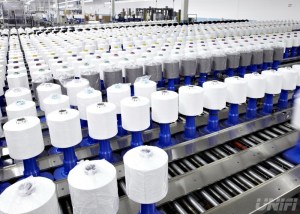
As a CEO I have had to build our company’s operating model around that reality. We supply threads, yarns, elastics, labels and trims at industrial scale to global apparel programs, and our structure is designed to provide tighter control over lead times, quality, sourcing and production continuity when conditions become more difficult.
In a market where brands are facing more disruption, they need suppliers with greater control, stronger forecasting and fewer breaks between processes. Bangladesh remains the world’s second-largest apparel exporter, with ready-made garments accounting for the great majority of export earnings. Around 40 percent of exports went to the European Union in 2024 and a further 18 percent to the United States. This is not a marginal sourcing market. It is a core pillar of global apparel production, and that scale has compelled the industry to become more disciplined in planning through volatility.
Trade policy shifts are reinforcing why Bangladesh’s apparel sector is moving beyond a purely cost-driven model. Research from Policy Integration for Development shows exporters earn roughly 10 percent lower prices in the United States than in the European Union5, largely because tariffs are often partially absorbed at factory level to remain competitive. Recent adjustments to U.S. duties, including a temporary reduction from 20 percent to 15 percent, have already triggered renegotiation requests and prompted some buyers to delay new order planning amid policy uncertainty. By contrast, duty-free access to the EU market continues to support price premiums for comparable products. These dynamics are accelerating structural change across the sector.
Larger exporters with stronger product portfolios can secure prices 30 to 35 percent higher than smaller manufacturers. From where I sit, the response is straightforward. Manufacturers need more control over their processes, stronger relationships across sourcing and a model that can hold steady when conditions change.
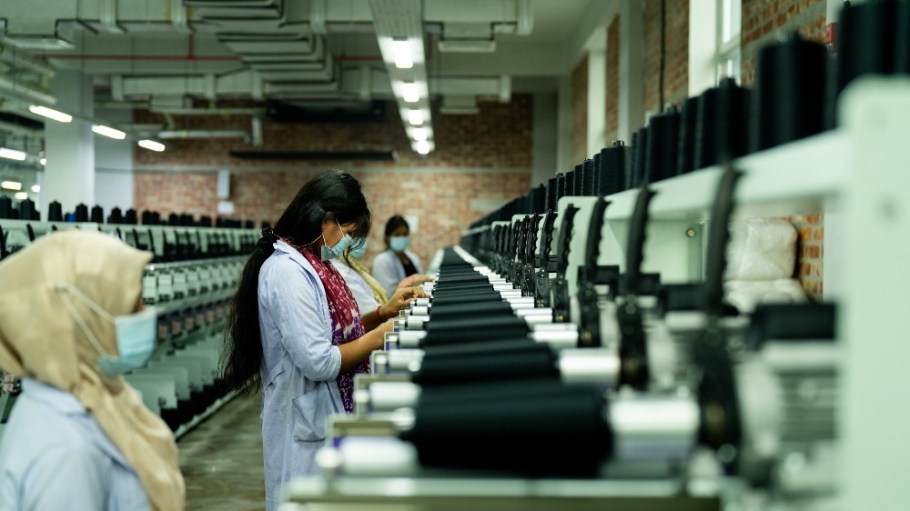
My answer has been integration. By bringing key Tier 2 and Tier 3 processes together, from twisting and covering to dyeing, finishing and testing, we reduce handoffs and keep tighter control over quality, consistency and lead times. For brands, that means fewer unknowns when the market becomes less predictable.
Sourcing discipline matters just as much. Polyester remains the dominant fiber globally, accounting for 59 percent of total fiber output, and because these feedstocks remain closely tied to petrochemical and energy markets, sharp price movements are felt across yarn, dyeing, logistics and overall cost planning. Forward purchasing and long-term supplier relationships are therefore not administrative decisions. They are essential tools for maintaining delivery stability.
Infrastructure investment further strengthens resilience. At sector level, Bangladesh has built the largest concentration of LEED-certified garment factories in the world. Industry analysis has estimated that factory upgrades and cleaner technologies are already saving around 35 billion liters of fresh water annually.
We have also invested heavily in the infrastructure behind that reliability. Our manufacturing campus includes water recycling, reverse osmosis recycling, zero wastewater discharge and on-site solar, not only because these systems support better environmental performance, but because they reduce dependency and give us greater control when external conditions tighten. In periods of instability, that operational control matters.
This is the point often missed in moments of instability. The most important story is not simply that supply chains are vulnerable. It is that experienced suppliers have learned how to operate through uncertainty without turning every disruption into a crisis.
Partnership therefore matters more than ever. The current sourcing environment has shown that transactional relationships are less resilient than long-term ones. Greater transparency, closer collaboration on demand planning and better visibility on inventory all improve the industry’s ability to absorb shocks. I believe strong supply chains are built on reliable delivery, clear communication and long-term trust. Brands do not need more promises from suppliers. They need partners that can keep delivering when the operating environment becomes more difficult.
Global instability will continue to test fashion’s supply chains. The question is no longer whether disruption will happen, but which manufacturers are built to keep operating through it. For brands, that means looking beyond cost alone and paying closer attention to integration, planning and long-term reliability. Those are not added extras anymore. They are becoming the baseline.
Assef Shaikh is the Chief Executive Officer of Harnest, a Bangladesh-based, vertically integrated manufacturer of threads, elastics, yarns, trims, labels and packaging supplying apparel brands in more than 50 countries. Under his leadership, the family-heritage business has evolved into a large-scale, technologically advanced manufacturing platform, with monthly capacities exceeding 1,000 tonnes of sewing thread, 800 tonnes of covered yarn and millions of trim and packaging components.
Shaikh has focused on combining industrial scale with responsible production, implementing zero-liquid-discharge dyeing, closed-loop water recycling systems that save millions of litres of water each month, renewable energy and waste-to-energy technologies. Alongside operational innovation, he continues the company’s longstanding CSR commitment through healthcare and education initiatives across Bangladesh, reinforcing Harnest’s role as both a manufacturing leader and a driver of social development in Dhaka.