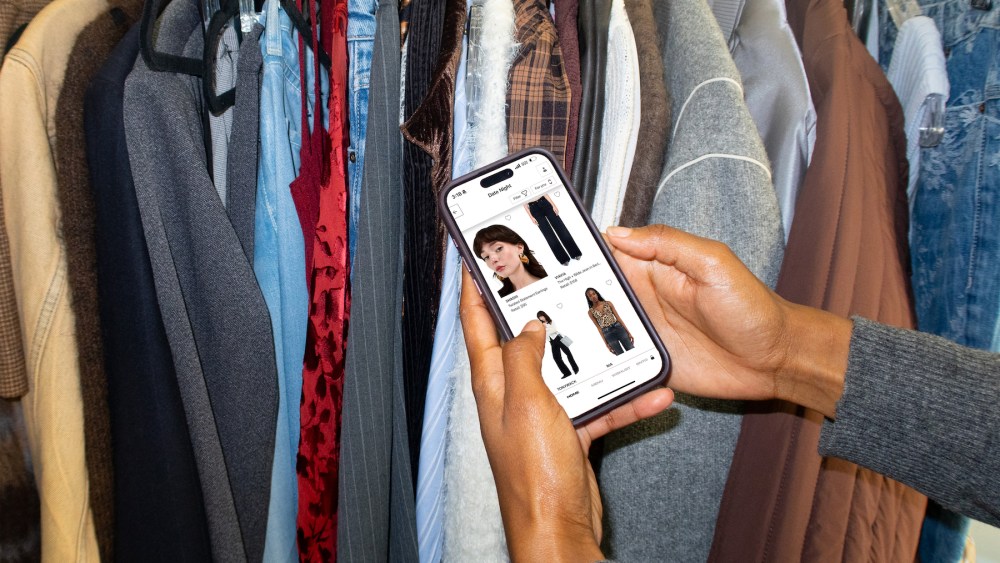
Meet Bnto: the 21st century’s solution to the death of shopping malls.
It’s what founder Sixuan Li calls the AI-powered solution to “nothing to wear” syndrome. For $98 a month, customers can pick six items—including accessories—from global brands to rent and then potentially purchase at a discount.
Li’s “fashion on rotation” business operates like a trident—a holy trinity of solutions.
Related Stories
Alma.ai is a full-stack, artificial intelligence-powered vertical supply chain tool for the fashion industry that addresses inefficiencies within the supply chain. It considers product life cycle management, digital asset management and warehouse management. Bnto, a rental platform, leverages Alma.ai to optimize inventory and user experience across various retail channels, including resale and rental. The overarching goal, Li explained, is to create an omni-consumption platform that enhances product movement and reduces marketing costs.
“The reason we started with a product lifecycle management tool like PLM is because we realized the product was built for the auto industry, not the fashion industry,” Li said. “Alma, the entire thing, is really and truly an operating system for the industry—we built these consumer applications on top of Alma, which is truly the backbone of how we plan to scale.”
Backing up a bit to introduce Viavia: a video-first e-commerce platform that secured an $8 million seed round in 2022 to launch a debut fashion retail destination for Gen Z. This was built to fill the whitespace between Revolve and Ssense; more international than the former, more accessible than the latter. Bnto, then, comes in as the rental arm.
While this framework resembles some other rental platforms on the market, Li acknowledged, Bnto differs in that it pulls from the same inventory pool as Viavia.
“So it becomes like, almost like a math problem of increased probability of product movement,” Li explained. “The same inventory, when it’s new, has the probability of being sold new or rented or being resold.”
This is what Li meant when she said omni-consumption. By using AI to flexibly optimize user experience across three behaviors, the lifetime and profitability of each unit of product are also optimized. This is an increasingly relevant pain point for the middle market, as the next generation of consumers aren’t particularly interested in buying anything at full price. It’s why retailers have high return rates and huge discounts, Li said.
“We realized that the problem is because the entire industry is trying to sell them these things that they can’t afford to buy at full price,” she continued. “They want the access, but then they actually prefer access over ownership; that’s why we saw the success story of Nuuly.”
Li is quick to say there is no competition between Bnto and other rental platforms, including Nuuly as well as Rent the Runway or Armoire. Partly because it’s a $500 billion market, but also because Bnto wants to go beyond this offering.
“We really aspire to be the omni-choice, the omni-consumption player, where we can actually sell new, rent, resell and let AI fully provide the flexible supply to meet the flexible demand because customers are already blending these behaviors,” she said. “We think a prerequisite for rental to happen is actually the high adoption rate of thrifting, right? This whole new generation realized they don’t even need to thrift or own that much stuff, and that’s when rental can happen.”
Consider this consumer: they will buy from Depop, rent from Nuuly, still shop at Revolve but return at least half of the haul and buy it from Ssense when it’s 70 percent off. This is a very real consumer journey, Li explained, but there’s no one-and-done solution where that consumer can do all three of these transactions.
“User experience wise, there’s no single platform you can do all three of these. But from a data perspective, there’s no way you can understand a user’s preference across all three behaviors, because all those data are also segmented,” Li said. “So the true premise of Alma is that it’s the same platform, the same inventory pool; we aspire to build Bnto to be this omni-consumption kind of lifestyle platform.”
On the topic of inventory, Bnto currently has more than 100 brand partners at present. This includes heavyweights like Coperni and Ksubi as well as edgier labels like Zemeta and PH5.
“Brands these days struggle with distribution channels; if each rental gets your product in front of highly engaged customers, that’s a really great way to educate and get brand exposure,” Li said, noting that Alma allows Bnto to do just-in-time inventory and just-enough inventory as well. “If we can shorten the production lead time, that’s going to be doing well with the sell-new market, and with rental, you can start making more and then bring that to bring enough to the market and to feed the rental market.”
While Bnto has a few overlapping brands with the other options on the market, it’s a non-issue for Li.
“Our goal, I think, through AI, is that eventually we want Bnto to be for everyone,” she said. “AI is a perfect tool to achieve that.”
What will sway some URBN loyalists, however, is very simple. Everything the model is wearing is labeled and linked. The images are unified; some even have videos showing how the garment moves. And the pieces clicked and viewed are then noted, used for recommendations further down the line.
“A fashion girlie in New York or Los Angeles would see a different home page from a teacher in middle America that’s also looking for something aspirational,” Li added. “We want this to fully democratize this whole process.”
That democratization includes Fabiola.

Bnto AI was trained using the company’s extensive product catalog, product images, community posts, insights from in-house styling experts and web-sourced information on trends and pop culture. This is all aggregated and considered when answering shopping and styling-related questions.
“AI is really good at understanding things within a context and that pairs back to when we train it, we give it a lot of examples of things you can describe,” Li said. “Whereas compared to traditionally, you have these search tools but it’s more manual tagging.”
Alma hosts all of the metadata of a product from images. Those images can be pushed to Shopify or, in this case, Bnto. These images have all the relevant attributions—those descriptive elements —but also other aspects, too, like category and fabric composition.
“All of these things combined will be used for AI recommendations,” Li said. “There’s a lot of things that we can do to more precisely match the supply and demand. The eventual goal is to get every piece of inventory moved; that’s the biggest issue of fashion.”
In this eventual world, then, Alma will pull a consumer’s given preferences with the hopes of eventually having that consumer buy the product and take it off Bnto’s hands.
“It’s really just using AI to rebalance supply and demand—letting your flexible supply meet your flexible demand. That’s all that we’re doing,” Li said, noting that when doing so, products moved 17 times faster than without Bnto.
“Our entire marketing costs went down to just a third of what they were before, because you were just really trying to push people to buy things they don’t want to buy,” she continued. “Everything is better off; selling new is better off, rental is better off. It’s basically a mismatched supply and demand.”