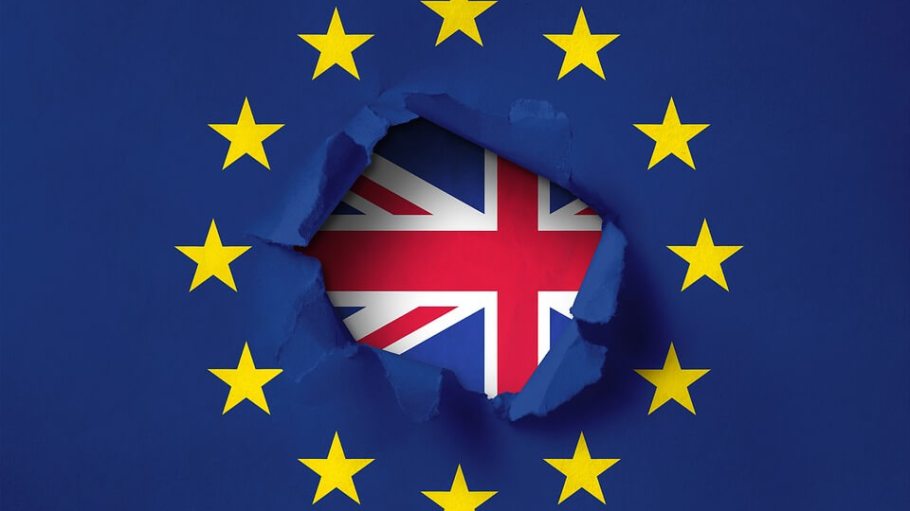
The Irish border has played such a central role in the current Brexit debacle that it now has its own comedy Twitter account. Prior to the election, pro-Brexit politicians claimed it was an easy-to-solve-problem, but the last two years have proved them spectacularly wrong. Boris Johnson, the former foreign secretary and leading Leave campaigner, controversially said in reference to the border, “It’s so small and there are so few firms that actually use that border regularly, it’s just beyond belief that we’re allowing the tail to wag the dog in this way.”
This shows an astounding lack of understanding—or concern—for the region’s troubled past. Northern Ireland’s violent border history, based around a battle for independence from the U.K., was only solved in 1998 with the Good Friday Agreement. This was a comprehensive agreement between the two countries that devolved certain powers from London to the Northern Ireland Assembly, allowing Unionists and Nationalists to run aspects of the country together. It spelled the end of years of terrorism—but the battles of the past threaten to resurface if any checks are put in place along the border.
Related Stories
As a result, the U.K. and the EU remain committed to ensuring there is no infrastructure between Northern Ireland and Ireland, which is why Theresa May’s Brexit deal has had to keep the U.K. in a customs union with Europe, as goods can’t flow unchecked between an EU and non-EU country. The fact the U.K. and Ireland will maintain the Common Travel Agreement (CTA), which allows free trade and free movement of people within the British Isles, is not enough.
The EU initially suggested Northern Ireland stay in the customs union, large parts of the single market and the EU VAT system, meaning the customs and regulatory border would essentially be drawn down the middle of the Irish Sea, dividing the U.K.
However, May has rejected this plan, creating a deal where all U.K. goods are to be aligned with EU ones for the foreseeable future. But because this entails keeping the U.K. subject to EU rules but with no power to shape them, there is a good chance Westminster will reject the deal when it is put to a vote in Parliament next month. That could lead to a no-deal Brexit and a hard border in Ireland.
Unsurprisingly Northern Irish citizens are in turmoil. A recent survey revealed that since last year, border retailers in both Ireland and Northern Ireland are 70 percent more concerned about the impact Brexit will have than they were a year ago. Consumer confidence has plunged as political turmoil looms–and statistics reflect it. Fashion sales are down by 6 percent in Belfast, and Northern Ireland remains the U.K. region with the highest store vacancy since Brexit, sitting at 15 percent.
Northern Ireland Retail Consortium director Aodhán Connolly said, “The retail industry is under considerable pressure right now. Industry profitability is falling with net profit margins now 3 to 5 percent of retail sales down from 6 to 8 percent over the past decade. There needs to be an overhaul in our antiquated business rates system that is a disincentive to invest in Northern Ireland. Our industry needs government support to effect retail reinvention and prevent retail Armageddon. We need forward thinking to make sure our consumers spend their time as well as their money in our towns and cities.”
The looming specter of a no-deal Brexit is making the retail ordeal Northern Ireland faces even more worrying. “It would have a major impact on the region,” said Tamara Cincik of London-based lobbying firm Fashion Roundtable. “The World Trade Organization defines how countries trade outside of specific trade deals and Britain would be subject to these terms, albeit on an un-formalized basis. It is likely that south of the border, fashion retail would benefit from the drop in competition, as consumers north of the border would face higher prices for the same goods they demanded before Brexit.”
This could be disastrous for Northern Irish stores, as citizens could legally cross the border to shop under the CTA, and any major price difference could decimate the Belfast high street. And brands are preparing for it—Next recently announced it has established a company in Dublin that will manage its cross-border customs issues inside the European Union if there is a hard Brexit, and that it will be opening more stores in the Republic.
However, while stores are still opening in the north—including plans for a vast new Matalan in Belfast—spending remains low.
“We think retail is facing a series of challenges and based on consumer confidence and the credit spend over the last two years, but it’s not clear Brexit is the sole cause,” Cincik said. “Retail is a transforming market and the Chancellor recently made clear that high streets and retail businesses need help to ensure that they effectively modernize and meet the demands of consumers.”
And while Brexit cannot be entirely blamed for the retail issues facing Northern Ireland, for the moment it continues to have a reverse-Midas effect—everything it touches becomes a bit poorer.