Nordstrom is investing in its alterations business—and underwriting the workforce to sustain it.
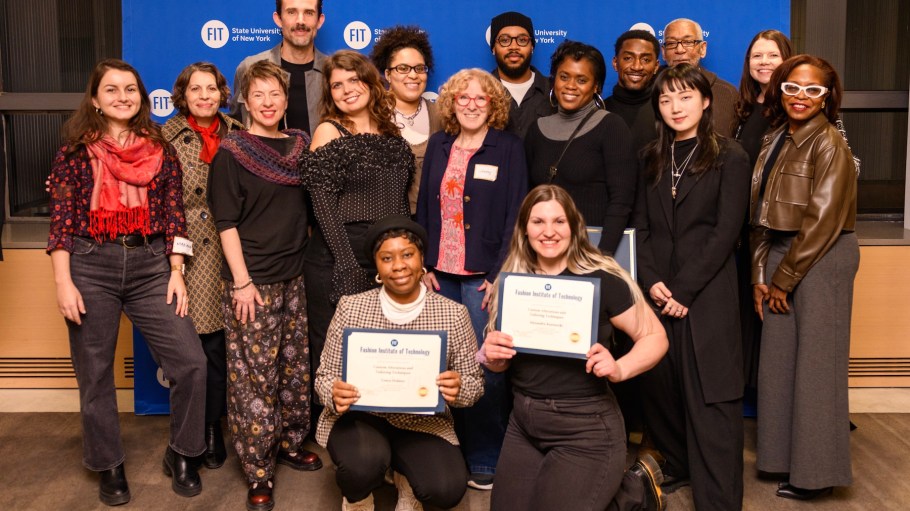
At a ceremony on campus held this month, the first cohort of students in the retailer’s new tailoring certificate program received completion certificates at the Fashion Institute of Technology, marking the launch of what both partners describe as a long-term workforce pipeline.
The program, “Custom Alterations and Tailoring Techniques,” was developed in partnership with FIT’s Center for Continuing and Professional Studies to train adult learners and career pivoters in advanced sewing within a retail environment. All students in the inaugural class received full scholarships funded by Nordstrom. A second cohort was also in attendance at the event, signaling the program’s continuation.
Related Stories
Dr. Yasemin Jones, FIT’s vice president of academic affairs, opened the ceremony by underscoring the significance of the collaboration.
“Nordstrom understands that tailoring isn’t just a service, it’s a craft. It requires precision, patience and pride in one’s work,” Jones said. “Their continued investment in scholarships and training shows that they value the people behind the scenes just as much as the final garment—that kind of commitment matters.”
For Nordstrom, the initiative is as much strategic as it is philanthropic.
“As a business leader for alterations, what I wanted to accomplish wasn’t just teaching the art of sewing,” said Marco Esquivel, store operations and services director overseeing alterations and aftercare. “It was teaching the Nordstrom way: How tailoring intersects with how we serve customers and help them show up at their best. That’s core to what we do every day.”
Eliminating financial barriers was deliberate, he added. “We also wanted to remove potential access barriers so students could participate in a program like this. That’s why partnering on scholarships and funding was so important.”
Scholarship funding shaped the program’s structure from the outset.
“We kept coming back to one word: access,” said Liz Manalio, assistant vice president for advancement at FIT Foundation. “It defined everything we did—even down to when the class should be offered for working professionals making a career pivot. Removing that financial barrier was critical.”
The nine-week, in-person course was co-developed by Nordstrom and FIT faculty and led by Broadway costume builder and FIT professor Michael Harrell. The students were trained on industrial sewing machines, blind hemming and retail-specific alteration techniques aligned with Nordstrom standards, pairing technical instruction with customer-service principles tailored to store environments.
The program formalizes alterations training to Nordstrom’s service standards while expanding access for skilled sewers seeking to enter or pivot into tailoring careers. It also arrives as retailers face mounting challenges in recruiting talent—even as fit, customization, and post-purchase services become more central to customer retention.
For graduate Jenny Robbins, the certificate provided needed credibility in a competitive hiring market.
“My résumé didn’t scream, ‘I’m a tailor,’” Robbins said. “I was applying for jobs and not getting responses. When I saw the FIT-Nordstrom program, I thought, ‘That’s what I need—that’s my foot in the door.’”
After completing the course, she added, “I knew I had the skills to contribute to a Nordstrom team.” Robbins begins her new role with the retailer this week.
FIT framed the partnership as part of its broader access mission.
The focus of FIT’s Center for Continuing and Professional Studies is supporting adult, nontraditional learners—especially in creative industries, said Jacqueline Jenkins, the center’s executive director, as “not everyone has the opportunity to pursue their first dreams.”
“What we find quite often is that it happens along the way,” she continued. “Our mission is access—connecting learners with partners like Nordstrom who understand that mission and are willing to remove barriers.”
A second cohort is already underway, with Nordstrom continuing to fund scholarships. The companies positioned the collaboration as an ongoing hiring pipeline—one that blends craft training, retail service standards and direct employment opportunities at a time when skilled tailoring talent remains in short supply.