The bond between LVMH Moët Hennessy Louis Vuitton and Loro Piana has become even tighter.
On Tuesday, the French luxury group confirmed the partial buyout of the Italian company’s shares held by the Loro Piana family, which occurred in 2025.
LVMH has raised its stake to 94 percent from 85 percent through the acquisition of an additional 9 percent of shares for 1 billion euros, via a call option. This was exercised in accordance with the terms of the original agreement that brought Loro Piana into LVMH in 2013.
Related Stories
With this operation, the brand is now valued at 11 billion euros.
The agreement signals LVMH’s confidence in Loro Piana’s potential and future growth. While LVMH does not break down sales by brand, the value of Loro Piana is understood to have increased four times since 2013.
Maria Luisa and Pier Luigi Loro Piana will continue to serve as members of the board of directors of the brand, “safeguarding the maison’s heritage and actively contributing to the strategic oversight of the brand’s future,” stated LVMH.
The French giant first bought an 80 percent stake in Loro Piana in 2013 for 2 billion euros, for an enterprise value totaling 2.7 billion euros at the time.
The Loro Piana family began trading wool and fine textiles at the beginning of the 19th century in Trivero, in northern Italy. Pietro Loro Piana founded the company as a wool mill in 1924 in the country’s Quarona. In the mid-1940s, Franco Loro Piana started exporting precious textiles outside of Italy, an activity further developed by his sons Sergio and Pier Luigi in the 1970s, when they started helming the firm and expanding into luxury retail operations. Sergio died in 2013, aged 65. Together, the siblings helped build and expand the company, which dates back six generations, rotating the chairman and chief executive positions on a three-year basis.
The company now offers exclusive men’s and women’s wear ready-to-wear and accessories collections, designed by an in-house team, and has developed a successful Interiors line. It also manufactures luxury textiles for its own use and as a supplier for high-end brands.
Last year, signaling the importance of Loro Piana for LVMH, Frédéric Arnault was named chief executive officer, moving on from his role as CEO of LVMH Watches. He joined at a time when the brand was said to be logging double-digit growth.
Arnault, the second youngest of LVMH chairman and CEO Bernard Arnault’s five children, is also a member of LVMH’s executive committee. He succeeded Damien Bertrand, who was appointed deputy CEO of Louis Vuitton.
Loro Piana has become the third-largest business in the fashion and leather goods division behind Vuitton and Dior, with market sources estimating it generates revenues of about 2.5 billion euros.
It is understood the brand’s profits are now at the level of revenues when LVMH acquired the brand in 2013, with Antoine Arnault, Bernard Arnault’s eldest son, becoming chairman and leading its integration into the group.
Bertrand, who came on board in 2021 succeeding Fabio d’Angelantonio, focused on brand elevation, product quality and savoir-faire to position the brand as the “master of fibers.” He brought the menswear and womenswear closer, developing the collections together, and further elaborated on Loro Piana’s push into leather goods and homewares.
Loro Piana sources vicuña from Peru, cashmere from Mongolia, and the finest, rarest wools from New Zealand and Australia — a research fueled over the years by Pier Luigi Loro Piana, whose textile expertise, passion and commitment is second to none.
Loro Piana in 1997 established the annual Record Bale Award, driving his and the brand’s quest for increasingly finer merino wool fibers every year. The company established the Franco Loro Piana Reserve in the Lucana area in Peru in 2008 and has significantly contributed to saving vicuñas from extinction.
In 2024, marking its centennial, Loro Piana presented “Master of Fibres,” a book published by Assouline and written by Nicholas Foulkes sharing the most significant milestones of the brand. In two versions, the book took almost three years to be completed.
Among the 100-year celebrations, Loro Piana staged the exhibition “If You Know, You Know. Loro Piana’s Quest for Excellence” at the Museum of Art Pudong in Shanghai, chronicling the story of the brand’s family legacy, textile know-how, fashion prowess, its links to China, and its devotion to the art world in 15 galleries.
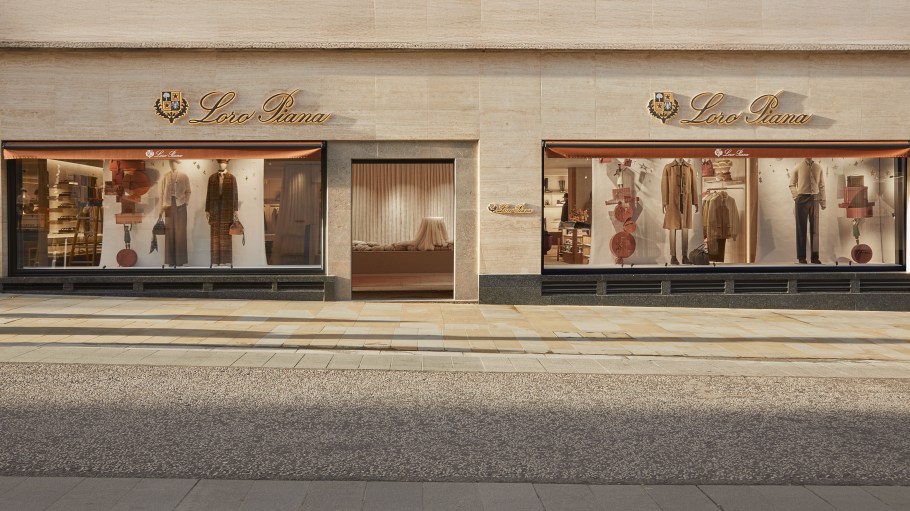
Loro Piana has also been reviewing its store network. For example, in November it expanded its New Bond Street store in London, adding around 2,000 square feet of retail space, with a total area of 5,650 square feet on one floor.
In 2024, the company opened a Los Angeles flagship on Rodeo Drive with a striking facade featuring glazed ceramic tiles made by a Tuscan company, inspired by the soft, undulating texture of the brand’s fabrics. The tiles in varying hues of the brand’s signature kummel color change depending on the light. Loro Piana first entered the U.S. in the 1960s by exporting fabrics, but in 1994 the company opened a showroom and office space in a townhouse in New York on 61st Street between Park Avenue and Madison Avenue and it gradually started to sell clothes, becoming the brand’s first retail presence. The first official store would only open four years later in Milan, on Via Montenapoleone.