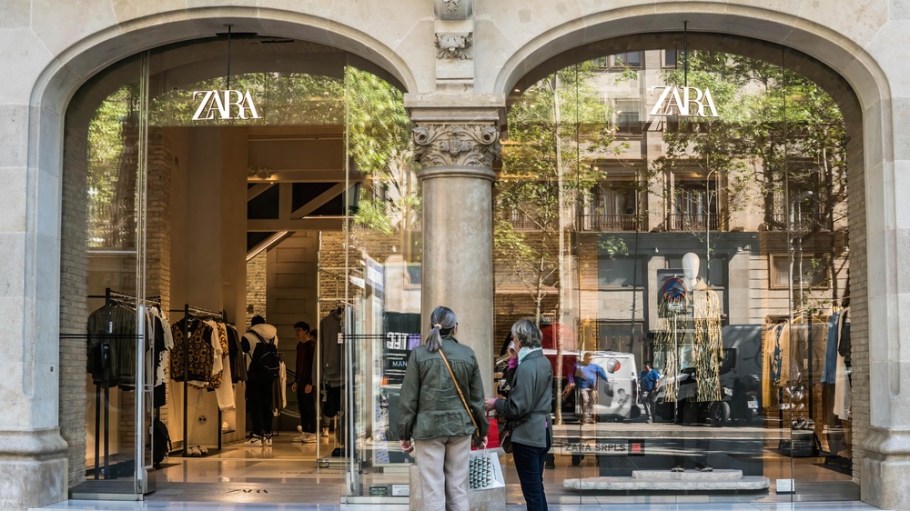
Zara owner Inditex ditched a would-be Turkish supplier in the middle of sourcing negotiations after it confirmed reports of union-busting that culminated in the dismissal of 90 workers without compensation.
The move is a rare, if pyrrhic, victory for textile, weaving and leather workers’ union Birtek-Sen, which was less successful in persuading Levi Strauss & Co. to drop a different Turkish manufacturer. It, too, let go of scores of workers, albeit after they went on strike over what they claimed was the right to choose their own union.
Related Stories
While an Inditex spokesperson declined to comment on the matter, it confirmed that it won’t be working with Akcanlar Tekstil, which operates a quartet of yarn-spinning mills in the south-central city of Gaziantep.
Workers protested for 36 days in August and September over poverty wages, unreasonably long hours and “inhumane” conditions such as cigarette butts in their food, said Mehmet Türkmen, head of Birtek-Sen. They held out as long as they could despite what Türkmen described as “police attacks and torture-ridden detentions,” though the demonstrations ultimately had to end because of financial practicalities. Even Inditex’s message to Birtek-Sen to let it know that the relationship wouldn’t be moving forward was only a partial win, since workers still didn’t have their jobs or severance pay, he said. Akcanlar Tekstil did not return a request for comment.
Türkmen contrasted Inditex’s actions with those of Levi’s, which he said was “never interested” in what was happening at Özak Tekstil in southeastern Urfa. A spokesperson for the denim giant, which decided to work with the factory on a conditional basis, previously said that it spent several months engaging with the factory to “find solutions and wanting to ensure there is no further job loss.”
Like Levi’s, Inditex has enshrined respect for freedom of association and collective bargaining in its code of conduct. The Bershka and Pull&Bear owner has also signed a so-called global framework agreement with IndustriALL Global Union, whose Turkish affiliate, Öz İplik-İş, incidentally, was the incumbent union Birtek-Sen was feuding with. Under the protocol, Inditex acknowledges the right of both local and national trade unions to access production centers and propose any necessary measures to correct breaches in conduct.
By and large, however, international brands “close their eyes, close their ears” to what’s happening inside Turkey’s factories, Türkmen said. He pointed out the widespread corruption and cronyism that stymies the enforcement of labor laws, including those that guarantee the rights of workers to form unions “without obtaining permission” and freely withdraw their membership should the desire arise. Brands need to have more awareness about this, he said.
Türkmen said that Akcanlar Tekstil still isn’t speaking to Birtek-Sen, which makes things difficult. It also has few other avenues, since any legal process can take years to resolve. “Three years is a long time for us,” he said. “So our campaign for action will continue.” Birtek-Sen is in the process of identifying other brands that manufacture with Akcanla Tekstil so it can take the fight to them, too. It continues to have a bully pulpit in the form of social media.
Birtek-Sen isn’t letting Levi’s off the hook, either. In May it filed a complaint under the German Supply Chain Act to charge the Red Tab purveyor with failing in its due diligence obligations. The union also included Hugo Boss and Inditex in its complaint, even though they’re customers of a different Özak Tekstil plant in Istanbul. Türkmen said that he and other Birtek-Sen members will be traveling to Germany and Belgium to meet with other NGOs and trade unions to discuss the matter further. And even though more than 300 of the 470 fired workers have now received the compensation they were owed, he wants to see greater redress. The Worker Rights Consortium, which investigated the issue earlier this year, has called for the reinstatement of all dismissed workers.
“We will not give up,” Türkmen said. “We will not let go.”