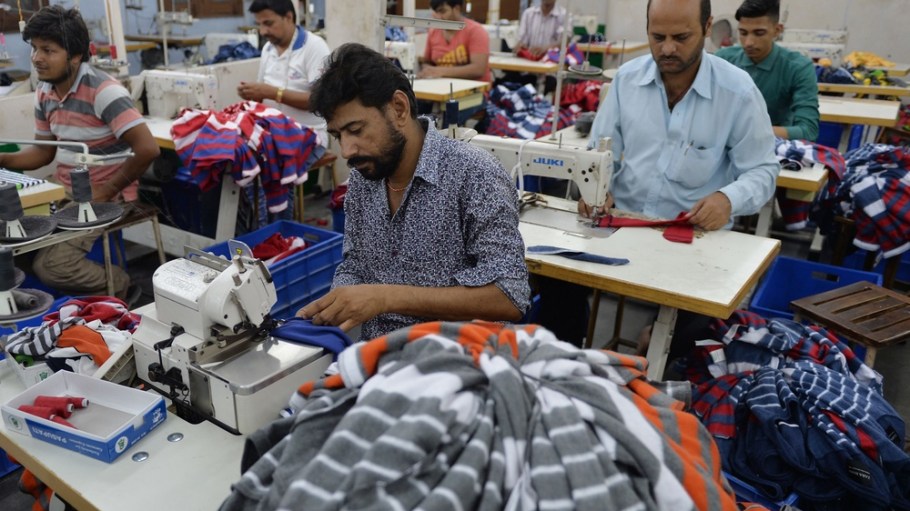
India could be caught up in a wave of nationwide protests as early as next month after a joint platform of trade unions, independent federations and workers’ associations rallied the country to mobilize ahead of a new budget session on Friday.
The protests, set to begin on Feb. 5, are in response to the Indian government’s “continued attacks” on workers’ rights, including the proposed rollout of “anti-worker” labor laws that include privatization of public sector undertakings, disinvestment of public companies and services, and the failed restoration of the old pension scheme, according to IndustriALL Global Union, a global union federation that represents more than 50 million people in sectors such as mining, energy and manufacturing across 140 countries.
Related Stories
Its union partners, IndustriALL said, are “particularly alarmed” about the upcoming budget session, which they worry will amplify corporate interests at the “expense of the working class.” They warned that controversial labor legislation that was passed in 2020—but has remained in a state of limbo due to worker resistance—is likely to take effect this year, ramping up daily working hours from eight to 12, for instance, and excluding from any liability employers with fewer than 20 workers under their charge. Under the new rules, employers with fewer than 300 workers in their factories would also no longer need government approval before they enact layoffs or closures.
Prime Minister Narendra Modi’s government says that labor reforms are needed to accelerate economic development. Before his reelection last year, Modi said he would “guarantee” India’s rise from the world’s fifth-largest economy to the third if he won. He said that the working class had become “entangled in a web of multiple labor legislations,” and that it was necessary to condense what were once 29 laws into four “codes” that simplified compliance for businesses.
But unions, IndustriALL said, are “determined to intensify their struggle” to prevent the laws’ implementation in a country that the International Trade Union Confederation gave in its latest global rights index the worst-possible rating of 5, meaning no guarantee of rights for working people. They are also asking for a minimum wage of at least 26,000 Indian rupees ($300), increased corporate and wealth taxes that don’t “burden the common masses” with goods and services taxes on essential food items and medicine, and a state-sponsored social security fund for unorganized and agricultural workers.
The call to demonstrate comes after an indefinite strike involving 18,000 workers at a dozen of India’s ports was narrowly called off in December after the government said it would ensure that employers would honor the wage revisions they had agreed to over the summer.
The nationwide protests, too, could culminate in a general strike if authorities fail to reverse their “unjust policies,” the unions said, creating disruptions on a scale that neighboring Bangladesh experienced during its 2023 minimum wage demonstrations, which involved tens of thousands of workers, and the far more sweeping democratic uprising, which ousted then-prime minister Sheikh Hasina in August only to give way to bouts of worker unrest that have yet to fully abate. It’s this volatile climate, crackling with uncertainty, that has reportedly driven export orders to Bangladesh’s rivals, including India.
“We urge the government of India to respect workers’ rights, engage in meaningful dialogue with trade unions, and ensure that labor laws align with international labor standards,” IndustriALL said.