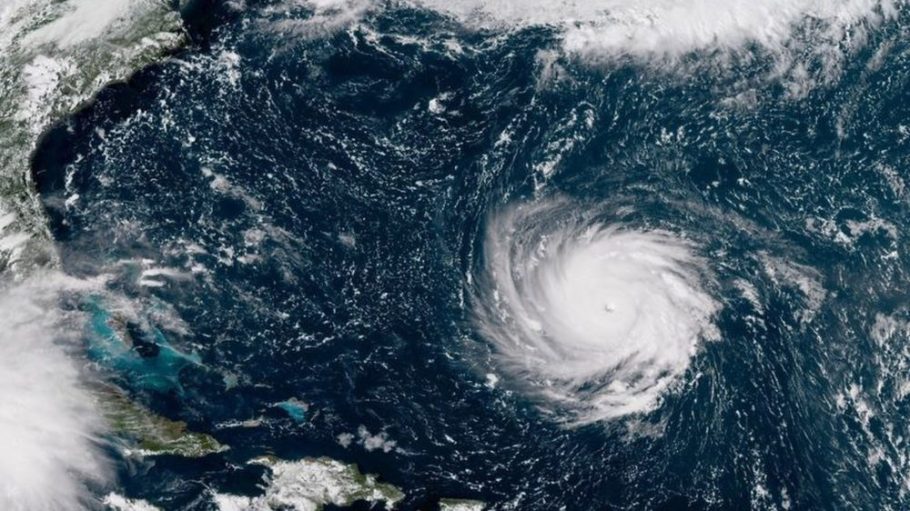
As Hurricane Florence barrels toward the North Carolina coast, the cotton fields and textile and apparel factories that lie in its path could take a hit.
Speaking on CNBC, Dan Leonard, senior energy meteorologist at The Weather Company, said the Carolinas’ biggest crop is cotton, and considering that this is a critical time for cotton crops, the harvest is in danger as Hurricane Florence approaches the East Coast.
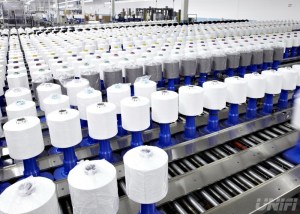
Companies such as Unifi Inc. and National Spinning were still open on Thursday though were likely preparing for the storm like many of those operating in the region. Walmart said due to Hurricane Florence’s impact on North Carolina, South Carolina and Virginia, some Walmart U.S. and Sam’s Club facilities will close or adjust hours of operation.
Related Stories
U.S. Customs and Border Protection (CBP) in the mid-Atlantic states said preparations are underway for Hurricane Florence. CBP activated Casey Durst, the Baltimore Field Office Director, as the agency’s Lead Field Coordinator for FEMA Region III Monday night.
Durst activated the Region III emergency operations center and has ordered CBP Ports of Entry to take preemptive action to protect employees, safeguard assets, and pre-deploy resources to support response efforts. CBP employees in the Norfolk, Va., area are complying with the governor’s mandatory evacuation order from low-lying coastal areas and are relocating family to safe havens before returning to duty. CBP will staff travel and trade facilitation operations at regional airports and seaports until flights and cargo operations cease.
Region III includes Pennsylvania, Delaware, Maryland, West Virginia and Virginia. Hurricane tracks predict Florence to make landfall as a powerful category 4 storm in North Carolina.
“Customs and Border Protection’s foremost concern is for the health and safety of all those living in harm’s way, including our selfless front-line federal officers and agents,” Durst said. “CBP is committed to safety of our communities and will contribute our unique capabilities when asked to assist our state and local authorities to respond to and to recover from this dangerous hurricane.”
During previous hurricane responses, CBP has contributed aerial damage assessment, urban search and rescue, human detection dogs, shelter and distribution center security, and helicopter and vehicle relief supplies distribution.
“The goal to any hurricane response is to quickly mitigate the storm’s impacts, ensure health and safety or our employees and residents, and to resume business operations, such as our international trade and travel facilitation, to help the affected region return to some sense of normalcy,” Durst said. “CBP officers and specialists will be ready to start processing international flights and cargo as soon as airline and maritime cargo commences.”
Mike Todaro, president of the American Apparel Producers Network, sent a note to members on Thursday, which said, “In the coming days, the Carolinas are going to get their butts kicked in the worst historical way. They are your supply chain. But for them, it is now all about their people, their buildings, their homes and heritage that is on the firing line.”
Trucks, planes, ships, cars, factories, mills and people are expected to grind to a halt, according to Todaro.
“This is going to impact you and it is going to bring out the very best in you, all of you,” he said.
Bloomberg noted that last year, Hurricanes Harvey and Irma constrained activity in the third quarter of 2017 and sparked rebuilding later in the year and into 2018. Bloomberg said based on consumer purchases that won’t be made as a result of the storm—such as canceled events and everyday everyday activities—Florence could have a $700 million net negative impact on the U.S. economy, not counting insurance losses, an assessment it made based on statistics from weather-analytics company Planalytics.
Florence could affect millions of workers in the southeastern U.S., with North Carolina, South Carolina and Virginia forecast to be hit the hardest, Bloomberg said. According to the U.S. Labor Department, flood-zone counties in the states have more than 42,000 establishments employing 682,179 workers with a quarterly payroll of $7.4 billion.