What’s the supply chain risk outlook for 2026? Gird your loins for potential shockwaves from logistical cyberattacks, crumbling critical infrastructure, even more extreme weather disasters and, most of all, intense geopolitical fragmentation that will further roil trade relationships, warned Everstream Analytics.
Following what the risk intelligence firm described as a “watershed” year for cyberattacks on carriers, 3PLs and other logistics providers, which soared by 61 percent from 132 to 213 incidents in 2025, cybersecurity breaches will continue to mount in “both frequency and sophistication,” it said, rating the concern with a threat level of 70 percent.
Related Stories
Chinese state actors, for instance, deployed the “ArcaneDoor” campaign in April, using custom malware to solicit maritime and financial intelligence from coastal facilities. The following month, Everstream Analytics reported in near real-time as the anti-Iranian group Lab Dookhtegan (“Sealed Lips”) launched a cyberattack that reportedly snarled communications on 116 Iranian vessels, and Russian APT28 (“Fancy Bear”) conducted a sweeping incursion against Western logistics firms across nearly every mode of transportation in a dozen countries. And in September, Iranian groups targeted Israel’s Ashdod and Haifa ports, the latter of which manages 88 percent of the country’s maritime traffic.
Cyberattacks on logistics represent a critical vulnerability, Everstream Analytics said, because organizations typically have little oversight or control over the cybersecurity of carriers, 3PLs and the airport or maritime facilities on which their operations hinge. The prudent business, it said, utilizes advanced supply chain risk monitoring platforms to track thousands of risk variables across its global logistics network, thereby gaining a “key first-mover advantage.”
“When cyberattacks strike, thousands of organizations typically scramble for the same limited resources,” Everstream Analytics said. “Companies that receive early alerts can secure resources at normal market rates before demand spikes, avoiding the astronomical costs associated with reactive crisis management.”
With the “backbone of global supply chains”—ports, bridges, power grids, transportation networks—aging rapidly, not to mention facing additional strain from catastrophic weather, infrastructure risks run even higher, with a threat level of 81 percent, said Everstream Analytics. It cited McKinsey & Company, which estimated in September that a global investment of $106 trillion in infrastructure would be required through 2040, with $36 trillion needed for logistics and transportation alone.
Port operations, it said, are increasingly likely to be interrupted by infrastructure maintenance, as well as outages to power, IT and other critical operating systems. In fact, Everstream Analytics expects at least one “multi-billion-dollar disruption” in 2026 as a result of failing infrastructure.
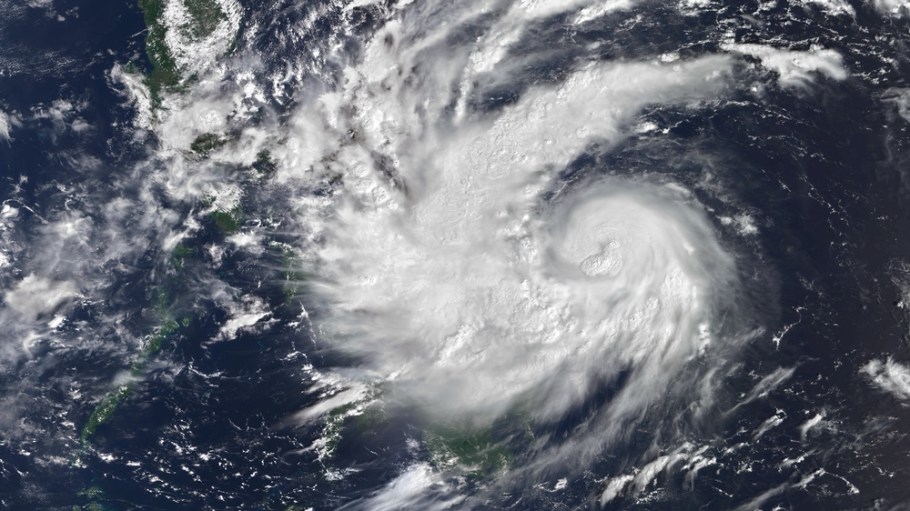
But even newish construction is subject to the strains of urban expansion and the increasingly volatile climate. In late November, three consecutive cyclones—Koto, Senyar and Ditwah—set off widespread flooding and landslides across South and Southeast Asia, causing severe loss of life and major disruptions to supply chain infrastructure. In Sri Lanka, damage to the railway tracks left only 30 percent of the network operational, requiring roughly $320 million for its restoration. In Indonesia, floodwaters cut off road access to the Port of Belawan in Sumatra, while in southern Thailand, road and railway damage thwarted 96 percent of the cross-border trade with Malaysia.
“Supply chain managers must develop comprehensive infrastructure risk assessments that go beyond their immediate suppliers to include the broader transportation and utility networks their operations depend on,” Everstream Analytics advised. “This includes mapping critical infrastructure dependencies, identifying alternative routes and considering infrastructure resilience as a key factor in location and sourcing decisions.”
Extreme weather gets a call-out of its own, with a 93 percent threat level as far as Everstream Analytics is concerned. Isolated events aside, the intensification of climate change could trigger “compound events” where multiple weather phenomena happen at once or in rapid succession.
Take the heat waves, droughts and floods that dogged a quarter of the European Union last summer. According to economists from the European Central Bank, these produced estimated losses of 43 billion euros, or $50 billion, just between June and August. Overall, global economic losses from flooding have been ticking upward, from $33 billion in 2000 to an average of $42 billion in recent years, amounting to a 27 percent increase.
Since 2000, tropical cyclone-related extreme wind events have been the “predominant driver” of economic losses, it said, with extreme winds from non-tropical cyclones coming in second. Significantly, Everstream Analytics said, four of the five years experiencing the biggest losses have been logged since 2017, indicating an “intensification of disruptive events in the supply chain in recent years.” Agricultural systems, in particular, are experiencing the worst impacts, affecting both crop quality and yield.
“Traditional weather risk management is no longer sufficient,” it said. “Companies must invest in advanced climate modeling and real-time weather monitoring systems that can provide early warnings of compound events. Building climate resilience requires fundamental changes to supply chain design, including geographic diversification, increased inventory buffers and flexible logistics networks that can rapidly reroute around weather-impacted areas.”
The No. 1 risk facing supply chains, which tops out with a risk level of 97 percent, should come as no surprise.
“The era of hyper-globalization is being replaced by geopolitical fragmentation and strategic decoupling,” Everstream Analytics said. “This shift from a theoretical risk to a measurable economic force represents the most significant threat to global supply chains in 2026.”
Recent evidence of this includes the United States’ military operations in Venezuela, which it said underscores the “rapid pace at which geopolitical shifts can occur,” leaving in their wake altered trade relationships, upset political alliances, regional uncertainties and logistical disturbances. The looming question is how companies can build resilience in a volatile world that treats trade policy no longer as a “static condition” but a “dynamic variable.”
“The pattern of 2025—sudden tariff announcements, reversals and escalations—should be the baseline expectation for 2026,” Everstream Analytics said. “Scenario planning must now include rapid, unexpected cost increases of 15-25 percent on critical inputs.” This includes not only predicting market trends but also predicting policy. Equally helpful: stress-testing budgets against unexpected duties so that a single, sudden announcement doesn’t wipe out bottom lines.
Has Everstream Analytics been wrong before? It admitted that the forced labor crackdown it anticipated in 2025, due to legislation such as the Uyghur Forced Labor Prevention Act and the EU’s corporate sustainability due diligence directive, hasn’t materialized in the way it expected. In fact, the United States’ enforcement of forced regulations dropped as the White House’s attention turned to tariffs. The CSDDD, for its part, has been watered down and delayed.
Everstream Analytics had also expected the Red Sea to remain a “global hot spot, with continuous Houthi attacks on Red Sea vessels.” In 2025, Houthi attacks on commercial shipping declined by roughly 84 percent versus 2024. The ceasefire between Israel and Hamas in October, though fraught, also further de-escalated regional tensions, it said.
But it was accurate in its predictions that a “combination of rising nationalism, new tariffs and exclusive purchasing agreements” would make rare metals and minerals harder and costlier to access. Cyberattacks, as it anticipated, were also a “defining feature of the 2025 threat landscape,” as were tariffs that led to supply chain turmoil and higher prices.
“Forecasting demands precision and adaptability,” Everstream Analytics said. “These insights—both validated and refined—sharpen our methodology for the year ahead. True resilience emerges not from flawless prediction, but from understanding the fundamental drivers of risk and building dynamic response capabilities.”