Five Below Inc.’s testing new strategies to get ahead of its shrink troubles.
Executives for the extreme-value chain said during the company’s first-quarter earnings call that they were optimistic about the retailer’s mitigation efforts.
Kristy Chipman, treasurer and CFO, told analysts that the company’s goal to have “75 percent of all transactions to be associate-led checkout, with 100 percent associate-led transactions in our highest shrink stores” has been “successfully implemented.” The company said in its prior fourth-quarter call that it would transition to self-checkouts to lower its shrink issue.
Related Stories
Chipman also said the company is testing additional strategies in 70 stores, including changes such as “receipt checking at the door, adding guards, and incremental upfront labor.”
Chipman said a count of physical inventories in 250 stores in May, including those testing the new strategies, had positive results in the overall shrink rate. “The subset of the stores that had an associate-led checkout, along with another mitigation measure, experienced greater improvement in the rate of shrink,” she noted.
Chipman said that after a review of the results from the testing, the company will proceed to “quickly roll them out to the stores.”
“We are cautiously optimistic about the progress we made in Q1,” president and CEO Joel D. Anderson said, adding that Five Below has a “firmer handle on how to mitigate shrink. These early reads demonstrated several examples of our operating efforts working and have put us on a path to reducing our shrink levels.” He also told analysts that tools used in the 70 test stores, such as more video cameras, show “even bigger declines than the stores that just had the associate checkout.”
Shrink has been a problem for retailers, particularly at chains that target the lower-income shopper. The dollar chains—Dollar Tree and its competitor Dollar General—in their first quarter earnings reports also spoke about mitigation strategies. And the two dollar stores to share another common theme with Five Below, one concerning higher-income consumers trading down as they seek value purchases to curtail the impact of several quarters of rising inflationary pressures.
Anderson said the company saw a “meaningful slowdown in sales during the back half of the quarter.” He said consumers were “more discerning” with their spending, although that was less of an issue with Five Below’s higher income customer base trading down as they sought value at the chain’s stores. Still, the slowdown was experienced across all geographies.
He said 85 percent of the items sold are priced at or below $5, and that the company’s buyers will seek out ways to bring even greater value for its shoppers. He also said the company is also conducting a pricing test in 100 stores to measure the impact of price reductions on driving sales. In addition, Chipman’s predecessor was Ken Bull, who last month was promoted to the new post of chief operating officer. Anderson told analysts that Bull will lead the teams within the store expansion and store potential pillars, while maintaining oversight of the inventory optimization pillar. “We have a line of sight into significant savings over the next 18 to 24 months with some savings benefiting 2024,” the CEO said.
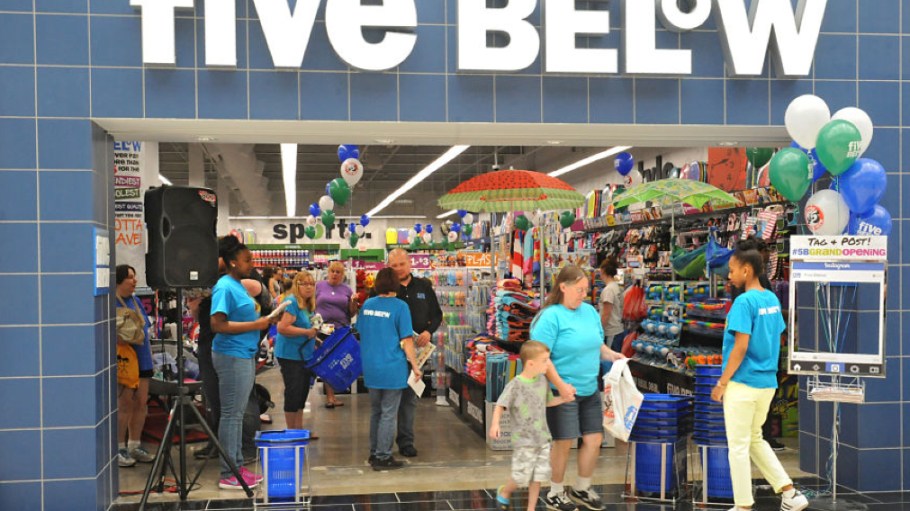
As for store openings, Five Below opened 61 new stores in the quarter, and Anderson said the retailer is on track to open about 230 stores this year. He noted that the company has “already built a strong pipeline for 2025,” and has been focusing on growing its Five Beyond format fleet. The company also completed 84 conversions to the new format as part of the 180 planned for this year. The retailer currently operates more than 1,600 stores in 43 states. Most items are priced between $1 and $5, and some extreme value items are priced above $5 in its Five Beyond shops.
Anderson said nearly 80 percent of the store base will be in the Five Beyond format by the end of the year. That should bode well for the future because he said the format has “performed the best in our lower household income stores.” While the back half of the first quarter was disappointing, he noted that a marketing initiative to drive banner recognition is expected to help drive sales—in addition to new product coming in—as the chain gets prepared for the back-to-school season and Halloween later on.
For the three months ended May 4, net income was down 16.0 percent to $31.5 million, or 57 cents a diluted share, from $37.5 million, or 67 cents, a year ago. Net sales were up 11.8 percent to $811.9 million from $726.2 million. Comparable sales in the quarter fell 2.3 percent.
For the second quarter, the company guided net income to the range of $32 million to $38 million, with net sales between $830 million to $850 million. The sales guidance is based on the opening of 60 new stores in the quarter.
For the full year, net income was forecast to be between $275 million and $297 million, with net sales between $3.79 billion to $3.87 billion. Net sales guidance includes the expected opening of 230 new stores for Fiscal 2024.