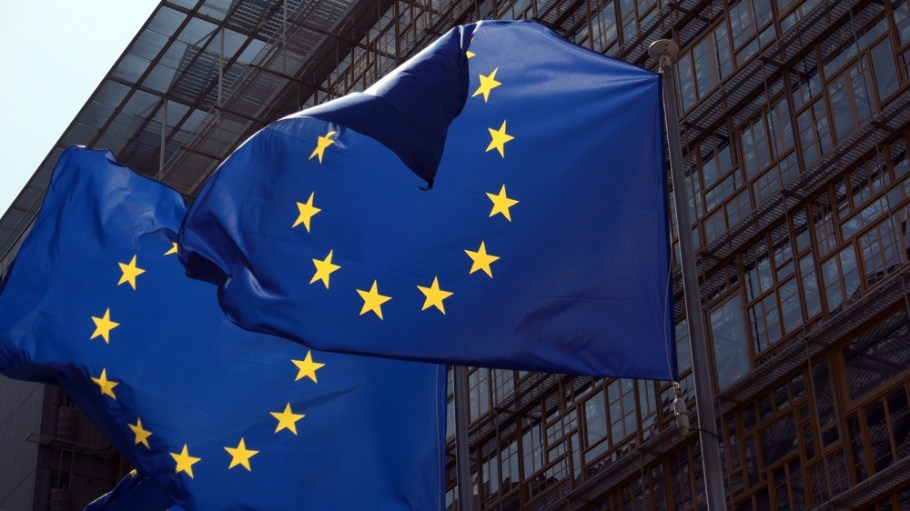
Perhaps the biggest irony of the European Union’s supply chain due diligence rules, now being hotly relitigated, is that they was supposed to provide a sense of certainty and consistency. And for a brief, shining moment they did.
The only certainty or consistency around Brussels these days, however, is that the lack thereof. On Monday, ambassadors from all 27 member states signed off on the European Council’s position on the inaugural omnibus simplification bill, which proposes amendments to the corporate sustainability due diligence directive, the corporate sustainability reporting directive and other legislative instruments even more aggressive than those proposed by the European Commission in February to relieve what it says are red-tape burdens, particularly on smaller enterprises.
Related Stories
But the European Council thinks that the CSDDD’s current threshold, which renders accountable only companies with more than 1,000 employees and a net global turnover of 450 million euros ($523 million)—or much higher than the originally proposed 500 employees and net global turnover of 150 million euros ($174 million)—could be raised further. It adopted a French proposal to cover only companies with more than 5,000 employees and 1.5 billion euros ($1.7 billion) in net global turnover.
While the European Council said that the largest companies can have the biggest influence on their value chains and are “best equipped to absorb the costs and burdens of due diligence processes,” the outcome would be that fewer than 1,000 companies—versus the previous 3,300, already 0.05 percent of European businesses—would be in scope.
The EU representatives agreed with the first omnibus bill that companies should only have to assess their direct suppliers—that is, those in Tier 1—through a general scoping exercise unless there is “objective and verifiable” information suggesting adverse impacts beyond direct business partners. They also proposed postponing the transposition of the CSDDD by member states by a year to 2028 and the obligation of in-scope companies to adopt Paris Agreement-aligned climate change mitigation transition plans by two years to 2029.
The consensus at COREPER II, meaning the Committee of Permanent Representatives (Part 2), puts the European Council’s incoming Danish presidency on the road to a tense trilogue as it prepares to hash out details with the European Parliament and European Commission ahead of a vote in October. The European Parliament has yet to release a negotiating position, though it previously agreed to a “Stop the Clock” directive to delay sustainability reporting and due diligence obligations for certain companies under both the CSDD and the CSRD.
“Today we delivered on our promise to simplify EU laws,” Adam Szłapka, Minister for the European Union of Poland, said in a statement. “We are taking a decisive step towards our common goal to create a more favorable business environment to help our companies grow, innovate and create quality jobs.”
Critics of the simplification process see it as tantamount to deregulation. It was only on Friday, after all, that the European Commission announced that it would be withdrawing from consideration a landmark law that would penalize nebulous, misleading or inaccurate corporate environmental claims. Lara Wolters, the Dutch politician who was the European Parliament’s lead negotiator on the CSDD, also said as much on the eve of the Global Fashion Summit in Copenhagen, describing a “sort of ‘Trump lite’” atmosphere where “true simplification” is only secondary. Over in the United States, Republican lawmakers are far from fans of the directive, too.
“The European Commission has now, under the guise of the report by Mario Draghi, rolled out a deregulatory agenda under pressure from a lot of large lobby groups in some of the member states, basically saying, ‘Wait a minute, all of what we did at the end of the last term, we didn’t really mean,’” Wolters said, referring to the Italian economist and former European Central Bank president’s 2024 paper on the future of EU competitiveness. “Of course, there’s nothing wrong at all with simplifying rules for business. The problem here is that the intention is not simplification as such. The intention is to give a political signal that we, too, are going to do things differently. And the problem with it is it’s been rushed through.”
Kalpona Akter, founder and executive director of the Bangladesh Center for Workers Solidarity and a former child garment worker, echoed the sentiment on stage at the Copenhagen Opera House a day later. She said she was filled with hope that the CSDDD would do something that decades of voluntary agreements have failed to, especially when it comes to access to remedy.
“For me, either have a good agreement or no agreement,” she said. “This kind of toothless directive is not going to make any difference for society back home.”
For Boukje Theeuwes, head of policy at Solidaridad Europe, a nonprofit for international cooperation, the European Council’s decision strikes “another blow” for the promise of the CSDDD to create a level playing field that tackles the root causes of human rights violations.
Allowing companies to avoid looking beyond their first-tier suppliers, except in extenuating circumstances, she added, creates a “limitation” that ensures that smallholder farmers and workers at the start of supply chains will see no support as they work to address social and environmental issues. It also undermines the central tenets of responsible business conduct, particularly the protection and inclusion of the 600 million smallholder farmers worldwide who are “indispensable to the resilience of Europe’s supply chains.”
“The Council’s approach flips due diligence on its head: forcing companies to act only after the damage has been done,” Theeuwes said. “This won’t address the problems of global trade; it will sweep them under the rug, along with any hope for addressing the root causes of sustainability challenges in these sidelined communities.”
Nele Meyer, director of the European Coalition for Corporate Justice, a coalition of civil society organisations and NGOs across Europe, went further, calling the EU’s simplification agenda a “sharp and alarming departure” from the climate, environment and human rights commitments on which the CSDDD was originally build upon and a“slap in the face of affected communities and victims.”
Drastically weakening obligations related to climate transition plans, she added, “hollows out” one of the directive’s few tools to ensure corporate action on climate.
“Despite the urgency of the climate crisis, member state governments are releasing companies from climate obligations and thus failing future generations,” she said. “The CSDDD had prepared the ground for a fundamental shift in corporate conduct, but this general approach turns the clock back to business as usual. This is not simplification—it is full-scale deregulation.”
The leaders of two of Europe’s most powerful countries have made no secret of the fact that they would rather the CSDDD disappear altogether. In a speech to a group of business executives at Versailles in May, French President Emmanuel Macron called for it and other regulations “not just to be postponed for one year, but to be put off the table.” His comments followed similar words from German Chancellor Friedrich Merz, who called for a “complete repeal” of the directive as a “logical next step” on his first official visit to Brussels the same month.
While Germany, like France, has its own supply chain due diligence law, the incoming coalition government has announced plans to repeal it due to concerns over a sluggish economy and geopolitical uncertainty. The CSDDD was supposed to do away with a patchwork of disparate requirements across the continent by enforcing a single—and one might say simple—standard.
On Monday, a group of high-ranking figures, including former parliamentary officials and ex-United Nations high commissioners for human rights, wrote an open letter contesting what they said was the “false dichotomy between sustainability and social responsibility on one hand, and efficiency and competitiveness on the other.”
“We understand and share the concern that excessive bureaucratic and regulatory demands can impact the internal operations of European companies,” they said. “That is why we support efforts to reduce and streamline these demands. However, we believe it is essential to uphold certain non-negotiable principles and political commitments that have established the European Union as a global leader in social and environmental matters.”
With the impacts of climate change bringing “significant” economic costs and social challenges, the transition toward a fairer and more sustainable economy “cannot wait,” the signatories said. Achieving decarbonization targets will require “transformative changes” in production models that are buttressed by public policies that “promote transparency and create clear incentives—and disincentives—for market actors.” The same goes for social sustainability.
“We advocate for competitiveness rooted in innovation and social justice—not in a race to the bottom through cost-cutting or the erosion of welfare standards and human rights, both within the EU and in third countries,” they added. “Europe must uphold this moral leadership not only within its territory, but also throughout the highly internationalized supply chains of major companies operating in the EU.”