Busy parents don’t have time to think outside the box. They need quick solutions that work for their hectic lifestyles.
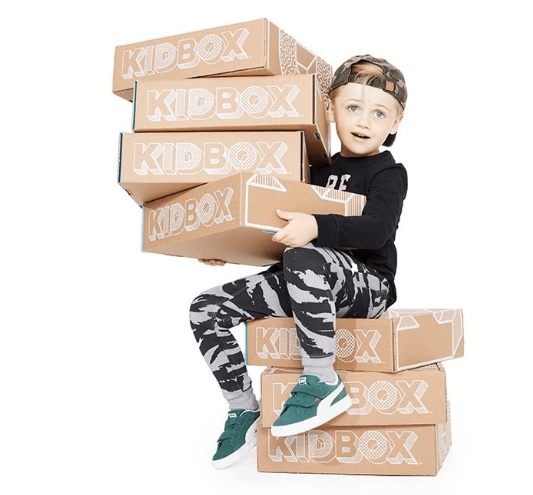
That was the thinking behind Kidbox and Rockets of Awesome, two children’s clothing boxes taking different approaches to solving parents’ apparel woes. Despite Bloomberg’s claim in December 2017 that “we’ve reached peak subscription box,” the companies say they continue to amass fans by providing a hassle-free experience.
“The box service seemed natural as children outgrowing clothes hadn’t changed, but shopping in a leisurely way was a thing of the past. People’s homes are the new doors of retail, and the living room is the new dressing room,” said Haim Dabah, who spent 30 years working in apparel, retail and tech start-up investment.
Related Stories
The model will be familiar to anyone who’s ever used StitchFix or similar services. To start, parents are asked to complete a survey, which helps the companies identify their tastes. From there, Kidbox selects between six and eight pieces and sends them out. At Rockets of Awesome, parents are given the chance to give a thumbs up or down to the pieces the company has chosen before they hit the mail—serving to avoid battles between moms and kids over what to keep and what to return once the boxes arrive.
Rockets of Awesome subscribers receive a box four times a year. The company charges a $10 styling fee, which can be applied toward the purchase should the subscriber opt to keep anything from the box. The pieces typically range from $16 to $38. A full box is $150, which builds in a 25 percent discount.
One thing Rockets of Awesome does not offer is name brand goods, and that’s by design. “Designing our own brand of apparel, under the Rockets of Awesome label, was critical in delivering that style and value,” she said.
Similarly, Kidbox offers a seasonal box but like Rockets of Awesome, shoppers can pause or cancel at any time. “Subscription is very onerous,” Dabah said. “We wanted to make it zero obligation, minimize friction.”
The Kidbox assortment includes pieces from 135 brands like Guess, Appaman, New Balance, Nanette Lepore and 7 For all Mankind. The breadth of product helps stave off “box fatigue” among customers for whom the element of surprise is important,” Dabah said.
Items for babies range between $12 and $13, making a full box $68. Bigger kids’ clothes are $14 to $16 with a full box totaling $98. Shoppers can keep all or nothing from their boxes.
The flexibility that both Blumenthal and Dabah have built into their services is a key to retention according to Ken Fenyo, consumer market lead for Fuel by McKinsey. “Over one-third of consumers who sign up for a subscription service cancel in less than three months,” he said. “Over half cancel within six.”
The advantage these businesses have is that they speak to the largest portion of subscription box shoppers. “Curation services are the most popular, accounting for 55 percent of total subscriptions,” Fenyo said, referring to products tailored to consumers’ needs like clothing. Boxes that fall into the Replenishment category—think razors and contact lenses—account for a third of subscriptions.
Dabah said the box model helps solve a key problem for online retailers too. “Most kids e-commerce businesses are not profitable. The average unit retail is pretty low—$4.99 for a T-shirt or $9.99 for jeans—factor in free shipping, people buy on average 1.5 items, and it’s difficult to make money,” he said. “Multiple outfits makes both a compelling sales argument and parents can make four to five outfits.”
Chris George, co-founder of Gentleman’s Box, launched the Subscription Trade Association in 2016 to create a community for businesspeople like himself. “More and more retailers are pivoting to subscription models because they drive more revenue per customer, permit continual brand engagement and a superior customer experience,” he said, adding that providing specialized services results in low churn rates and higher lifetime value.
The box model also allows both Kidbox and Rockets of Awesome to get to know their shoppers on a deeper level, which in turn helps them create a better experience.
Blumenthal said her data bank of customer buying patterns informs the development of fabrics, silhouettes, colors and patterns. Further, she told the Loose Threads podcast that the company’s algorithm was built to reflect the Tinder dating app, but instead of matchmaking it’s focused on creating coordinating wardrobes. Ultimately, she said, the technology is allowing Rockets of Awesome to be more efficient.
“Our supply chain is rather flexible to ensure we can react to what we’re seeing our customers respond to,” she said. “And the subscription aspect of the business also enables us to plan at the customer level which products we’ll ship each season.”
Dabah added that technology is also an important part of the Kidbox model. “Several hundred thousand kids, we know their size, age, whether they’re going to be sporty, preppy or city cool. The algorithms create an imaginary inventory and we go to market,” he said.