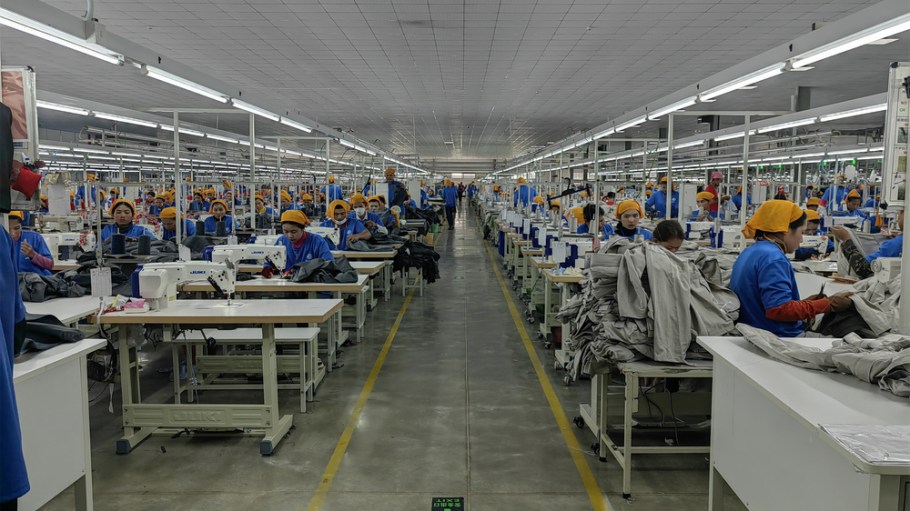
As minimum wage discussions in Cambodia kick into gear, more than two dozen trade unions and civil society organizations advocating for the Southeast Asian nation’s nearly 1 million garment, footwear, textile and travel goods workers are calling for a monthly floor salary of at least $232, or 10 percent more than the current $208 threshold.
This isn’t “merely a request,” signatories such as the Business & Human Rights Resource Center, the Centre for Alliance of Labor and Human Rights Alliances, the Cambodian Alliance of Trade Unions and the Clean Clothes Campaign said in a joint statement, published earlier this month. Rather, they said, it is an “urgent necessity grounded in the real costs of survival for Cambodian workers and the demonstrated economic capacity of the country.”
Related Stories
That the current wage is “far below the threshold of a dignified life” is apparent, the organizations said, citing the Asia Floor Wage Alliance’s 2024 Consumption Survey, which found that workers spent roughly $408 on food and non-food items, or double their average income of $250. The Anker Research Institute backed this up, estimating that households in urban areas require some $417 per month to obtain a “basic but decent” standard of living, which includes meeting essential needs and paying down social security. As the 41 percent gap between average earnings and living costs stands, according to CNV Internationaal’s 2024 Fair Work Monitor, 73 percent of workers are drowning in debt just to stay alive.
“This persistent wage-expenditure gap pushes workers further into debt, traps them in poverty, and forces them to compromise on food, healthcare and education,” the organizations said. “It is unacceptable that the backbone of Cambodia’s economy—the garment and footwear workers—are denied the most basic conditions for a dignified life while the sector continues to attract global investment and deliver profits for brands and employers.”
But the country’s manufacturers are in a tight position, too. It was only a couple of months ago that a 35 percent tariff rate was bearing down from the United States, and the future looked bleak. While a sectorial collapse appears to have been averted with the current 19 percent figure, which is on par with neighboring rivals like Indonesia and Vietnam, the question of who pays for the additional duties is a question that continues to loom large. Brands such as Adidas and Nike have talked about “optimizing” their sourcing strategies to offset the new duties. Workers, in particular, fear that any offloading of the burden to their employers will leave them ultimately bearing the brunt. It’s also for this reason that labor campaigners say that a minimum wage of $232, despite undercutting the full cost of living, represents the “minimum necessary adjustment” for 2026.
The odds aren’t in their favor. Increases over the past few years have been in the $2-$6 range. But the garment, footwear, textile and travel goods sector is nonetheless an economic tentpole for Cambodia, which dispatched $13.9 billion worth of exports in 2024, a 23 percent uptick from the year before. The United States accounted for 37.2 percent of the shipments, followed by the European Union at 16.5 percent.
“We call on the National Minimum Wage Council, the Ministry of Labour and Vocational Training, the Royal Government of Cambodia and employers’ associations to recognize these undeniable realities and approve a new minimum wage of at least $232 for 2026,” the organizations said.