Much like an environmental ecosystem that fosters symbiotic relationships, Brandix India Apparel City (BIAC) has flourished into a vertically integrated park that spans fabric to finished garments. Two decades in, the hub continues to evolve in response to industry needs.
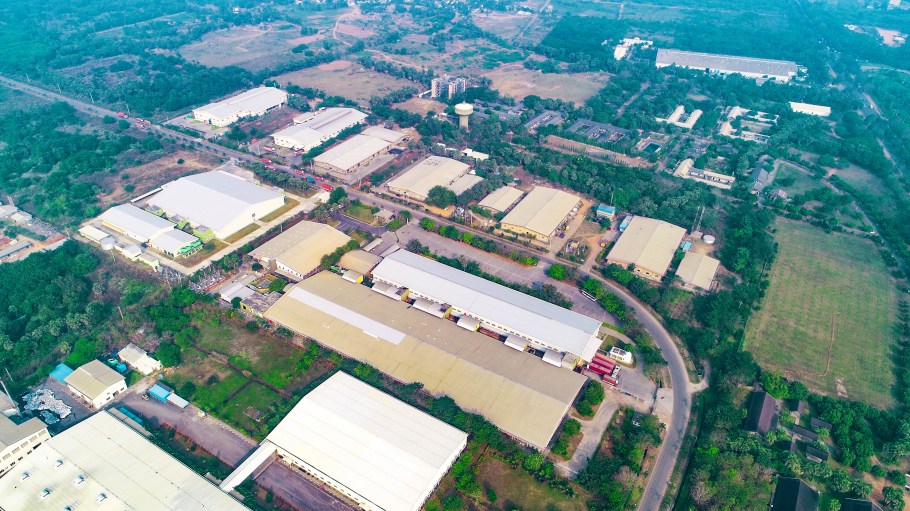
Plans for the park were initiated in 2005 following discussions between Brandix and the Government of Andhra Pradesh, a state on the East Coast of India. What began as a proposal for a 50-acre facility expanded into a larger vision for an integrated manufacturing hub in Achuthapuram—today a 1,000-acre apparel ecosystem serving leading global brands.
Related Stories
“The state government offered land and regulatory support, while we brought our experience in building vertically integrated apparel ecosystems,” said Hasitha Premaratne, Brandix managing director. “The local labor force, large and trainable, was among the decisive factors that led us to this partnership. We began by setting up a training school and a small export factory even before the park’s full infrastructure was in place to ensure we were ready from the outset.”

BIAC is home to six apparel manufacturing units, which have a combined annual capacity of over 110 million pieces. In addition, Brandix has curated a network of suppliers within the park to create an increasingly self-sufficient, co-located production flow. Fabric mill Teejay India supplies knit textiles while Vardhman Yarn and Thread (A&E) provides thread. Pioneer Elastics, Ribest Ribbons and S&S Industries supply trims such as elastics, ribbons and bra underwires. Tags and labels are available on site through ITL, and companies can turn to Econopack for packing materials.
Keeping production within the park significantly reduces transit time between processes and removes transportation-related delays. For instance, one brand has reduced lead times to between 11 and 21 days by co-locating production at BIAC. In addition to inter-hub transport benefits, the park is only 31 miles from Vizag Port, allowing BIAC to offer lead times that rival those from key sourcing destinations such as Chittagong and Shanghai. From the port, it takes roughly 27 to 30 days to travel to the East Coast of the United States and 32 days to reach the West Coast. Meanwhile, the airport is just an hour away by car.
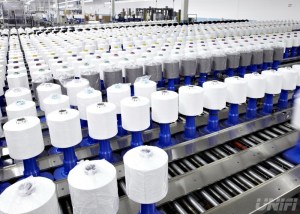
Although the park’s coverage already spans most of the manufacturing process, there are plans to expand the verticality and production capabilities on site. BIAC is exploring adding fiber and yarn manufacturing, and it is also responding to demand for synthetic fabric mills, infrared tags, lace manufacturing and advanced finishing and embellishment.
To support new entrants, BIAC offers a plug-and-play infrastructure, providing access to shared services such as an effluent treatment plant, a water treatment plant, power supply from the national grid and solar energy. With this model, new entrants can get production up and running in an interim facility in as little as three months and move into a more permanent facility within a year.
Sustainability is embedded across the park. BIAC operates an ISO 14001-certified environmental management system, with an effluent treatment capacity of 56 million liters per day and a 500-million-liter rainwater harvesting pond. The park has also invested over $7 million in a marine outfall pipeline for the safe discharge of treated water.
Beyond scale and efficiency, BIAC’s success is underpinned by a long-term commitment to its people. The park’s growth is supported by a skilled and stable workforce. Since inception, BIAC has collectively employed more than 100,000 people, 80 percent of whom are women from rural areas, creating sustained livelihoods across communities in Andhra Pradesh and beyond. All employees enter the workforce through Brandix’s training-first approach, gaining not only technical skills but also access to stable employment, career progression and supportive workplace practices.
Employee well-being at BIAC is reinforced through safe working environments, on-site support such as counsellors and employee councils and community infrastructure that supports everyday life—from transportation, food and healthcare access to recreational facilities. This focus on connection and care has helped build long-term relationships with employees, who remain the backbone of the park’s sustained success.
The lessons from BIAC go beyond its campus, informing Brandix’s strategies across its facility footprint as the company targets net-zero emissions at all factories by 2040. “BIAC has become our blueprint for scalable, sustainable manufacturing,” said Sadiq Omar, director at BIAC.
Click here to learn more about Brandix India Apparel City.