Each year, an estimated 92 million tons of textiles become waste, with 57 percent destined for landfills and 25 percent bound for incineration. Should this trend continue, the earth could be discarding 134 million tons of textiles by 2030.
It’s clear that the fashion industry cannot perpetuate its linear manufacturing paths, and companies are intervening and investing in solutions for reuse. However, these circular streams are barely making a dent in the problem. Per Textile Exchange, recycled fibers made up just 7.6 percent of the total fiber market in 2024.
Related Stories
To support the textile business in further integrating recycling, India’s Birla Cellulose is ramping up its circular efforts with the debut of a new fiber product. Liva Reviva™ M blends Birla Excel lyocell with mechanically recycled post-consumer textile waste, creating a stream for used garments that may otherwise have been tossed. This new fiber joins Birla’s existing Liva Reviva™ offering, which previously centered solely on chemically recycled waste.
“The circular economy ecosystem can only work effectively when the [entire] workstream results in the reduction of textile waste,” said Manmohan Singh, chief marketing officer at Birla Cellulose. “Mechanically recycled fiber is one such key initiative in textile-to-textile recycling.”
Man-made cellulosic fibers (MMCFs) such as viscose and lyocell are often choice blending partners for recycled content such as cotton textile waste because they add strength and softness to the shredded fibers. In an industry first, Liva Reviva™ M takes these two fibers and blends them together into one raw material. Because this combination is happening at an earlier stage, it creates a uniform blend that allows for consistent performance and hassle-free processing.
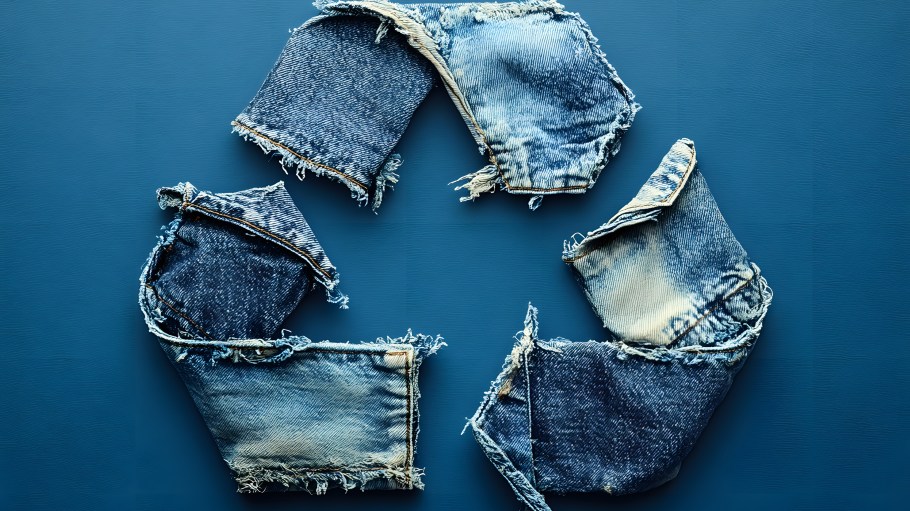
One variant of Liva Reviva™ M incorporates 30 percent used denim to create a fiber that is ideal for spinning and weaving high-quality jean textiles. Another, Liva Reviva™ M white, is geared toward home textiles products, such as towels, bedding and rugs. The manufacturer has also developed two varieties with its Spunshades viscose fibers, which are dope dyed before they are spun and which feature its Colour-Lock™ technology that resists fading.
Adding versatility, Liva Reviva™ M can either be used alone as the sole fiber for a garment or textile product, or it can be blended with other fibers. Some fitting blending partners are organic cotton and recycled polyester.

All the waste textiles for Liva Reviva™ M come from verified sources and are free from hazardous chemicals, while the wood pulp for Birla Excel is Forest Stewardship Council (FSC) certified. Providing further visibility from the sourcing of the fiber components through to retail, the Global Recycled Standard (GRS) certified fibers are traceable on Birla’s blockchain-based platform GreenTrack™.
“Liva Reviva™ M is a step toward reducing textile waste and repositioning the waste into meaningful textile products,” said Singh. “We expect Liva Reviva™ M volume to pick up with higher adoption in recycled denim, terry towels and rugs, both by Indian and international brands.”
Liva Reviva™ M is Birla’s latest foray in circular fibers, expanding its efforts in this area. In 2019, the company debuted Liva Reviva™, a fiber that mixes post-consumer waste content with wood pulp as the feedstocks for its man-made cellulosic fiber production. Because of the chemical manufacturing process that the fibers undergo, Liva Reviva™ is indistinguishable from virgin MMCF materials. Over time, Birla has increased the portion of waste textiles in Liva Reviva™, allowing it to save more fabric from disposal.
“Birla Cellulose is committed to address the larger issues of solving textile waste for which both chemical and mechanical recycled fiber are required,” said Singh. “The trends will pick up fast, and Birla Cellulose has the unique product of mechanically recycled MMCF fiber to offer.”
Click here to learn more about Liva Reviva™ M.