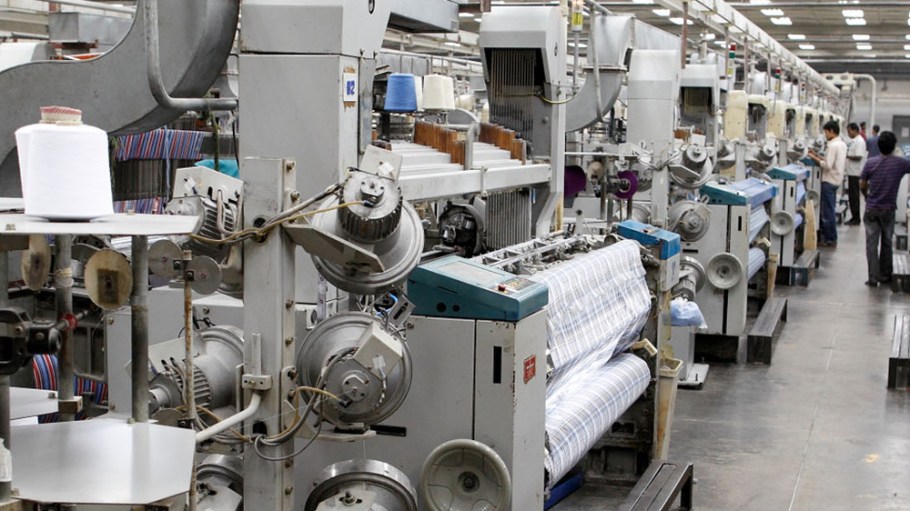
The protests at the beginning of the year began, peacefully enough, with a 40,000-strong human chain that stretched and twisted along the Dhaka-bound lane of the Nabinagar-Chandra highway, a main thoroughfare connecting the city of Gazipur to the rest of Bangladesh.
On Wednesday, part of a factory, a truck and three buses were allegedly set ablaze by former garment workers whose patience over the closure of Beximco Industrial Park had finally boiled over. They reportedly vandalized more than 50 other vehicles, attacked several journalists and created a roadblock that stranded commuters for hours until law enforcement officers dispersed the crowd with rubber bullets and tear gas. Firefighters from five units struggled to extinguish the flames that ripped through the ground floor of the five-story Grameen Fabrics and Fashion building, a social enterprise run by the Grameen Telecom Trust, which Nobel laureate and interim government leader Muhammad Yunus founded in 2010.
Related Stories
The fire, according to a statement from G.M. Tariqul Islam, the factory’s manager, destroyed fabric, machinery and electrical equipment worth 18 crore Bangladeshi taka, or nearly $15 million. Members of the army, industrial police and the regular police have been deployed in front of Grameen Fabrics and Fashion—temporarily shuttered—and around the area. Four suspects have also since been arrested, presented before the Gazipur Metropolitan Magistrate Court and placed on a one-day remand, though leaders and workers from Beximco Industrial Park told local media that “external provocation” was to blame for the escalation in violence.
Whoever was responsible, the event marks another bitter milestone for Beximco Group, a once-sprawling multi-industry conglomerate that operated one of Bangladesh’s largest vertically integrated textile and garment manufacturers, complete with a glittering clientele that included Marks & Spencer, Target, Calvin Klein owner PVH Corp. and Zara owner Inditex. Its crushing debt, estimated at a stunning 50,098 crore taka, or roughly $4.1 billion, finally caught up with it in December, when the company’s inability to open new lines of credit and fulfill orders resulted in the layoff of 40,000 garment workers across 16 of Beximco Industrial Park’s apparel factories, including Beximco Fashions, Crescent Fashion and Design, Shinepukur Garments and Yellow Apparels.
On Thursday, labor advisor M. Sakhawat Hussain said that Beximco’s massive financial liabilities have rendered any reopenings impossible. Simply put, he said at a press briefing held at the Ministry of Labour and Employment, the factories are unable to pay workers’ salaries. Hussain also said that the government has covered wage payments for three months since September and that a committee will be reviewing the situation later next week. A sale or lease of Beximco’s units are its available—and most likely—options.
”The government is always vigilant about ensuring that workers receive their rightful dues,” he said, before criticizing what happened the day before. “They resorted to arson, which is unacceptable. All those involved will face consequences.”
The loss of employment has left workers’ livelihoods hanging by a thread, according to Nazma Akter, founder and executive director of the Awaj Foundation and president of the Sommilito Garments Sramik Federation, both workers’ rights groups. She said that it seems like the country’s garment sector, which accounts for nearly 85 percent of its exports, is being roiled every day by one crisis or another. Sufficient compensation, nevertheless, remains at the heart of unrest that has permeated the sector since the sudden collapse of the then-prime minister Sheikh Hasina’s Awami League government in August.
“We have lost our jobs and are now unemployed, facing a very helpless situation,” Hadi Islam, one of the protestors, told The Business Standard. “The 42,000 workers in the factories are now in great difficulty, and we demand the reopening of the factories.”
“We are dying from hunger,” added Rahima Khatun, another former worker. “The factories have been closed for several months and have not reopened. Can’t you see the condition we are in?”
Md. Rafiqul Islam Rana, an assistant professor of retailing at the University of South Carolina, said that this was the aftermath of “unchecked” financial corruption by Salman F. Rahman, who founded Beximco with his brother in 1970 and was once Hasina’s most private industry affairs advisor.
Salman, who is currently behind bars, allegedly laundered millions of dollars to a Dubai-based company owned by his son through more than two dozen letters of credit and sales contracts between 2020 and 2024, according to the Bangladesh police’s criminal investigation department, which seized 250 crore taka ($205 million) in assets related to the case on Thursday. Earlier in December, the CID filed 17 cases against both Rahman brothers, their sons and 24 others for allegedly laundering some 1,000 crore taka ($820 million) to shell entities in Saudi Arabia and the United Arab Emirates using 93 lines of credit between 2021 and 2024. None of the proceeds from the supposed export of goods were expatriated to Bangladesh as required by law.
A Bangladesh Bank report published this week said that Beximco obtained almost 58 percent of its loans through its textile and apparel division and that a “significant portion” is considered unrecoverable. Of the 32 apparel factories that Beximco Industrial Park had listed, 16 “non-existent” factories acquired 11,923 crore taka ($978 million) in loans, all of which are in default, it said.
But Rana also believes there is more to the protests, echoing previous assertions from trade organizations such as the Bangladesh Garment Manufacturers and Exporters Association that “outsiders” were “trying to create chaos.”
“While thousands of employees and workers of Beximco Textiles are left without jobs to sustain their livelihoods, it is also crucial to closely examine who is instigating these worker unrests,” he said. “Based on my conversations with several garment workers from other companies, it often appears that external agitators are responsible for sparking these labor disturbances. The interim government must take immediate action to provide these people with the means to survive while ensuring that Salman F. Rahman is held accountable for his criminal activities.”