To hear insiders tell it, the reason why Bangladesh hasn’t had another Rana Plaza-like industrial accident has mostly boiled down to luck.
Plenty of credit should also go to the International Accord for Health and Safety in the Textile and Garment Industry, previously known as the Accord for Fire and Building Safety in Bangladesh, of course. Forged in the aftermath of the 2013 building collapse, which killed more than 1,130 garment workers and injured or maimed thousands more just outside the capital of Dhaka, the binding pact signed by labor rights groups and mostly European retailers such as H&M Group and Zara owner Inditex, raced to flag and fix hundreds of thousands of safety hazards in more than 2,000 factories, resulting in a 90 percent-plus remediation rate in a matter of a few years.
Related Stories
Civil society organizations have hailed the Accord, a trailblazing demonstration of the power of legal liability to drive systemic change, as the most effective labor rights initiative to shape the modern apparel industry. In what appeared like record time, Bangladesh had rehabilitated its reputation from a death trap for workers to one of the safest countries for them to ply their trade.
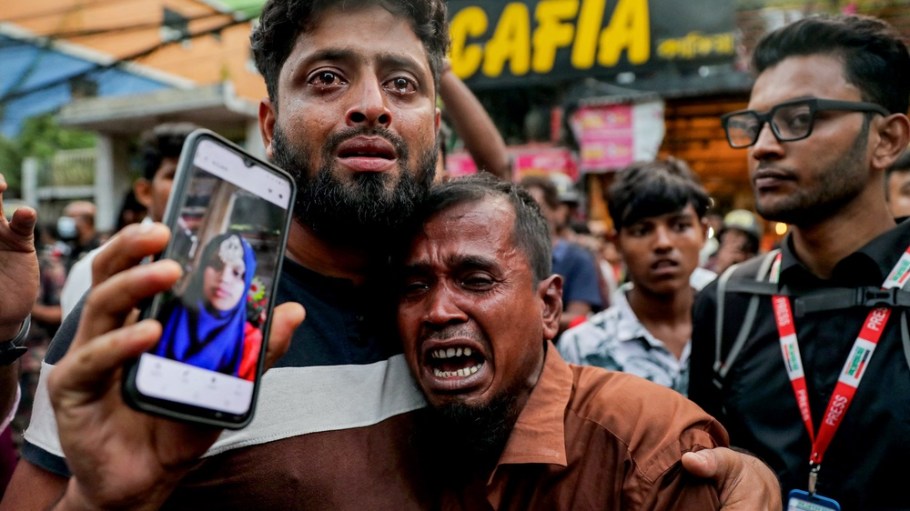
But the narrative is more complicated than that, as several tragedies and near-tragedies, which happened in quick succession, have shown. In October, a fire at Anwar Fashions in the Mirpur area of Dhaka killed 16 people, among them a 14-year-old girl, because a locked roof exit prevented their escape. The same month, six workers suffered severe burns after an explosion in a room housing the gas meter of two adjoining garment factories, M.S. Dyeing, Printing & Finishing and Fair Apparels, in the Fatullah neighborhood. In November, 200 workers at two factories in Gazipur—Fashion Pulse and Denimach—were injured after a 5.7 magnitude earthquake led to a body-crushing stampede that was reportedly compounded by locked emergency exits and main gates.
Ineke Zeldenrust, international coordinator for the Clean Clothes Campaign, a witness signatory of the Accord, has long nursed a sense of foreboding about where worker safety is headed in Bangladesh. Together with her counterparts at Maquila Solidarity Network and the Worker Rights Consortium, she dispatched a memorandum in February warning of a “backslide into disaster” because of factory owners’ growing encroachment into the RMG Sustainability Council, the tripartite body also known as the RSC that took over the Accord’s inspection and monitoring duties in 2020 and which broadly agreed with the assessment.
“There’s a sort of assumption that because the Accord is there and because there’s been all this attention for fire and building safety, that workers are now safe, when they clearly are not,” she said. “And instead of expanding and strengthening the program, it’s being very conservatively managed at the moment, largely because of the employer influence we believe in Bangladesh and because brands are saying, well, the Accord was sort of done, right? We now have other, more important things to do.”
That Anwar Fashion, M.S. Dyeing, Printing & Finishing and Fair Apparels weren’t employed by any of the Accord’s 230 brands—and therefore didn’t come under the purview of the RSC—was itself a problem. The Accord, Zeldenrust said, is only as good as the companies that sign on. The current deal, which has been renegotiated several times over the years, covers a little over 1,680 garment factories in Bangladesh. This is half of the 3,320 facilities that Mapped in Bangladesh, a project of the Centre for Entrepreneurship Development of Dhaka’s Brac University, has managed to identify country-wide.
“There are many more brands sourcing from factories like these that have not joined the Accord,” she said. “And if they had then, they could have seen that the buildings were unsafe. They could have all together ensured that the buildings got fixed. Everyone has enough knowledge and capacity to have avoided this. People suffered unimaginably, and all this could have been avoided with a little bit more attention.”
M.S. Dyeing, Printing & Finishing, was covered under the Accord until 2018, when it was publicly declared unsafe for reaching the final stage of the program’s escalation process without addressing life-threatening issues. This, Zeldenrust said, should have triggered the Bangladesh Garment Manufacturer and Exporter Association, the trade group to which it and Fair Apparels belong, to withdraw the so-called utilization declarations that allowed them to continue exporting their products.
There was at least one Accord signatory—Solo Invest—that sourced from M.S. Dyeing, Printing & Finishing, despite it being declared “ineligible” and without declaring the relationship to the Accord. Sabor, another Accord brand, likewise received at least one shipment from Fair Apparels, despite the factory not being listed on the Accord website. Zeldenrust said that the Accord should ensure these brands are held accountable for breaking the agreement’s terms. M.S. Dyeing, Printing & Finishing, Fair Apparels, Solo Invest, Sabor and the BGMEA did not respond to requests for comment. A spokesperson from the Accord said that it closely monitors all signatory brands to ensure they don’t source from ineligible factories and that it takes “swift and appropriate enforcement action” if rules are being flouted.
The Centre for Policy Dialogue, a Dhaka-based think tank, saw all of this coming as early as 2021. Factories that don’t fall under the auspices of the Accord or RSC—and even those that do—are supposed to be the responsibility of the Ministry of Labour and Employment’s Department of Inspection for Factories and Establishments, or DIFE. Its Remediation Coordination Cell, which was created after the Rana Plaza collapse with support from the International Labour Organization, has been woefully behind any corrective measures—at last count at 59 percent completion—partly because of the lack of consolidated brand pressure, and partly because the majority are housed in rented buildings whose owners are loathe to provide the necessary access for inspections, however infrequent or cursory they may be. DIFE did not reply to multiple emails seeking more information.
“The RSC currently oversees around 1,800 export-oriented factories working with International Accord signatory brands or factories independently registered through BGMEA/BKMEA, while the responsibility for ensuring safety in all factories—including informal and subcontracting units—rests with DIFE as the government authority in Bangladesh,” an RSC spokesperson wrote in an email, using an acronym for the Bangladesh Knitwear Manufacturers and Exporters Association, another trade group. “If a factory is not listed by a brand or they don’t list themselves with RSC, they are not within our coverage.”
Worse off yet are the informal factories that make up as much as one-quarter of the industry, yet are nearly completely off the radar—even DIFE’s—yet subcontract with larger facilities, said Tamim Ahmed, senior research associate at the Centre for Policy Dialogue. Anwar Fashion, which couldn’t be reached for comment, was one of them. There are Anwar Fashions “everywhere” in Bangladesh, but most especially in Dhaka, he said. Short of government intervention—shutting down a factory can have huge employment implications, which officials from Sheikh Hasina’s former regime didn’t want to deal with, he noted—there is little incentive for such factories to improve.
But such can also be the case with facilities with deeper pockets. Sometimes, factories just don’t feel the need to do anything, let alone maintain the constant investment that’s needed to tackle a dynamic issue like safety, Ahmed said. More than 12 years after the Rana Plaza disaster, a sense of complacency has also started to settle in, he added.
“I personally visited one pretty big factory, and I asked factory management, ‘Why aren’t you going for remediation?’” Ahmed said. “And they said they don’t have any pressure on them. Effectively, they work with non-traditional buyers: They are increasing their exports to Russia, to Brazil, to UAE. So Bangladesh’s buyers do not really consider safety as a key competitiveness factor. And without effective pressure or effective incentives, they’re not going to invest in their safety issues.”
‘It’s common sense’
Kalpona Akter, founder and executive director of the Bangladesh Center for Workers Solidarity, a workers’ rights group, as well as a former child garment worker herself, doesn’t fault the employees of Fashion Pulse and Denimach, of the allegedly locked exits, for panicking during the earthquake and the three aftershocks that followed. The implosion of Rana Plaza, too, started with a rumble and a shake.
But Akter can barely conceal her anger at the factories—Anwar Fashion in particular, because those deaths were unnecessary.
“How could you not learn that you’re not supposed to close the door when it is for emergencies and it’s about people’s lives?” she said. “It’s common sense. It doesn’t cost anything not to lock the gates.”
And while Akter appreciates all that the Accord has done, it dismays her that Fashion Pulse and Denimach were also Accord factories that made clothes for household names such as Bestseller, Benetton and Levi Strauss & Co., none of which responded to requests for a public statement. She said she fears a backslide in safety in the country that could be exacerbated by DIFE’s dearth of funding or resource allocation. If a 6.9-magnitude earthquake hits the Madhupur Fault in Tangail, said Rajdhani Unnayan Kartripakkh, a public agency responsible for coordinating urban development in Bangladesh, 40 percent of Dhaka’s aging, densely packed buildings could collapse, resulting in the deaths of more than 200,000 people.
“The whole country seems like it’s waiting for something big to happen,” she said.
It was also in October, when the accidents at Anwar Fashion, M.S. Dyeing, Printing & Finishing and Fair Apparels occurred, that Bangladesh ratified three key ILO conventions, including ILO conventions 155 and 187, which have to do with occupational safety and health. (The third involves preventing gender-based violence and harassment in the workplace.) Activists like Akter have been demanding these rights for a long time, she said, but it’s still too early to tell how the conventions will be leveraged to create safer workplaces, especially in this transition period before a new, permanent government is elected.
An Accord spokesperson refuted the allegations of locked exits, saying that the RSC’s post-incident investigation confirmed that workers were able to evacuate safely to designated assembly areas, though it was after assembling that “panic spread through the crowd,” leading to a surge of shoving toward the main gate that caused injuries.
“Most workers received first aid at local hospitals and were released shortly afterward,” the representative said in a statement. “Preliminary safety assessment forms were also shared with all covered factories to help ensure conditions were properly reviewed. Based on these inspections and the cases reported to the RSC, no immediate structural safety concerns have been identified.”
An RSC spokesperson said that the gates of Denimach were closed for “security reasons” but were opened immediately “in response to the earthquake situation.” Worldwide Responsible Accredited Production, which audited Denimach in October, said that it identified “some lapses” in the factory’s maintenance of its requirements and, as a result, placed it on a corrective action plan. Denimach, a WRAP spokesperson said, is scheduled for a follow-up assessment to ensure that it has addressed the unspecified issues.
“Bangladesh continues to be a critical sourcing destination for the apparel industry, and one that has made great strides in safety over the past decade, although clearly work remains to be done,” the spokesperson wrote in an email. “With thousands of facilities in a competitive export market, there is a high need for continual monitoring and many buyers rely on WRAP as a resource in this regard, because we maintain a vigilant watch over facilities we certify.”
Even so, a narrow focus on only monitoring factories as “the solution” to prevent future factory disasters does not delve deeply into the root cause behind why these disasters continue to occur, said Sanchita B. Saxena, senior advisor at Article One, a management consultancy specializing in human rights and sustainability. This includes the inherently exploitative nature of apparel production that is undergirded by unequal power dynamics between the global North and the global South.
“Suppliers are constantly getting pushed on price or constantly asked to do things faster, and that’s not realistic,” she said. “Monitoring is only the first step. There’s a bigger conversation about restructuring the relationship between brands and their Tier 1 suppliers from transactional to more cooperative and collaborative, and really thinking of a partnership. As well as creating better conditions for workers to be able to organize.”
There’s also a need for buyers to recognize the impacts of their purchasing practices, and to conduct deeper due diligence into the hidden corners of their supply chains where the greatest risk is concentrated, Saxena said. And when she says “shared responsibility,” she doesn’t mean “dumping everything on your supplier, sitting back and saying, ‘Well, I hope they do everything they need to do.’”
“Until then, unfortunately, these fires and these incidents and deaths are going to continue,” she said. “Not to negate the improvements that have been made, but brands can’t just go, ‘OK, we’ve done our part.’ There’s so much more.”