Fashion fakes aren’t just an issue of consumer trust or brand protection, but they’re also a matter of public health, Steve Lamar, CEO of the American Apparel & Footwear Association, said Wednesday.
Lamar was responding to the trade group’s latest brand protection report, released with the support of quality assurance firm Intertek and building on a 2022 study that found dangerous levels of hazardous chemicals in more than one-third of the nearly 50 counterfeit products tested.
Related Stories
AAFA member brands participated in the latest study by submitting counterfeit items for testing between August and December. The fakes were sourced through test purchases on e-commerce platforms or through seizures, then analyzed at Intertek’s ISO/IEC 17025-accredited laboratory.
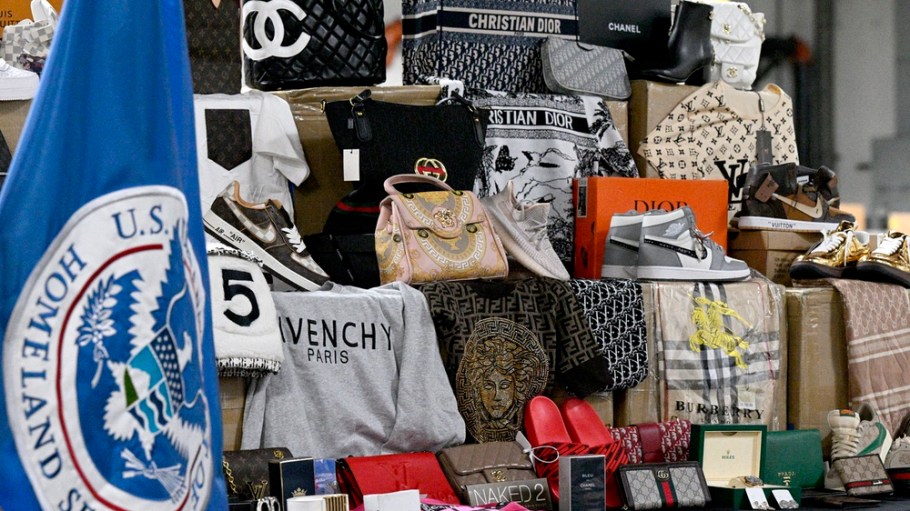
The follow-up, which examined almost 40 clothing, footwear and accessory copycats, found that 16 items—representing 41 percent of the samples—were laden with heavy metals, phthalates and the per- and polyfluoroalkyl substances known as “forever chemicals,” meaning that “American consumers are unknowingly bringing dangerous products into their homes,” the report said.
Eight items, representing more than 20 percent of the total counterfeit samples, failed due to excessive levels of phthalates, which are synthetic “plasticizer” chemicals that have been linked to reproductive issues, metabolic disorders, cardiovascular and respiratory problems and some cancers. A counterfeit pair of high-top sneakers, according to Intertek, contained nearly 327,000 parts per million of diethyl phthalate, or 650 times higher than the regulatory limit outlined in AAFA’s restricted substances list.
Another five products failed for PFAS, six for alkylphenols and alkylphenol ethoxylates, three for bisphenol A, two for formaldehyde, and three for heavy metals. The report highlighted one men’s jacket that “notably” contained as much as 191 parts per million of lead, a substance that can cause kidney and nervous system damage, especially in children. Another item, a sports hat, contained almost 10 times the regulatory limit for formaldehyde, which can cause skin irritation, respiratory issues, burns and, with prolonged exposure, is considered a potential human carcinogen.
These results underscore what the AAFA characterized as a “serious threat” that extends beyond the financial and reputational risks to its member brands, which include household names such as Adidas, Chanel, Hugo Boss and Levi Strauss & Co. With dupe products continuing to dominate the top 10 commodities seized by U.S. Customs and Border Protection for violating intellectual property rights, the organization said they also pose risks to workers, consumers, the environment and industry innovation.
For one of the failed fakes—a child’s T-shirt—the AAFA member brand worked with local enforcement to conduct a raid at a warehouse and adjacent production facility in Tumbes, Peru. Counterfeit goods were uncovered in conditions that were described as filthy, unsafe and unfit for workers, which the AAFA said were consistent with the “underground” operations brands often encounter. The raid resulted in the seizure of more than 5,000 finished counterfeit branded T-shirts, along with decals that had not yet been applied. Criminal charges are pending against the site owner and facility managers.
Holidays and major sporting events, such as Valentine’s Day, Mother’s Day, the Super Bowl, the Olympics and the World Cup, typically drive a surge in purchases of clothing, footwear and accessories, the AAFA said. With these and other occasions approaching, it added, it’s “critical” to push for stronger accountability and proactive measures to prevent the “fraudulent promotion of counterfeits,” often through unregulated third-party online marketplaces.
The AAFA is urging Congress and the Federal Trade Commission to find new solutions to tackle the “growing epidemic” of fraudulent websites, as well as explore pre-verification of paid advertisements across platforms to “sever the fraud impacting American consumers.”
The trade group is also lobbying for the reintroduction of the Stopping Harmful Offers on Platforms by Screening Against Fakes in E-Commerce, or SHOP SAFE, Act, which would require online retailers to meet the same standards as their brick‑and‑mortar counterparts in proactively preventing the sale of counterfeit or illicit products.
Another regulatory tool, the AAFA said, is the passage of S.2677/H.R. 4930, which would give CBP the green light to “clarify and expand” its authority to share IP-related information with rights holders and other relevant stakeholders.
“Counterfeit products continue to pose real risks to American consumers,” Lamar said. “It’s time to act decisively to safeguard consumers from dangerous counterfeits. We call on policymakers to immediately address the very real dangers being trafficked online.”