Shifts in consumer behavior and increased competition from e-commerce players have presented unique challenges for department store retailers. Toss in the delayed payments from the newly merged Saks Fifth Avenue and Neiman Marcus conglomerate on the luxury end, and it’s no surprise that vendors are seeking to woo the more stable specialty store sector instead.
These independent retailers have seemingly found the magic potion to survive and prosper in a difficult environment, thanks to their curated assortments and unrelenting focus on customer service. And the manufacturers who sell to them are reaping the rewards as well, posting solid sales so far this year despite the roller coaster issue of tariffs and other concerns impacting consumer confidence.
Related Articles
“Our spring season has been better than expected with all the turbulence in the market — from tariffs to political unrest and inflationary pressure,” said Dan Orwig, president of Peerless Clothing, the country’s largest tailored clothing manufacturer.
You May Also Like
Although tailored clothing might be the easiest discretionary item to pull back on, he said, “we continue to see the need for the dress side of things. It’s one of the bright spots in menswear.”
He said that even if the numbers of weddings have slowed since the pandemic rebound, the demand for occasion dressing remains strong for guys who have gone back to the office and are attending events. “It’s subtly added another dimension.”
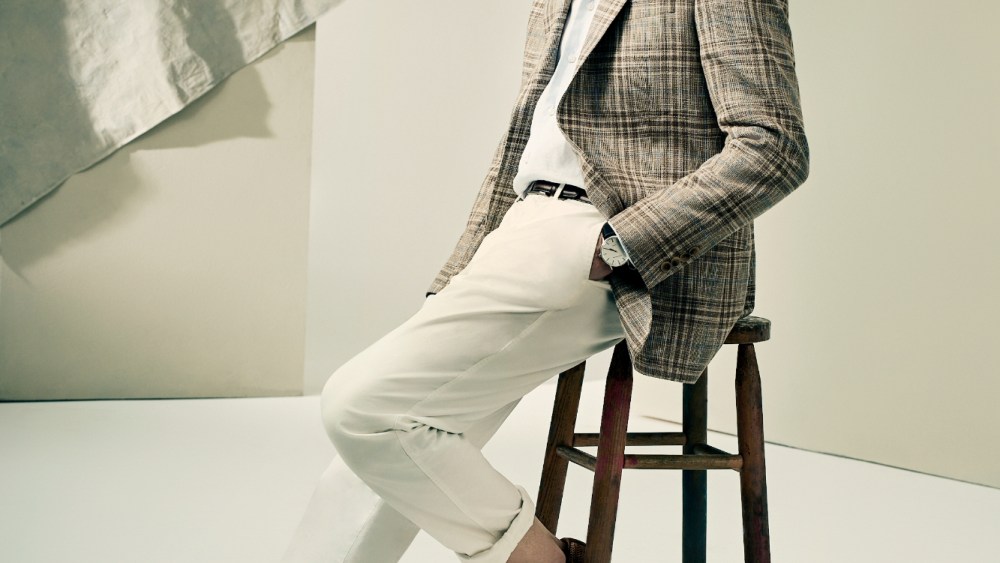
But that doesn’t necessarily translate into nested suits. Instead, “polished dressing” is where the opportunities lie, he said. A suit with a polo underneath, a dress pant with a quarter-zip or a sport coat all fit that bill.
“Sport coats have been on an amazing growth trajectory coming out of COVID-19,” he said. “But we’re also seeing the suit business gaining velocity.”
Peerless, which is based in Canada, did not raise prices for spring, but depending upon how the tariff situation ultimately shakes out, there may be some pockets that experience “slight increases” for fall, he said.
Even so, as a result of the strength shown in spring, Orwig is optimistic about fall, despite a potential price hike. “We’ve got the right product, trend and customer,” he said. “And we’re benefitting from that.”
Scott Ruerup, president of Peter Millar, is also experiencing strong sales.
“Overall business has been fantastic,” he said, “and the mood of the retailers planning to go to the Chicago Collective is consistent with that.”
Although the tariff situation continues to be a major talking point in the industry, the brand is doing everything it can to navigate the situation. “It’s such a roller coaster ride and we have no crystal ball, but we overcommunicate with our salespeople and our customers and speak to our supply chain partners every day.”
He said if necessary, Peter Millar, which is owned by Richemont, will pass along some price increases, but “we won’t overreact. Our prices are moderate so a slight increase won’t make a difference.”

He said the company started moving production out of China around six years ago and doesn’t manufacture much there anymore. Instead, it uses plants all around the world where the tariffs are expected to be lower.
“We’ve only seen around 30 percent of our customers so far, but we haven’t heard of any buying resistance,” he said. “Business is really good out there.” That’s especially true of specialty stores. “Price is the number-one question for department stores,” he said.
At the Chicago show, Ruerup said the company will be showing its Crown, Crown Sport and Crown Crafted collections, all of which will have price increases below 10 percent for spring. He’s expecting strong reaction to Crown’s casual lifestyle polos, and Crafted, the company’s performance luxury collection, is expected to find fans for its sweaters, polos and suede layering pieces in light, springlike colors such as rose, purple and biscotti.
Alex Faherty, chief executive officer of Faherty Brand, characterized his company’s sales as “really solid — not insane, but solid and steady. The business sentiment improved as we got closer to summer. People were buying closer to season, especially with all the supply chain issues.”
He said the company’s men’s business has been especially strong despite the “cloud of economic uncertainty” that continues to dominate the news. “The stock market keeps going up and the general mood is positive,” he said. “Guys are continuing to dress better after their super-casual COVID sweatpants phase. They’re stepping up their game. Younger guys are more stylish and look better than ever and older guys are trading out of their golf polos.”
As a result, Faherty has seen sales increase in pieces such as sweater polos and “more fashion items. And linen has been amazing.”
Like many other brands, Faherty has been shifting its sourcing from Asia and now counts the continent of Africa, the Middle East, Turkey and other countries as their primary production regions. The tariff issue caused the company to raise prices in the low-single digits and they may be forced inch them up again, but that remains to be seen.
Although Faherty may be best known as a summer beach-y related brand, he said the business is evenly split between the first and second half. As a result, he’s anticipating a good fall and holiday. “We continue to evolve the brand and make the colors better. It’s not easy, but if you’ve got the right product, you’ll do well.”
And he’s looking forward to the Chicago show. “It’s the number-one show in America,” he said. “The cornerstone of our business is specialty stores and it’s a great place to reconnect.”
Peter Leff, executive vice president of wholesale at Tommy Bahama, also reported strong sales. “We had a very solid and positive second quarter,” he said. “And we have positive momentum going into the third quarter.”
Leff attributed the strong showing to the popularity of the brand’s technical product, led by the Island Zone collection, as well as short-sleeve wovens in “happy styles, colors and patterns,” a hallmark of the brand.
He said because the company had addressed the tariff situation early, everything was shipped on time, although the added tax will result in some minor price escalations of around 3 to 8 percent on some spring 2026 product. “But not for fall. We aligned with our manufacturers to cover the added tariffs or cover them ourselves.”
Despite the price increase, he said he feels “very positive” about the upcoming spring season. “We’re a warm-weather brand and do 65 percent of our business in the first six months,” he said. “As long as we have newness and color, we’ll be successful.” He said he expects to see more than 100 specialty stores at the Chicago Collective, and most are generally upbeat about their business. “There’s definitely some caution,” he said. “Traffic is down but conversion is up and e-commerce continues to be good. Some stores lack an entrepreneurial spirit, but others see it as an opportunity to gain market share.”
Michael Burns of the M5 showroom said that the specialty stores he works with are doing really well, particularly those in the upper end of the market. “There’s a little more caution with Saks and Neiman’s with brands worried is they should sell them or reduce the amount considering the money they’re owed.”
But the beneficiaries will be Nordstrom, Bloomingdale’s and the independent specialty stores, who don’t have the same cash flow issues.
Because a lot of his brands are European, the issue of tariffs has been front and center for months. “Columbo and others set their prices in January and February and decided not to increase prices. Now, it’s all wacky and we’re going to get hit, so it’s a problem. We’re trying not to pass it on, but we don’t have that margin built in.”
Among the brands he expects to be most popular at the Chicago show are Jacob Cohen, a brand that started out as a five-pocket pant label and has expanded into other silhouettes; Columbo, a knitwear specialist that recently introduced ready-to-wear, as well as Boglioli, an Italian suitmaker.
“We do a lot of trunk shows and events in stores,” he said of his brands. “These types of stores want a lot of interaction with brands.”