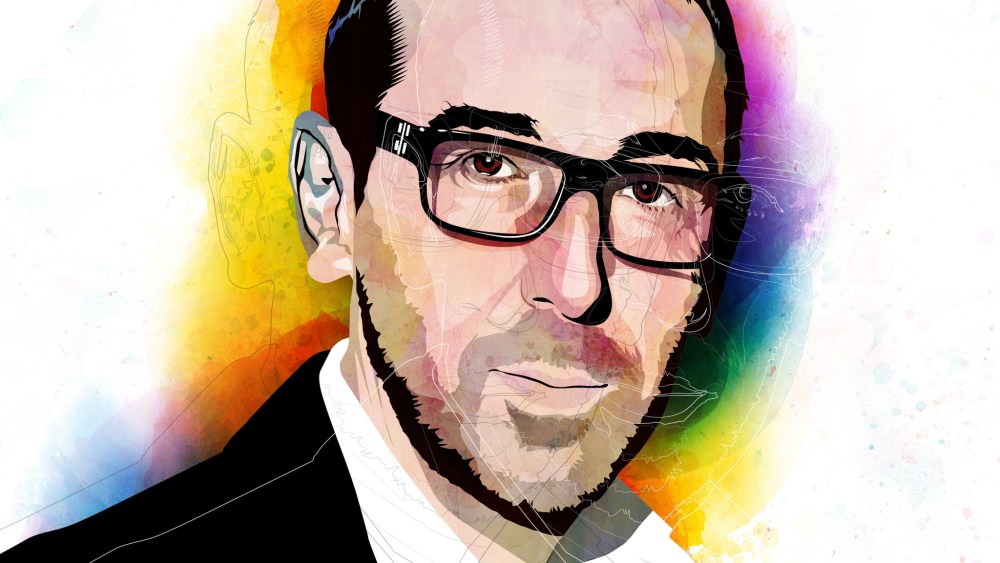
Fashion thrives on change and the most successful designers are expected to have special antennas that catch and anticipate people’s desires and needs, daring to forge paths and introduce designs that are desirable and commercially strong.
Alessandro Sartori, who will receive the WWD award for Menwear Designer of the Year recognizing his work as artistic director of Zegna, falls into this category, as he has spearheaded a major stylistic shift at the storied menswear brand that is also boosting the company’s business around the world.
Related Articles
Soft spoken and affable, Sartori during an interview at the sprawling Ermenegildo Zegna Group headquarters in Milan pinpointed the fall 2021 collection presented in January 2021 as the watershed moment for the brand, establishing a precise and significant aesthetic change.
You May Also Like
At the time, he called the collection “The (Re)set,” pointing to an entirely new course for Zegna, acknowledging that traditional formalwear had run its course. “During COVID-19, we all got used to comfort, locked up at home during the pandemic,” he said.
Sartori, however, had had enough of sweatpants and did not take the easy sportswear road. He proceeded to blur the lines between luxury and leisurewear, elevating both, creating functional and comfortable yet exclusive garments.
The reset included the introduction of an innovative cashmere jersey fabric developed by Zegna — superlight yet reminiscent of felt — on fluid suits in generous silhouettes or on kimono-style belted jackets and oversize blazers with no internal canvas or linings, and added a strong knitwear component to the lineup.
That did not mean renouncing Zegna’s time-honed sartorial techniques. On the contrary. He praised the craftsmanship of the artisans and the pipeline built over the years by chairman and chief executive officer Gildo Zegna, who has invested in a strong and reliable supply chain that allows the designer to raise the bar on research and development of unique and precious fabrics. In addition to its own Lanificio Zegna, the group’s textile supply chain includes Lanerie Agnona, Tessitura di Novara, Bonotto and Dondi, a 60 percent stake in Tessitura Ubertino, all acquired over the years. In 2018, the group also finalized the acquisition of a controlling stake in Pelle Tessuta, which specializes in the weaving of leather, and bought a majority stake in Cappellificio Cervo, a historic men’s hat brand based in Biella. Last year, the Ermenegildo Zegna group joined forces with Prada to acquire a majority stake in Filati Biagioli Modesto SpA, which specializes in the production of cashmere and other precious yarns.
From that (Re)set collection, Sartori has further developed his personal take on menswear, culminating in a successful spring 2023 collection and a signature style. So much so that his chore coats, overshirts and deconstructed suits in soft and dusty monochromatic palettes, from powder white and buttercup to dusty rose, honey, vicuña and mocha, are instantly recognizable.
For spring, he experimented with light shapes and technical finishes, developing a new leisurewear silhouette, and subverting under and outer layers, as his shirts became jackets and jackets became shirts. The hybrid function added modernity to wardrobe staples.
His knowledge of fabrics is encyclopedic. He has been lacquering jacquard tops; rubberizing leather and nylon, and using recycled paper, which telegraphs Zegna’s focus on sustainability and its “Oasi Cashmere” traceability project, increasing the use of wool and technical fabrics made from preexisting and postconsumer sources. His ability with fabrics is partly due to his years at Zegna and partly a consequence of his background — and his excitement in narrating the qualities of textiles is palpable. He hails from Biella, not far from Zegna’s Trivero headquarters, and received a degree in textile engineering in Biella, followed by a degree in fashion design at Istituto Marangoni in Milan.
Indeed, Sartori and Zegna go a long way back, as he began his career at the Italian group in 1989 as a menswear designer and became creative director of the Z Zegna line in 2003. In 2011, he was appointed artistic director at Berluti and left five years later to rejoin Zegna in his current role.
Sartori has been part of the momentous transformation of the company, which includes its rebranding into a single label and initial public offering in New York last December. The designer highlighted the productive relationship with Gildo Zegna and credited the executive for shifting the collections into the luxury, elevated leisurewear territory.
“I always have interesting conversations with Gildo and [his son] Edo [Edoardo Zegna, chief marketing, digital and sustainability officer of the group]. There is chemistry, which is not a given, we share common values and goals, they are open to innovation and work is our passion,” said Sartori.
“We defend our craftsmanship,” he said, citing the Zegna training school. “The made in Italy production and being Italian is also very important, we are proud to be Italians.”
Craftsmanship at Zegna is modern, though, he insisted, and technology continues to evolve to respond to the times and today’s fashion.
He pointed to the techniques employed to dye those monochromatic looks, depending on the weight of the turtleneck, jacket and pants, or the efforts made to find unusual colors. Camel at Zegna is not simply camel, as the artisans use a touch of pink to remove the yellow base.
Expanding the palettes may be traced back to his admiration as a young designer for Romeo Gigli and his “genius aesthetics and different use of colors.”
The ‘80s decade, David Byrne and David Bowie, “those crazy proportions,” also strongly influenced his style, mused Sartori, who enjoys electronic music, including that of Byrne’s Talking Heads or Placebo, for example.
Sartori is also passionate about vintage cars dating back to the end of the ‘60s to the early ‘80s, citing from his collection the Lancia Fulvia HF, among others.

Photography is another outlet, and he enjoys shooting mainly urban landscapes.
Metropolitan milieus are also where his new suits have gained traction, said Sartori, citing cities ranging from Singapore and Dubai to London, Paris and New York. “America is on fire, as is Europe and the Middle East. I am extremely satisfied because I see that this specific aesthetic sells. Suddenly it became hot,” he said simply. He expressed his belief that it responded to expectations and a need “that were in the air” and which were accelerated by the pandemic, to “feel good in beautiful and precious garments, comfortable yet chic, elegant and sophisticated.”
To be sure, Gildo Zegna at the end of August, commenting on the group’s performance in the first six months of the year, trumpeted strong sales in the U.S., Western Europe and the United Arab Emirates, which helped the company report a 20.8 percent growth in revenues in the period to 729 million euros.
During its capital markets day last May, the group said it was aiming for revenues to exceed 2 billion euros and for adjusted earnings before interest and taxes to reach at least 15 percent of revenue.
Sartori has also also been instrumental since his arrival in channeling the previous three collections into a single label; in the rebranding, and in Zegna’s communication activities. The menswear label dropped the name of the founder, Ermenegildo, and became known simply as Zegna last year. The logo was updated in a modern font, with a double stripe and a road symbol, inspired by Route 232 that the founder built over 111 years ago in the mountains of northern Italy around Trivero. The symbol is in a vicuna color that celebrates one of the most precious fabrics used by Zegna.
Globally, the brand’s stores are being revisited to reflect these changes.
Over the years, Sartori has launched memorable advertising campaigns, from the “Defining Moments” series, the last chapter directed by Academy Award-nominee Luca Guadagnino in 2019, comprising three short films featuring Boyd Holbrook, André Holland and William Chan.
Sartori has been championing diversity and integration for some time now, staging for example the brand’s fall 2019 show at Milan’s Centrale railway station because, he said at the time, it was “a place of connection. We liked the idea of a big hub where people are coming and going, where we connect diversity, different stories, but most of all, human beings.” For the “Defining Moments” campaign, the designer among others paired Javier Bardem and Dev Patel, photographed by Craig McDean, and Robert De Niro with McCaul Lombardi and photographed by Francesco Carrozzini.
At the same time, he has turned his attention to defining modern masculinity, launching the “What Makes a Man” campaign fronted by “Green Book” actor Mahershala Ali.
Sartori has not turned his back on tailoring entirely, but he said that made-to-measure and personalization are drivers in this category, worn now more on special occasions and events.
“Timeless designs that will last forever, passed on as gifts, to be repaired — these are some of my aspirations for Zegna,” he concluded.