
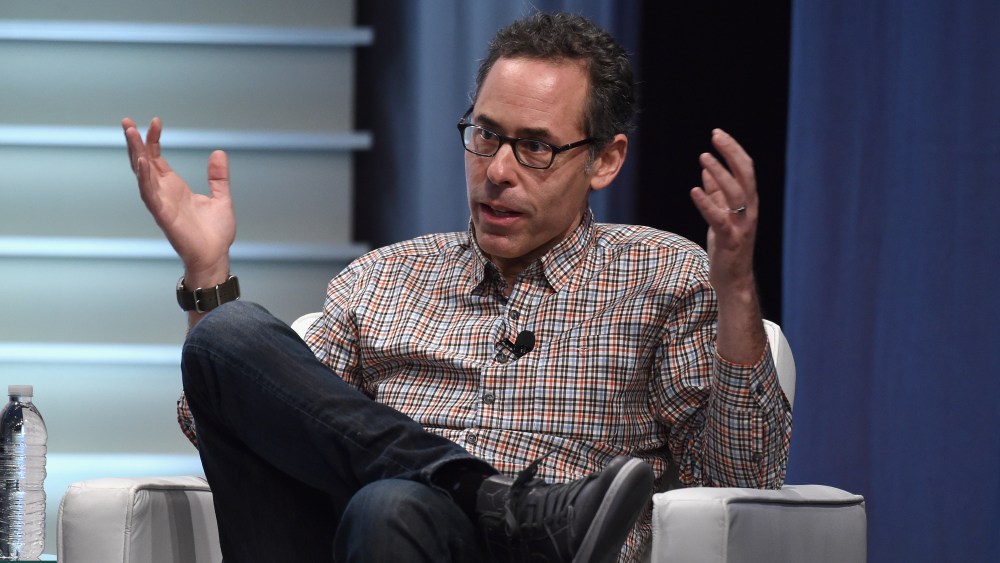
SAN FRANCISCO — Dan Porter is a matchmaker between New York designers and the burgeoning digital platforms that help spread their message beyond the tents at fashion week. As head of digital for William Morris Endeavor, which recently merged with New York Fashion Week producer IMG, Porter was behind promotions like Twitter’s TweetCam at Prabal Gurung; the takeover of Facebook’s official fashion page — including video content both backstage, in the front row and on the streets; Periscoping from Rachel Zoe’s presentation, and sharing stories on Snapchat from Jeremy Scott and others.
Here, Porter talks with WWD about what’s on his radar for covering fashion week now and into the future.
Related Articles
WWD: Talk about what you worked on at fashion week.
You May Also Like
Dan Porter: We really focus on deep integration with the social platforms, because that’s how an enormous number of people experience fashion week. By working closely with the platforms and us facilitating those relationships further for the designers, we’re able to get a lot of reach.
Twitter we worked very closely with around their #fashionflock; we had a party with them, we flew digital influencers who are our clients from the WME side, they shared content that was widely consumed [and] we had a Twitter mirror and a TweetCam backstage.
You want to get content that feels different and original, and imagine that everyone in their feed is seeing lots of user-generated content, which probably looks similar, so you want to play with that.
It’s very competitive.
This is the third show that we had the team at, and each year has gotten bigger. This is the first year that we worked with Tumblr, and we had 10 all-stars to capture content.
WWD: So IMG had their own team providing all this content for the designers?
D.P.: We had a full media room with photographers, videographers, editors, graphic designers, and people posting in real time. I describe it like a mobile home during the Olympics. They were in the control room, saying, “Does this look good in slow motion?” or “Should we do a stop action for this?”
WWD: It looked like slow motion was a trend this year.
D.P.: I was at the Jeremy Scott show, and the models wore these blonde wigs and the slo-mo of hair bouncing was amazing. There’s this relationship between sports highlights and fashion highlights. Everyone is trying to create that moment.
WWD: This is your third time working on fashion week. What changes have you made?
D.P.: This is the first time we worked with Snapchat, so they are only going to be mobile-quality photos, so it’s less polished. It’s a different vibe, a different type of content for us to produce. Tumblr has more a gif feel. So this year we got more polished on our polished stuff, and more organic, or grassroots, in our Tumblr and Snapchat. It was the first time working with Twitter in a more organized way and producing content at a regular clip.
WWD: When you think of runway shows or photo shoots, everything is so carefully orchestrated. Is it a struggle for the fashion industry to embrace such an impromptu type of coverage?
D.P.: I do think that’s true. There’s an element where you have to be really good at adding that polish after the fact. I think that’s why so many people like slow motion. You can take a moment that you have a little more control over and find the most polished aspect.
The organic or the fresh nature of messaging platforms like Snapchat give a whole different vibe to it. At the end of the day, you want as many people to have access — to think about who [designers] are, and what they are doing.
Originally we felt if we could get backstage, it would be great. But the models and designers are capturing content, so being there is just part of the battle. Really getting that workflow to capture unique and fresh angles, and keep it quick-moving, is important. It matters that you’re there, but you really have to up your game in terms of what you do with that content.
WWD: It must be hard to be original when everyone has a smartphone.
D.P.: You do see the difference in quality between professionally produced content, with higher-end cameras, but you’re really just trying to cover the range. If it is going to feel organic, then it should be really organic. It’s hard to fake higher-end stuff with a phone.
WWD: Why was it important to broadcast all this content from fashion week?
D.P.: Our job is to provide the best possible platform for the designer. At the elemental level, the designer doesn’t have to do all these things, like do security and rent the space, in the physical space, so even if a designer is terrific at social, they don’t have the scale we have. We are not only giving them the scale in the physical but in the virtual space, and everything matters — the intangible value to fans, the ability to reach their fans, the ability to get feedback through likes and shares. Our number-one goal is, how do we support the designer and make it the best experience for them?
Our secondary goal is, once we’ve met that need, how can we capture that content on a macro level and bring a holistic experience of fashion week to people around the world who don’t have a chance to attend? That’s good for fashion and fashion week. It’s good for everyone in the ecosystem, from the kid in Kansas who dreams of being a fashion designer, to all the way up.
WWD: What were some of the successes this year?
D.P.: The Snapchat live stories were really fun. We helped Alexander Wang get a special filter at his after party. The whole fashion flock thing for Twitter, which is really about organizing fashion-related content on Twitter, and bringing digital influencers who are 17, 18, 19, 20 into the mix and having them share in their own voice on Twitter, that was really fun.
One of them, Loh Anthony, does videos on YouTube. Marc Jacobs saw one and imitated him, and it was this kid’s dream to meet him and we facilitated it for him. It was hilarious and fun and felt authentic, and that’s, at the end of the day, why people connect with digital talent.
A lot of the clips we did, we spent a lot of time on getting the right music, the right filters and cuts. Our stuff was really good and fast and really covered a lot of angles, so you felt like you were there in a 360 sense.
WWD: Are people noticing these efforts?
D.P.: Our Twitter account for @NYFW grew astronomically. Facebook we got a lot of engagement. A lot of it we worked through our IMG models account and our NYFW account on Instagram. It was really positive. Overall, we were really happy with the ability to tell a story in real life and to not just share some pictures but to tell a visual story.
WWD: How do you keep up with the change of pace to know what is the important platform to use?
D.P.: It is hard. That includes, like, drone shots or GoPro shots? Part of it is because we also, on the WME side, represent so much digital talent. Their whole lifeblood is figuring out what platforms make sense for them and how to use them in the most current way. That really keeps us close to where digital talent is gravitating.
The other honest answer is we download every app that comes out, because sometimes it’s not just about the platform, but it’s about the app that lets you chop up the photos and create gifs or create four photos on one screen. And sometimes you see the talent that you work with, and you see something and say, “How did you make that?” And they say, “Oh, everyone is using this.” There is no rest in terms of figuring out those angles.
WWD: Let’s talk about the future. You recently announced a TV project with Apple.
D.P.: There’s a whole fashion channel called Made 2 Measure that will launch exclusively on Apple TV. It will tell stories about fashion and designers, and use some of those stores that we were telling about fashion week.
I think there was a lot of excitement around Periscope around live-streaming. This was the first year we did it in our app. This was the first time you could just open the app and choose a show from a live-stream.
WWD: It seems like there are a lot of sports comparisons.
D.P.: Sports is about live consumption and highlights, and there are not a lot of other good reference points when you’re talking about live viewing and highlights, so it’s an obvious spot to look. It’s big business, so there is a lot of investment in keeping that fresh for consumers. It’s the same for us. We are working on an awesome live broadcast, and often with the live-stream, you will see much more because of where the camera is, and we’re looking at a way to create those highlights for people who want to see their favorite designers.