
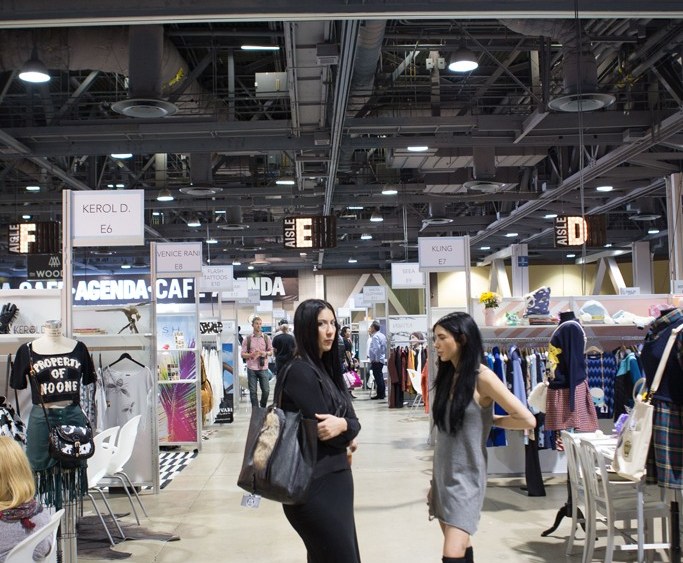
LONG BEACH, Calif. — Action sports brands have hustled to turn a new leaf and the shakeout has left the industry with several new standards.
Efforts to globalize executive ranks and streamline businesses resulted in a smaller number of stockkeeping units and fewer styles, while the troubles of some of the larger brands to sell their entire lines at full price have paved the way for a greater focus on capsule collections and startups — all trends that converged during the Agenda trade show at the Long Beach Convention Center.
“The consumers want newness,” said Kevin Bailey, president of Vans, VF Corp.’s 49-year-old skate brand that is freshening its fall offerings via collaborations with Eley Kishimoto, Disney and Takashi Murakami. “You can stay true to your heritage but you have to bring newness.”
Related Articles
Capitalizing on the demand for newness at Agenda were startups such as Depactus and Cova, which caught the attention of Duke Edukas, co-owner of Surfside Sports in Costa Mesa, Calif. Former Electric, Billabong and Volcom executives launched Depactus, whereas a pair of former Quiksilver executives backed Cova.
“Their lines were on point, and the people behind the two brands are seasoned veterans of the surf-fashion part of the business,” Edukas said.
You May Also Like
Stance continues to be one of Surfside’s most profitable brands on a per-square-foot basis, and the company’s expansion into underwear could be a boon for sales.
“Never in my wildest imagination did I ever think we could sell as many socks as we now do, and [be] dominated by a single brand,” Edukas said.
Streamlined design teams now create for a global audience.
Volcom rebooted its men’s denim line to nearly halve the number of styles from seven to four. The women’s side of the Kering-owned brand showed off its Stone Row capsule collection that includes a $335 leather jacket, shorts for $39.50 and an embellished jacket retailing for $102.
“It’s not the stuff [the customer’s] going to turn and burn,” said Gina Turpel, Volcom’s women’s marketing director, who added that surf boutiques such as Surfside will be carrying the elevated collection.
Element Skateboards, part of Australia’s Billabong International Ltd., revamped its backpack line for fall and expanded its Wolfeboro Collection of men’s jackets under its own global restructuring. It also expanded its retail business, having opened a freestanding store in London last month with plans to open another in Costa Mesa this year.
Despite the uncertainty wrought from restructuring, investors see opportunities in the sector.
Last month, Altamont Capital Partners revealed a deal to acquire a majority stake in Fox Head Inc., a privately held motocross equipment, apparel and accessory brand based in Morgan Hill, Calif. In addition to Palo Alto, Calif.-based Altamont, which owns action sports accessories company Dakine and snowboarding equipment maker Mervin Manufacturing, motocross athletes Ricky Carmichael and Carey Hart also invested in Fox. The founding Fox family retains a minority share. Pete Fox, who left as chief executive officer last February to make way for Nick Adcock, returned as chief creative officer. Scott Olivet, an operating partner at Altamont, stepped in as interim ceo following Adcock’s departure. Hybrid Apparel became a strategic supply chain partner to the company.
“There was a lot of doom and gloom and there was a lot of restructuring, but if anything, our whole industry sees it as a good thing,” said Agenda show founder Aaron Levant. “There is some of that still going on — a changing of the guard, big companies shrinking. But for the overall market, it’s a good thing because it creates new opportunity for real estate in the store for new brands.”
Much of what was shown at Agenda continues to be dominated by men’s brands, pointed out Gabby Barreto, a women’s footwear buyer at New York-based Shopbop.com. Still, she found the show helpful in viewing what’s available in the action sports space.
That was also the case for Nicole Haase, senior director of merchandising at San Francisco-based ModCloth.
Madrid-based Kling had some memorable pieces that were what Haase described as a “cute and feminine aesthetic” in the sea of action sports and streetwear brands.
She noted bohemian looks are still going strong, along with silhouettes such as bell-bottoms and maxi skirts.
“There was a clear lack of denim presence this time as I saw pants and jackets made from rayon, spandex and corduroy, which leads me to assume that denim has been soft for most retailers and they are looking to invent new products to offset this downtrend,” Haase said.
Surfside Sports women’s wear buyer Meredith Peterson said relaxed jogger pants and sweaters were key items shown by brands for fall.
“A couple of the brands that stood out to me are Obey Women’s and Amuse Society,” she said. “They are both a little more fashion-forward than your typical surf brands, but fit our customer base very well.”
She added Obey’s elevated women’s line has helped it evolve as a fashion brand.
“We used to do mostly printables with them, but the last few seasons their sportswear has looked amazing,” she said.
Agenda also served as a venue for launching new women’s brands. Here are a few notable debuts.
NEXT: Vans x Eley Kishimoto >>
Brand: Vans x Eley Kishimoto
Debut Season: Fall 2015
Prices: At retail, $14 to $110 for apparel and accessories; $19 to $75 for footwear; and $150 for snowboarding boots.
Background: Promoting so-called wearable art through easy separates brightened with graphic prints, London-based women’s label Eley Kishimoto is hitting the youth market with Vans. Husband-and-wife design duo Mark Eley and Wakako Kishimoto, who once designed for Cacharel, were already fans of the footwear brand prior to the project, having sported the slip-ons on their feet. Owned by VF Corp., Vans views collaborations like this as a crucial means to add freshness to its business, which has tracked 20 consecutive quarters of double-digit growth, according to Bailey. Hitting Vans’ worldwide stores and Web site in July, this tie-up is one of five slated for the women’s business this fall. The Cypress, Calif.-based brand is also lining up collaborations with skateboarder Geoff Rowley, contemporary footwear designer Charlotte Stone and Walt Disney Co.’s Winnie the Pooh, Mickey and Minnie Mouse, along with a bevy of princesses.
Signature Styles: In addition to transferring its iconic flash print on 34 stockkeeping units, including jackets, drapey pants, sneakers and tote bags, Eley and Kishimoto interpreted Vans’ signature checkerboard and waffle sole pattern. For the first, it broke up the black-and-white checks and tinted them in pastel hues. The waffle sole got a makeover in baby blue. “Vans is always about prints and these guys love prints,” Bailey said. — Khanh T.L. Tran
Brand: Sunday by RVCA
Debut Season: Fall 2015
Prices: $28 to $45 retail
Background: What started four years ago with a bralette dyed in a couple of colors to complement its surf-inspired clothing has expanded into RVCA’s first women’s sub-brand. Sunday, as the new venture is called, includes 24 pieces cut from cotton, viscose jersey and Modal, designed to move from the bedroom to the farmer’s market to whatever casual outing a Millennial has planned for the weekend. While a rarity in the action sports sector, the line-up of loungewear and intimates meets a growing demand in the women’s business. To wit, RVCA said Nordstrom expressed interest in picking up Sunday, which offers everything from bralettes and bikini briefs to rompers, shorts, dresses and pull-on pants. “It’s such a huge market outside of our industry,” said Lauren Holtz, women’s national sales manager at Billabong-owned RVCA.
Signature Styles: Cutouts make a bralette too interesting to hide under clothes. Perhaps that’s why a sleeveless hoodie dress is designed with revealing armholes. A subtle snakeskin print and geometric grids spruce up the neutral palette of black, gray and beige. — K.T.L.T.
Brand: Patagonia Denim
Debut Season: Fall 2015
Prices: $99 retail
Background: Outdoor brand Patagonia is striving to set a precedent for environmental responsibility in the jeans business by launching a denim program that emphasizes fair trade and organic materials. In an industry known for using vast amounts of water, sandblasting, chemical-intensive dyes and other processes that aren’t sustainable, Patagonia is offering three women’s fits made of organic cotton fabric woven by Arvind Limited and sewn in a fair trade-certified factory in Sri Lanka. “We look at product launches like this as a way to change the industry,” a Patagonia spokeswoman said.
Signature Styles: By choosing a simple dark rinse and eschewing any techniques to distress the denim, Patagonia said it uses 30 percent less energy and produces 25 percent less carbon dioxide. The cropped boyfriend, straight and slim styles are intended to become wardrobe staples. — K.T.L.T.
Brand: RVCA Denim
Debut Season: Fall 2015
Prices: $64 to $90 retail
Background: Building on its previous denim selection that was based on one fit and three washes, RVCA is offering four fits for jeans, a jacket and two types of shorts, all made from fabric sourced from Cone Denim. It covers the bases of the fit spectrum, starting with a low-rise skinny style zippered at the ankle and moving to mid-rise and high-rise skinny jeans and a boyfriend cut. The shorts come in a slouchy fit as well as a high-waisted cutoff. With an array of washes, such as solid black, acid wash, inky blue with slight whiskering and a bleached and distressed option, it’s aiming to outfit the youthful customer who likes the trends offered by premium denim brands, but not the prices.
Signature Styles: Made in Mexico, the bleached and distressed boyfriend jeans and acid wash jean jacket combine value with style. — K.T.L.T.