MILAN — European luxury furniture makers have been saved from U.S. President Donald Trump’s latest round of tariffs — for now.
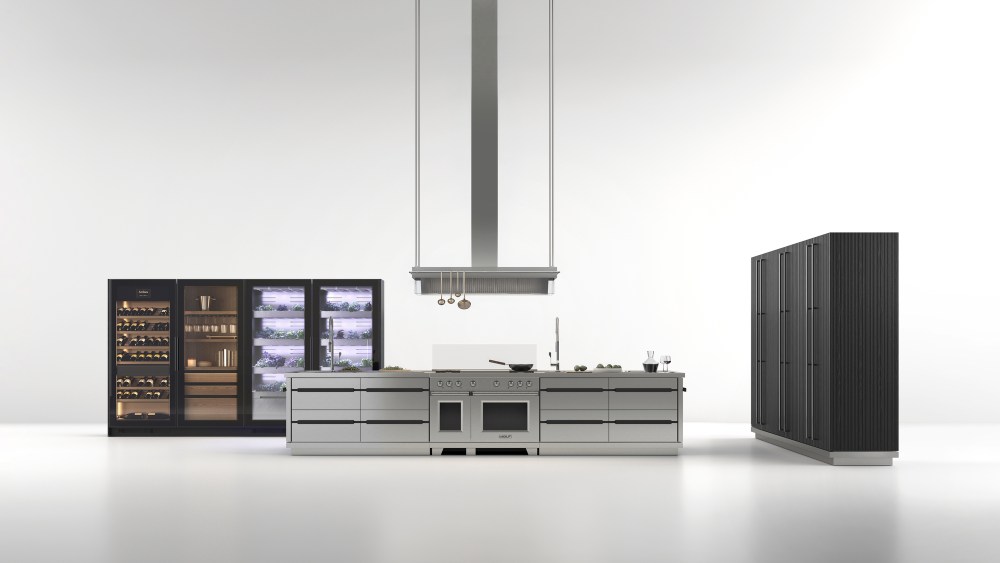
The comprehensive 15 percent tariff cap on EU exports, negotiated between the U.S. and the EU in July, is protecting luxury furniture makers, the majority of which are based in Italy. This includes recently announced duties on kitchen cabinets, bathroom vanities and certain upholstered wooden furniture, leaders confirmed this week.
“We’re still on guard,” Claudio Feltrin, the president of the nation’s wood and furniture supply chain federation Federlegno, told WWD. At a press conference in Milan on Monday unveiling Salone del Mobile.Milano’s new bridge-building event in Riyadh, Feltrin urged furniture leaders here to focus on the Middle East to counterbalance unpredictable trade policy from the U.S.
Related Articles
“The tariffs have confirmed this need and requirement on all of our parts. We have everything necessary to travel around the world; we are recognized for it. However, above all else, we must also go to places that are opening up,” he urged furniture leaders here.
You May Also Like
President Trump’s trade policies have greatly embraced Section 232 of the United States Trade Expansion Act of 1962. The section allows the president to impose restrictions at will on imports if they are determined to threaten U.S. national security.

Caution Remains
Feltrin said in the face of continued uncertainty, Saudi Arabia’s growth presents a great opportunity. In 2024, Italy’s export of wood-furniture products to the country reached 288.3 million euros, up 16.9 percent from 2023 and 19 percent from 2022, according to a study by Italy’s wood supply chain consortium FederlegnoArredo. Saudi Arabia is the second-largest single market in the Middle East and North Africa region for Italian furniture exports. Italian-made furniture represents a 36 percent share of the high-end market, according to U.N. Comtrade Data.
Salone del Mobile.Milano president Maria Porro echoed this. “The situation in the U.S. remains very complicated, for reasons we all know…they had a phase of stagnation and then contraction. Saudi Arabai remains a region of great possibilities,” she said.
U.S. Firms Assess the Damage
The news is grim for the U.S. furniture industry, where the small, family-run businesses in the heartlands of Michigan and North Carolina depend on components and supplies from Asian countries.
A fresh round of Section 232 tariffs imposed a 10 percent tariff on softwood timber and lumber, and a 25 percent tariff on kitchen cabinets, bathroom vanities and certain upholstered wooden furniture will take effect beginning Oct. 14. Those rates will climb to 30 to 50 percent from 2026. According to S&P Global, exceptions only apply to Japan, and the U.K., (in addition to the EU) where tariffs will be 15 and 10 percent, respectively, for kitchen cabinets, vanities, and certain upholstered furniture.
Industry leaders on both sides of the Atlantic, however, are still assessing the negative effects of the U.S.’ evolving trade policy.
Inflation Woes
RH’s chief executive officer Gary Friedman told WWD in September that additional tariffs would certainly cause North American furniture makers to go out of business, as the cost of supplies and parts are set to rise. He also stated that the tariffs will spur a round of inflation, another added blow to small and medium-sized companies across the nation. U.S. inflation rose 2.9 percent in August.
In the U.S., Seattle-based Henrybuilt, a kitchens, dressing rooms, bathrooms firm said the tariffs restrict firms from obtaining innovative materials available outside the U.S.
“When it becomes difficult or even impossible to purchase them, that slows down innovation and can weaken the future outlook for companies that make their products in the U.S., but need specific ingredients from non-U.S. companies to produce them,” Henrybuilt’s founder Scott Hudson told WWD.
Despite the 15 percent cap, clients are reticent to buy European products, he said, which at first blush bodes well for Henrybuilt’s business.
“The general uncertainty about the future of trade relationships and what the Trump administration might do next is at least as much of a factor as the actual tariffs. We may get some short-term business benefit from tariffs, but despite that, the tariffs are not good. Competition is good for strong companies. It makes us better, and it sharpens our distinctions,” he said.
Analyst Cristina Fernandez of Telsey Advisory said uncertainty remains around products from Mexico and whether or not they are excluded from tariffs under the U.S.-Mexico-Canada Agreement. “The good news is that a meaningful amount of upholstered furniture is already manufactured in the US.,” she commented. Looking ahead, she sees consumers taking on the burden of rising tariffs. “I expect more price increases over the next few months as companies look to offset the incremental costs.”