No more tariff extensions.
That’s the latest missive from U.S. President Donald Trump. According to Trump, Aug. 1, 2025, will mark the end of the line for trade deal negotiations.
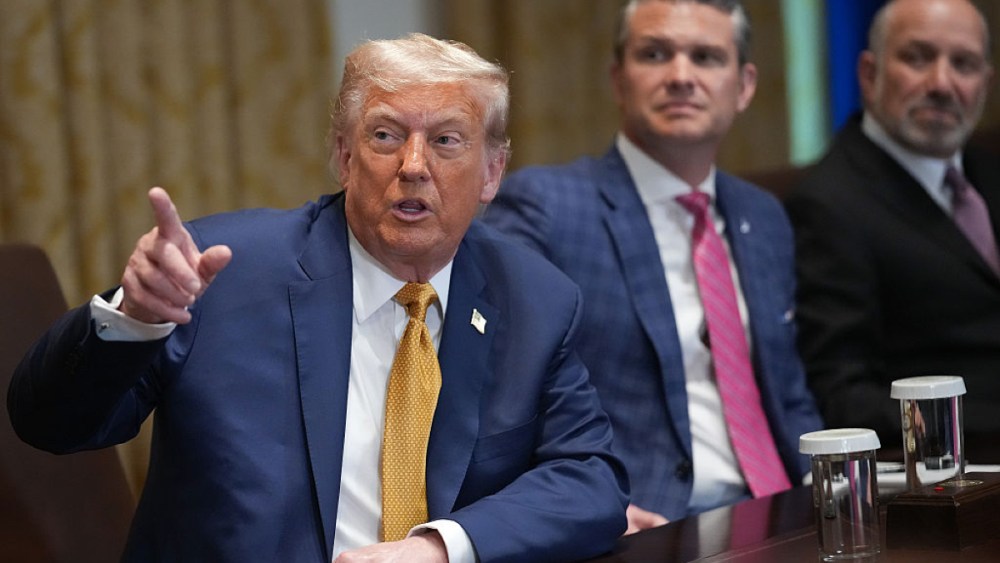
On Tuesday, Trump posted on his Truth Social platform: Tariffs will start being paid on Aug. 1, 2025. There has been no change to this date, and there will be no change.” Trump added for emphasis that “all money will be due and payable” starting Aug. 1, noting further that “No extensions will be granted.”
Related Stories

Tuesday’s post followed the flurry of tariff letters that Trump sent out to at least a dozen countries, with Japan and South Korea the first two recipients. The two saw their tariff rates climb to 25 percent starting on Aug. 1. Later in the day, the president also sent out similar letters to two countries that have grown market share in footwear production: Cambodia, which will see a 36 percent duty rate, and Indonesia, where the levy is 32 percent.
You May Also Like
The tariff letters were similar to the bare bones outline of a trade agreement with Vietnam, disclosed last Wednesday. That agreement called for a 20 percent tariff on Vietnam imports to the U.S., but it also added a 40 percent tariff on transshipping. The tariff letters issued on Monday, with more slated to be sent out over the next few days, included both a transshipping tariff and a provision for retaliatory duties for countries who choose to raise their rates on American exports.
One shoe-producing country that hasn’t yet received a tariff letter is India, which is facing a 26 percent reciprocal tariff rate. The speculation is that an announcement on a framework for some trade understanding could come as early as Tuesday night, with a more formal agreement to be finalized down the road.
In a clip posted on X, Trump said Monday night that the U.S. is close to a deal with India. Those countries where a deal isn’t likely — or where talks have dragged on without much movement forward — were sent a tariff letter indicating how much more in tariffs they’ll have to pay. He also said in a separate Bloomberg post on X that there could be some wiggle room in his Aug. 1 deadline, noting that if “they call with a different offer and I like it, we’ll do it.”
In addition, Trump in a Cabinet meeting Tuesday morning said of the European Union, “We’re probably two days off from sending them a letter.” While there are reports that talks have progressed, Trump apparently is still pushing for concessions, likely over digital services taxes. Italy, Spain and Portugal are EU members that also have footwear production capacity.
Trump emphasized that the trade proposals are “my deals to them. We’re picking a number that’s low — we don’t want to hurt them — and fair.” He said that in most cases, “We’re picking a number that’s lower, in most cases, lower than what they charge us,” adding it’s time the U.S. “started collecting money from countries that were ripping us off.”
TD Cowen analyst John Kernan wrote in a note on Thursday that the 20 percent tariff on Vietnam goods are on top of the duties already on footwear an apparel. And he predicted that tariffs on Southeast Asian countries will also see their rates climb.
Vietnam has become the go-to place for the production of athletic performance shoes. The 40 percent transshipping rate is believed to be aimed at China, where Chinese manufacturers have circumvented China tariffs on imports to the U.S. by shipping first to Vietnam before the goods head to their final U.S. destination.
But China also is said to have transshipped to other countries to evade its higher tariff rate. That accounts for the inclusion of transshipping rates in the tariff letters that were sent out.
As for China, the expectation was that tensions between the two countries deescalated following a U.S.-China rare earth minerals trade deal last month. The rate for China imports to the U.S. — at one point as high as 145 percent — is currently at 30 percent during a 90-day pause that’s set to end on Aug. 12. But Chinese representatives have said the country would oppose attempts by the U.S. to strike trade deals that would be contrary to China’s interests. China is Vietnam’s largest trading partner, and it couldn’t have been too happy to see the inclusion of a transshipping provision in the Vietnam agreement or the same inclusion in Monday’s tariff letters.
UBS head of fixed income and chief investment officer Americas Kurt Reiman noted Tuesday in a company webinar updating the state of tariffs said the rates in the letters were the same as the reciprocal levies disclosed on April 2, with just the “goal post” shifting to Aug. 1. His colleague U.S. chief economist Jonathan Pingle raised the possibility that tariffs could see the U.S. enter a period of stagflation.