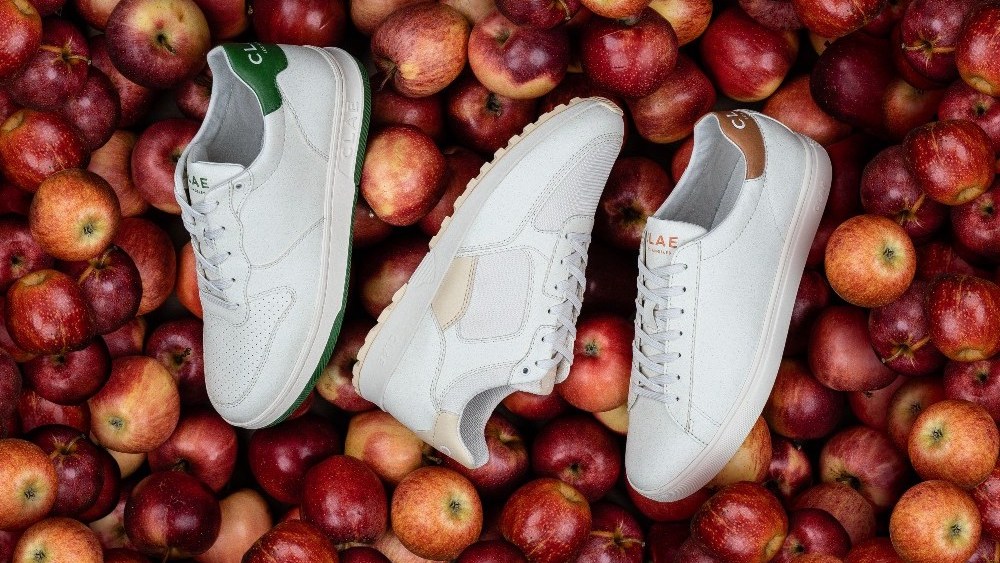
Los Angeles-based footwear brand Clae is adding a new plant-based, vegan-friendly material to its roster.
The label this week announced the launch of its Apple leather sneaker capsule, the latest in an exploration of animal-skin alternatives that includes Desserto’s cactus leather. The 22-year-old brand, known primarily for its Italian leather and nubuck cupsoles, has been adding new silhouettes and materials to its range in recent years with a focus on versatility and sustainability.
Related Stories
The Apple capsule features reimagined versions of the brand’s Bradley and Malone court shoes as well as its Joshua runner. Clae partnered with Italian synthetic leather manufacturer Mabel Industries, a supplier for Mansur Gavriel, on the project. The material innovator utilizes waste generated as a byproduct of the food industry, like apple cores and peels, drying and processing them into a fine powder. The organic substance is used as a substitute for oil-based derivatives like polyurethane, a staple ingredient in much of the alt-leather available on the market.
You May Also Like

Clae CEO Jim Bartholet said the brand is intent on testing the industry’s most promising alt-leather solutions as it searches for viable substitutes for animal hides. Apple leather has proven both versatile and durable, with the capacity to be developed in a multitude of different color ways. It also allows the brand to make use of a bona fide waste stream that would otherwise be destined for landfill. “Looking to the future, we’re probably going to focus on vegan [inputs],” he told Sourcing Journal. “That’s the direction.”
While Clae’s business was built on traditional leather, Bartholet said the brand’s search for alternatives has been prompted both by growing consumer interest and necessity. The footwear and leather goods industries have experienced declining quality in leather hides, the majority of which are sourced as byproducts of the U.S. meat industry, which is always looking to grow cattle larger and faster to increase profits. As a result, hides have become thinner and exhibited defects, Bartholet said.
By contrast, the quality of man-made vegan inputs has become more consistent, he explained. “The benefit that you have anytime you’re using a manufactured product like cactus or apple leather is that you’re going to get a really high yield,” he said. A sheet of vegan leather produces fewer cutting room scraps because there are no imperfections, and each “hide” is essentially identical. Bartholet said that the cost of materials like apple leather, while higher than conventional PU-based options, is comparable to traditional premium leather.
Clae’s Apple capsule also features elements like GRS-certified recycled mesh, laces, foam and insoles, as well as GOTS-certified organic cotton lining. Available in black and an off-white color way inspired by the flesh of an apple, the range retails for $140-$180 on the brand’s e-commerce site and at select boutiques across the globe.
While the shoes have only been on the market for a matter of days, Bartholet said that sales were nearly evenly split between Europe and the U.S., underscoring both markets’ enthusiasm about plant-based footwear. “The total sold was equivalent,” he said, though European consumers have so far overwhelmingly preferred the black color way, while Americans gravitate to off-white.