
NEW YORK — The Olympic athletes in Athens might need high-performance fabrics more than the spectators at home, but textiles firms are chasing both groups with vigor.
An increasing number of high tech fibers and fabrics, with properties ranging from moisture management and skin softening to muscle compression, are vying for an increased share of the performance market, whether it be for yoga, mountain climbing or biking.
Despite their various uses, many of the fabrics are made with a focus on a single goal.
“If there was one umbrella, I would say it was comfort,” said Iris LeBron, fashion director for intimate, active and swim at Invista. “They all want to be comfortable and that means very different things to very different people.”
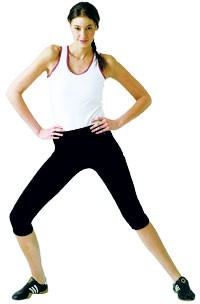
Runners, for instance, want pants and tops with muscle-compression fabric that fits snugly enough to hold working muscles stable. Invista’s Lycra Power spandex offers muscle-compression properties.
Yoga aficionados are another group that needs the stretch that spandex provides, but has very different comfort needs. For them, there are fabrics with finishes that help soften skin as a body lotion would by releasing aloe or vitamin E when they stretch.
Comfort and fashion were themes echoed by several textile and apparel executives.
“They want to look pretty while they work out,” said Susan Wexler, vice president of design for Danskin.
She noted that garments with muscle-compression properties work double duty — since the compression supports softer fatty tissues, as well as firm muscles.
“It’s close to the body, it’s good for the muscle, especially for somebody who has a high activity level,” said Wexler. “It also smooths you out and makes you look really good.”
Danskin produces performance activewear with bold colors, yoga-style looks geared toward gentler pursuits and dance apparel.
“We’re expanding into triathlon wear,” she said. “One of the things that Danskin really stands for is fashion and femininity, and we really think we can bring those attributes forward in the functional market.”
Bill Girrier, vice president of marketing and sales at RadiciSpandex, said the styling of performance fabrics often “connotes activity — it races the heart.”
Related Articles
You May Also Like
“A lot of the colors you see in biker-type attire — you’ll see people wearing that stuff around because it connotes a lifestyle,” he said. “With the Olympics, I think you’ll see a lot of people wearing athletic apparel even if they’re not active.”
In additional to being comfortable and stylish, performance fabrics have to be tough enough to withstand vigorous pursuits and frequent washing.
RadiciSpandex sells spandex that is resistant to the degrading effects of chlorine, body oils and ultraviolet light.
“You have to protect it from the things that are going to attack the fiber,” said Girrier. “Spandex isn’t bulletproof.”
Fabrics aimed at other areas of the performance market, such as rock climbing or mountain biking, are toughened up with abrasion-Continued from opposite page
resistance fabrics, such as Spandura, a branded blend of nylon and spandex marketed by New York-based H. Warshow and Sons.
Warshow, which continues to manufacture in the U.S., markets its performance fabrics not only to athletes, but also to the military, which is a growing part of the firm’s business.
“The performance-fabric market, to my mind, during the last 12 months has gone through a rebirth,” said David Parkes, president of Concept III, a marketing company that sells fabrics and yarns to the technical outdoor market. “The consumer is more and more tuned to performance textiles. Yoga apparel is very strong right now. That consumer recognizes the importance of Lycras, the importance of wickability, the importance of performance fabrics.”
Concept III this month introduced a new generation of wicking polypropylene knits with Kingwhale Industries called M-F, which are resistant to odor. Kingwhale determined that prior generations of the fabric had absorbed a lubricant used on the mill machinery, which could in turn trap body oils and secretions, and encourage the buildup of odor. The new generation of the fabric is free of the residue.
Huntington Mills is also attacking odor with new fabrics. The mill just launched two fabrics, PurEffort Interlock and PurEffort Fleece, under its SkinTech umbrella. The PurEffort fabrics offer antimicrobial protection and moisture management with DAK America’s Delcron HydroPur polyester fiber and Milliken & Co.’s AlphaSan antimicrobial agent.
David Waters, vice president of sales and marketing for Huntington Mills, described the performance-fabric market as a “lifestyle business.”
While many products are developed to meet the needs of high-performance athletes, he said, they tend to “cascade across the other consumer segments.”