
Fiber and fabric firms continue to innovate to serve the growing activewear and outerwear markets.
At last week’s first Get Outdoors NYC show at Metropolitan West in Manhattan, these companies brought out their next generation of materials with performance-enhancing characteristics aimed at making the active consumer more comfortable and efficient.
Primaloft presented its new insulating fibers, some for late fall of this year and others for fall 2017. A synthetic fiber made to imitate goose down for outerwear is said to be 90 to 95 percent as hydrophobic as the real thing and is made from 55 percent post-consumer fiber derived from plastic bottles, noted Ken Fisk, marketing communications associate for Primaloft.
Related Articles
Fiber innovation across sectors has been at the forefront the last few years, fueled by technological advancements and consumer need. The outdoor sports market has grown by 6.7 percent to become an $18.8 billion market, according to consumer research firm NPD Group.
You May Also Like
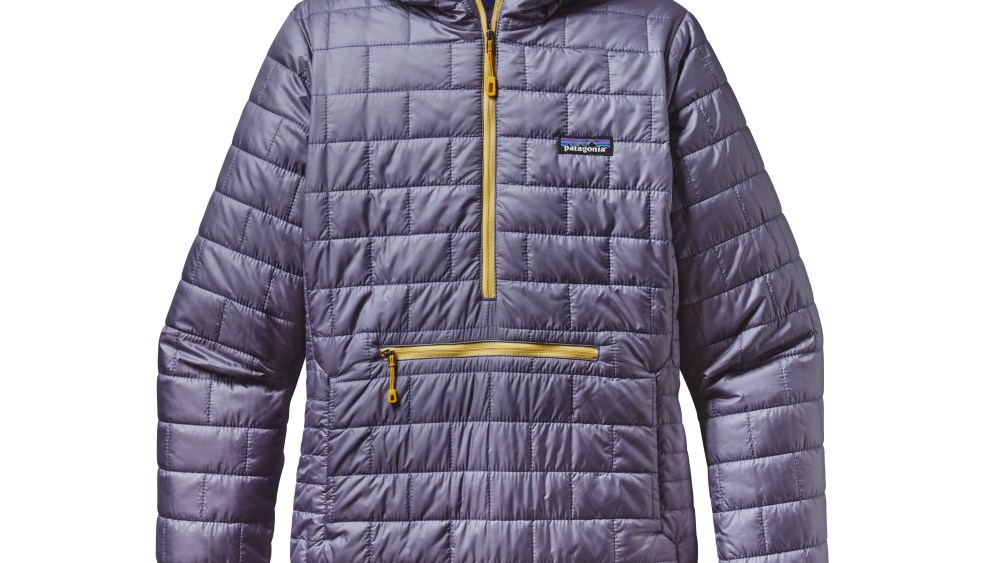
Demonstrating the Gold Insulation Eco fiber’s construction, holding it under a container of water without any permeation of the liquid due to tiny air pockets throughout the fiber that block penetration, Fisk said Patagonia has the exclusive for late fall with its Nano Puff line, and then Primaloft will make it available to the market for fall 2017.
“It’s environmentally friendly with no loss of performance and no added price,” he said.
Another product for the activewear is called Active Insulation, with Silver and Gold price and performance levels. The performance synthetic insulation is made from tightly woven fibers that are constructed to be breathable, fast-drying, lightweight and water-resistant, with a high warmth-to-weight ratio.
These will be used this fall by brands such as L.L. Bean, Adidas, Helly Hansen and Eddie Bauer.
3M Thinsulate highlighted its new Featherless Insulation, also as an alternative to natural down, noting that it mimics the look and performance without the potential allergens or cost.
A representative demonstrated that Featherless is as lightweight as down but has more loft, stays warm when wet and is breathable. In other words, as marketing materials says, it has “warmth without the downsides.”
Also focusing on activewear, but in the odor control area was Polygiene, which uses a silver chloride additive to inhibit growth of odor-causing bacteria in fabric.
It’s being used in apparel, footwear, gear and wetsuits. Polygiene markets its product with a tag “Wear More. Wah Less,” touting it as a sustainable, practical product. The technology is Bluesign and Oeko-Tex 100 approved and can be recycled.
On the other hand, Coolcore technology is said to be a “smart textile” that adapts to its environment and regulates temperature by managing heart and moisture, noted E. Scott McQuade, vice president of strategic partnerships at Coolcore.
The proprietary construction helps manage and distribute wearer’s body heat and also cools through regulated evaporation. The chemical-free material works through three functions — wicking, moisture circulation and regulated evaporation, reducing surface fabric temperature buy 30 percent, McQuade said. It recently received the “Innovation Technology” award from the Hohenstein Institute for “Cooling Power.”