
A look at some first-time exhibitors and lines set to launch.
MADE GOLD
While some denim brands might lament the encroachment of activewear on their business, Marta Goldschmied is embracing it — introducing indigo-based activewear as part of her new line.
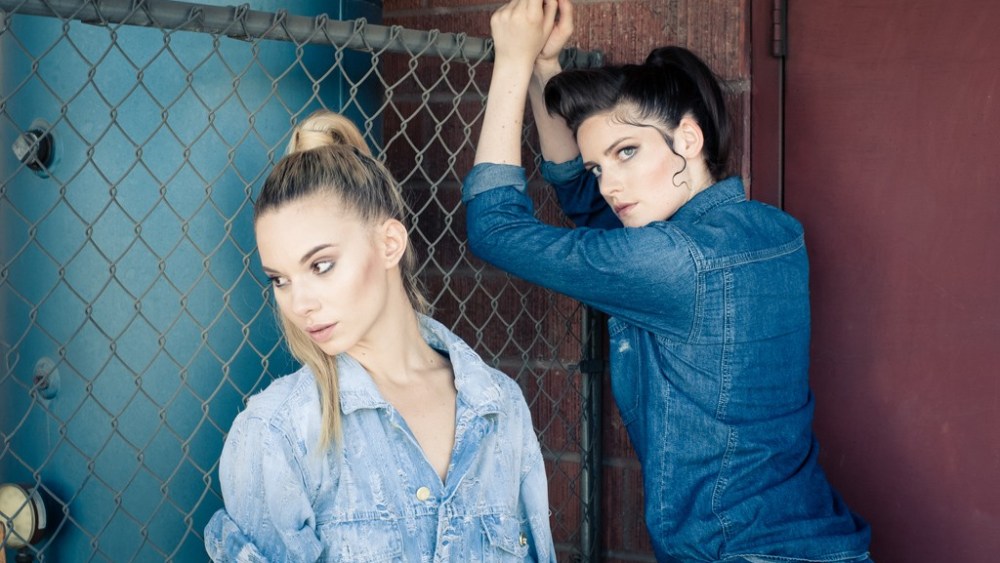
The daughter of jeans guru Adriano Goldschmied, the 27-year-old is putting a Millennial’s spin to Made Gold, launching at Coterie for spring. Blurring the lines between denim, sportswear and workout clothes, Goldschmied is proffering overalls and skinny jeans with an icy-blue tint, short chambray jumpsuits, leather biker jackets and vests, and pencil skirts cut out of cotton jacquard woven into a dragon pattern. She’s also integrating a proprietary fabric that blends cotton indigo thread with nylon so that it feels like denim on the front and technical activewear fabric on the back. Woven exclusively for Made Gold by a Chinese mill, the material comes in a geometric print, a tie-dyed style and a vintage-inspired wash for leggings, shorts, sports bra, pullover and sweatshirt.
Related Articles
“The [denim] market isn’t doing really well,” Goldschmied said. “The answer to that is the activewear, taking the classic bodies and turning them around and making them something different.”
You May Also Like
But Goldschmied isn’t totally turning her back on her family’s legacy. Denim makes up 60 percent of the line, retailing for $220 on average and using Italian and Japanese fabrics. After launching Emm Gold, her first graphic-heavy streetwear brand, which she still sells online, Goldschmied devised two key fits for Made Gold: an exaggerated skinny style with a longer inseam and a cinched boyfriend version with a 9.5-inch rise.
With retail prices running from $150 to $258, the line is bowing exclusively at Ron Herman in Los Angeles. Goldschmied is aiming to land in 300 stores in the first year.
Helping her forge the business development and sales strategy is partner Shane Markland, who oversaw sales during the launches of Current/Elliott and her father’s most recent label, GoldSign. They’re collaborating with another Goldschmied — Marta’s sister, Glenda, who graduated from London’s Central Saint Martins — to finesse the branding and packaging.
— KHANH T.L. TRAN
VIMMIA
Also playing on the trend away from denim to activewear for an everyday wardrobe is Ardy Raminfar, founder and president of Vimmia.
After almost a decade of working on the Anthropologie line Bordeaux, a brand based on basic draped jersey fabric, Raminfar decided to strike out on his own after observing the market trend. What women really wanted, he discovered, were apparel items in which they could freely move.
“I saw people wanting comfort more than anything,” the Los Angeles-based designer said. “More than anything, I started with my wife, who has three kids she takes care of and running from morning to three in the afternoon.”
In 2011, realizing that the market was quickly shifting toward casual chic, Raminfar began researching fabrics and studying how he could create activewear easy enough for the gym but durable for the entire day. After two years of sourcing materials in South America, the result was a mélange of lightweight denim fibers woven with technical fabrics, with quick wick-drying and UV-protecting elements.
“I wanted to do a sleeker fabric than our competitors,” he said. “I wanted to take away from the dry hand and do a sleek hand. We wanted the line to be what Vimmia means in Latin: life force.”
For the new season shipping next month, the line will introduce original prints from art studios in Paris and London that were printed on the apparel through heat and wet-print processes.
Vimmia, a freshman at the show, shipped its first collection in July 2013 and includes shorts, compression leggings, bras and pullovers, ranging from $60 to $260. It is sold at Equinox, Core Power Yoga and specialty stores across the country.
— DAVID YI
AQ/AQ
Fresh, futuristic and dramatic is how AQ/AQ describes itself. “It’s meant to be worn where the lights are brighter and the music is louder,” AQ/AQ’s mission statement says.
Formerly called Aqua by Aqua, the nine-year-old British label features women’s and men’s wear. Music is a big part of the brand, which is “progressively fresh and innovative,” said Stephanie O’Neill, marketing manager.
“It’s worn by women to define their nights out and special occasions,” O’Neill said.
Colors and exclusive prints are designed in-house and applied to architectural styles. AQ/AQ’s target customer is a woman age 18 to 30.
“We have a strong brand aesthetic, a high fashion aesthetic and accessible price points,” O’Neill said. “We play with fabric innovation and printing techniques.”
The brand is sold in two of its own stores in London, one for men and one for women, as well as at Harrods and online on ASOS.com. The company is opening its first U.S. store in Los Angeles in 2015. O’Neill said Los Angeles is the brand’s target market.
AQ/AQ, a first-timer at the trade show, is sold at Bloomingdale’s and Shopbop.com. The brand is also sold in Europe, China, Canada and Australia.
The collection is fantasy-inspired, dreamlike and euphoric, said O’Neill, adding that metallic fabrics are “quite girly.” A blue playsuit is $200 at retail, a draped minidress goes for $248.50 and a backless jumpsuit has a tag of $257. The men’s collection is also edgy, with graphic T-shirts, black wool varsity jackets with bright blue leather sleeves, and printed shirts with pants to match.
“We’re looking to expand and produce collections that are as well received in the U.S. as they are in the U.K.,” O’Neill said.
— SHARON EDELSON
NEXT: Lisa Freede >>
LISA FREEDE
While styling for TLC and Cher in the Aughts, Lisa Freede found there was a need for affordable but luxurious jewelry.
“I was calling in jewelry from Harry Winston and all of these places, but then I was like, ‘Wow, I need to start making my own,’ ” after not being able to find perfect wardrobe staples, Freede recalled.
In 2004, after setting out to create jewelry that was under the $150 mark, she launched three designs — called the Huggie — at Fred Segal in Los Angeles. After a trial run, the entire collection was sold out in days.
“I didn’t want to reinvent the wheel, but do basics with a twist,” Freede said.
Today, the business has expanded to include leather, chains, crystals, bold metals and statement pieces. The designer even experiments with resins in colors like olive and champagne. One style of bracelet includes wooden beads from Tibet.
The collection, launching at Coterie, will include a medallion encrusted with pavé stones, with pearls and chains that will hit the collarbone. Prices range from $48 to $98. Freede sells to retailers, including Harvey Nichols and Jennifer Miller.
— D.Y.
NEXT: Day Birger et Mikkelsen >>
DAY BIRGER ET MIKKELSEN
Day Birger et Mikkelsen, based in Copenhagen, has grown in its 17 years in business to now include a collection, a younger diffusion line, accessories and home goods.
Keld Mikkelsen, who started the company in 1997, has a background in textiles and worked in Asia, where he was drawn to the craftsmanship in Hong Kong and India. The home line was started in 2005. The second women’s line, aptly called 2ND Day, launched in 2011.
The signature collection is broken into two parts, the main collection and Love Everyday. The collection features designs infused with global influences combined with a Scandinavian simplicity. Ancient embroidery, patterns and trims are merged with contemporary silhouettes.
“It’s a little bit bohemian and a little bit ethnic, but still very classic,” said Pia Mia Fellah, the company’s marketing manager.
For fall-winter, the theme of the collection, being shown for the first time at Coterie, was “East meets West.” There was a lighter interpretation of the theme for spring. Styles include muted paisley prints on tops for $187, lace dresses for $340 and a leather jacket with a quilted chevron pattern at $576.
Love Everyday is more classic and tailored, yet still feminine. Sheath dresses retail for $187, leather skirts at $341, soft blouses for $145 and cropped jackets at $234.
The second brand, 2ND Day, is edgier. “It’s clean and not so decorated,” Fellah said.
Et, an accessories line, consists mainly of handbags, some utilitarian and others more playful. There are bucket bags and totes in leather and clutches decorated with fringe.
— S.E.