
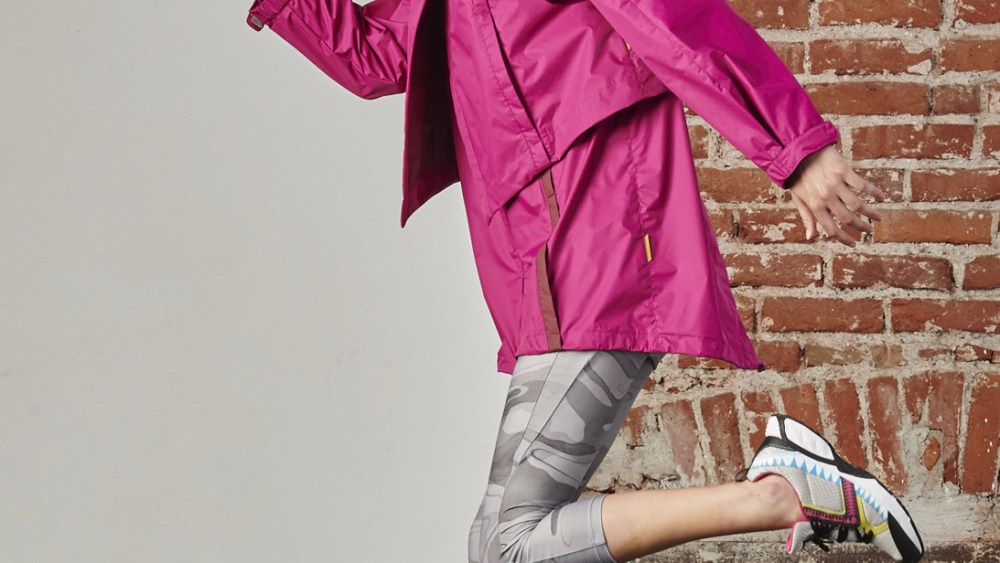
MILAN — The spring 2016 women’s edition of the White trade show showcased many newcomers and revealed strong seasonal trends, including denim and athletic-inspired, over three days during fashion week. Comprising mainly domestic resources, young designers and emerging labels, 186 of the 450 brands exhibiting were new entries, and 34 percent were from abroad.
Launched at this edition, the White Select area highlighted 10 innovative brands such as designer Angelo Sergio’s unisex Angelo Sergio Santoni collection, which drew inspiration from Martin Margiela and Jean Paul Gaultier. Calling unisex a “huge trend,” he showed a unisex ballerina vest of black Italian leather, which was based on a deconstructed, playfully proportioned ballerina shoe.
Related Articles
On thriving activewear trends, Sàpopa sportswear founders Maria Elena Ghisolfi and Piero Righetto presented lifestyle pieces made from Italian silks and cottons mixed with performance fibers.
You May Also Like
“Our sizes are the same as high fashion, fused with kinetic, Italian-made fabrics that allow sports performance and movement,” said Righetto.
The brand’s perennial go-to item, created by designers Gigi Vezzola and Maria Teresa Castelli, is the “slegging,” a pair of full-coverage leggings with a small, frilly demi skirt over the seat. “They take you from the gym to the café,” said Ghisolfi.
Balossa White Shirt, the winner of this edition’s “Inside White” prize, has been presenting classic white shirts in playful reinventions since the brand launched at the fair’s February edition. Its Lithuanian art director, Indra Kaffemanaite, melds Italian and Japanese styles. “We don’t follow the rules. Sleeves and collars are never where they’re supposed to be, or we present the shirt as a dress or a shrug,” she said of its Holly shirt, which can be worn in three different ways, and has off-kilter sleeves that can be tied as a belt.
Aligned with strong travelwear trends, jet-setting athlete and photographer Hubertus von Hohenlohe introduced two travel-themed special editions at the fair. Travel with Art by Mandarina Duck is a capsule collection of three sizes of trolley cases created with the Italian luggage and accessories brand.
“Considering how much design has taken over the world, travel trolleys were boring and risked nothing with design,” said Hohenlohe on the inspiration behind his collection, which uses three prints taken from “Elegantly Wasted,” his 2009 photography book of recycled waste materials. “The pieces are for a well-travelled, creative crowd who wants to travel with an inspiring piece of art.”
The collection will be available at retail globally starting in February.
Von Hohenlohe also collaborated with the Italian fashion brand Malloni, launching the Malloni for Travel with Art collection of a dozen women’s travel-friendly, crease-resistant separates such as leather jackets, distressed jeans and sneakers.
At Italian denim brand Don’t Cry, spring trends pointed to extensive embroidery, sequins and jewels of various sizes. On jeans, flared-leg, high-waist cuts were popular, including its best-selling Amalia boyfriend jeans embellished with black sequins embroidered in a solid field over the legs. From its Veneto-based headquarters, the brand mixes Los Angeles styling with Made in Italy craftsmanship and materials.
On vintage trends, Italian brand Ultràchic featured whimsical, proprietary, retro-themed prints in bon-ton, Fifties silhouettes with a rock ‘n’ roll edge. Its spring collection’s naïf theme was inspired by Tuscan landscapes and seascapes like Forte dei Marmi, printed with folkloric geese, tractors, scarecrows, fish and moles on Italian cotton, silk, crepe de chine and organza. “The woman who wears this combines a strong sense confidence and elegance with irony — she loves fashion but doesn’t take it too seriously,” said creative director Diego Dossola, who founded the brand in 2006 with Viola Baragiola. Collections can be found at Ultràchic stores in Milan and Seoul, as well as 150 worldwide multibrand retailers.
The apparel and accessories trade fair, held across multiple venues of the Tortona fashion district, drew 20,160 visitors, representing a 12 percent increase compared to the September 2014 edition. There was an 8 percent uptick in buyers’ attendance. Domestic buyers increased 9 percent while international buyers rose 7 percent, dominated by Japan, Europe, the Middle East, China and Korea.