If you purchase an independently reviewed product or service through a link on our website, WWD may receive an affiliate commission.
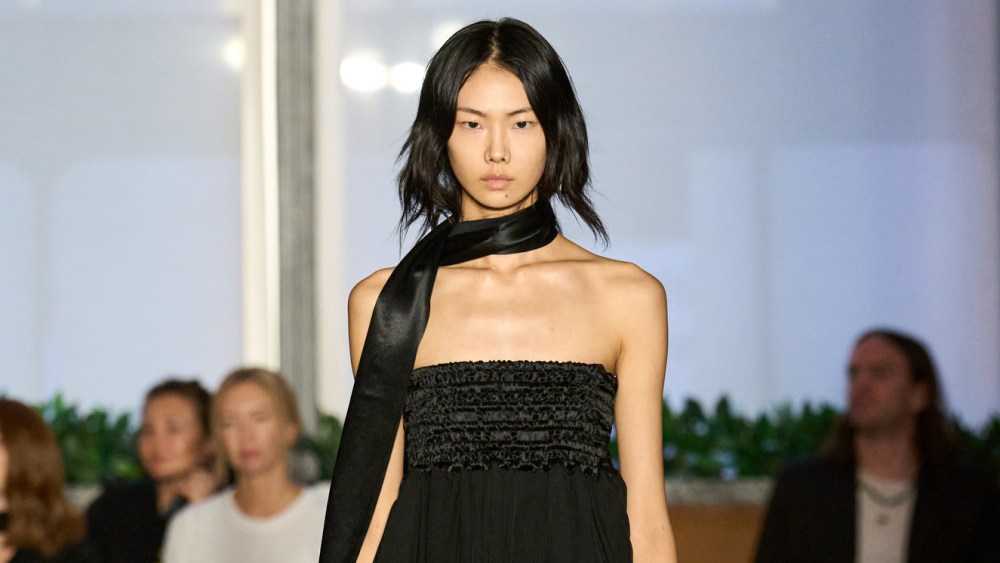
Summer may be approaching fast, but from stylish Instagram feeds to the wedding circuit and beyond, one surprising — and slightly off-season — accessory is quietly taking over: the scarf. More specifically, the little silk scarf — often slim, elongated and sometimes finished with tassels — that serves no practical purpose beyond looking impossibly chic.
The silk scarf, of course, is hardly new. For decades, it has remained a wardrobe staple, from beachside headscarves to Hermès status symbols. In recent seasons, silk scarves tied as belts, tops and pareos have resurfaced as cool girl-favorite styling tricks. Now, a new evolution of little silk scarves is giving the classic accessory fresh relevance.
Related Articles
This season’s most standout iterations rework the familiar formula with skinny proportions, dramatic lengths, crochet tassels, fringe detailing and tactile finishes. The result is an accessory that feels both polished and playful — and increasingly essential for eveningwear.
You May Also Like

On the spring 2026 runways, Maria McManus spotlighted the trend with a dramatically long silk scarf finished with crochet tassels, using it as the focal point of a pared-back look. Labels including Maison Magdalena, Toteme and Dries Van Noten have embraced similar styles: narrow, fluid scarves with statement tassels that add movement and intrigue. They have quickly been adopted by the fashion set as the finishing touch for wedding guest dressing, little black dresses and sleek tailoring alike.
The broader resurgence reflects a larger shift in how consumers are approaching accessories. “I think people are craving pieces that feel expressive and emotional right now,” says Yong Wang, cofounder of silk accessories label Lost Pattern. “A silk scarf is super versatile and has this rare ability to completely transform a look while still feeling personal and effortless.”
Lost Pattern Skinny Silk Scarf
That adaptability is central to the scarf’s renewed appeal. “It is not tied to one age group, gender or aesthetic,” Wang explains. “Someone can wear the same scarf as a headscarf, tied to a handbag, styled as a top and endless other ways. That flexibility makes it incredibly relevant to how people dress today.”
On Instagram, the styling possibilities are already on full display. Some wear them looped at the waist as belts over midi dresses or oversized shirting and trousers. Others drape them loosely across the collarbone, allowing tasseled ends to trail dramatically down the back. There is also the “smoking scarf” approach: wrapped languidly around the neck with sharp suiting or matching silk separates for an understated note of glamour.
Unlike more traditional scarves, these miniature silk versions offer little in the way of utility. Their appeal lies entirely in aesthetics — and that is precisely the point. The fluid texture, subtle sheen and narrow silhouette bring instant elegance to even the simplest look, whether paired with cocktail attire or used to elevate office basics.
“What feels exciting now is that there are no rules anymore,” Wang added. “In the past, silk scarves were often styled in a very polished or traditional way, but today people are approaching them with much more creativity. The modern approach is also much more genderless and seasonless.”
In a moment when accessories are increasingly expected to do the heavy lifting, the little silk scarf succeeds by doing almost nothing at all — except making an outfit feel finished. And as with every great scarf trend before it, its styling potential is nearly endless.
Shop More Little Silk Scarves
Wolf & Badger Marianne Scarf
Otzio Breton Fringe Silk Scarf
Eileen Fisher Silk Georgette Crepe Scarf