
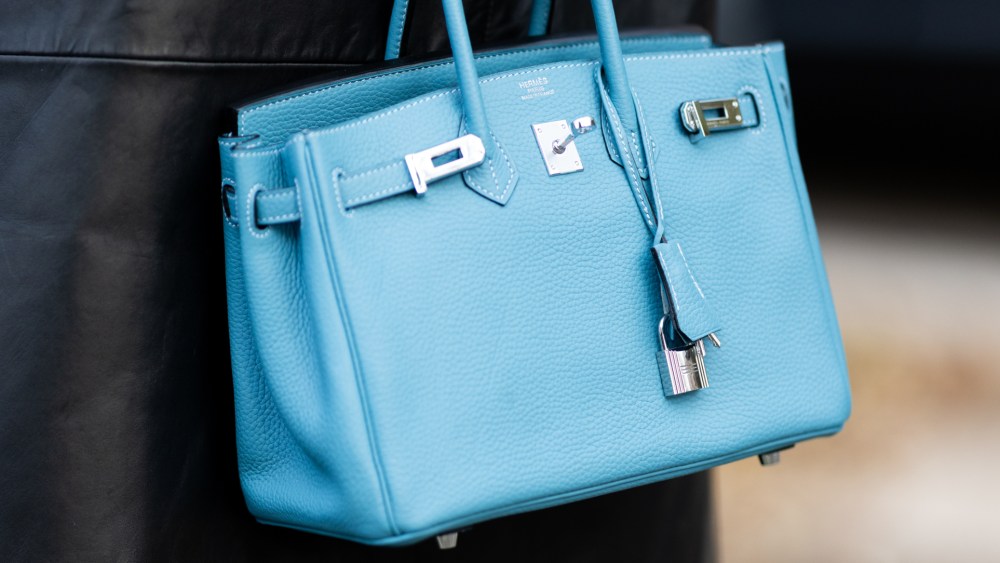
Hermès, The Row and Miu Miu headline 2025’s luxury resale landscape, according to Rebag’s newly released 2025 Clair Report, which tracks value retention and brand performance across the global secondary market.
The data-driven study, powered by Rebag’s proprietary Comprehensive Luxury Appraisal Index for Resale (Clair), analyzes millions of transactions across brands, categories and regions to track how value appreciates, or erodes, over time. According to the report, 2025 marked one of the most active years yet for luxury resale, with handbags, watches and fine jewelry showing strong retention rates across multiple segments.
Related Articles
Hermès reclaimed its top position with an average 138 percent value retention, up 38 percent from 2024. Over a 10-year period, Birkin bags have appreciated 92 percent on the resale market, more than double Hermès’ own retail price growth of 43 percent.
You May Also Like
Elizabeth Layne, Rebag’s chief marketing officer, said the Birkin’s long-term trajectory is a case study in luxury’s evolution into a true asset class. “The Birkin’s 92 percent value growth underscores that top-tier handbags have matured into long-term investment assets, not just fashion statements,” she told WWD.
In total, eight Hermès styles sold above their original retail prices this year, led by the Kelly Mini II at 282 percent of its original cost, the Sellier Birkin at 183 percent, and the Constance at 137 percent. Tightened shopping restrictions introduced by the house, limiting customers to two quota bags per year and one registered address, also contributed to stronger resale premiums.
“As more consumers approach luxury with an investor mindset, we expect this steady, asset-like behavior to extend beyond Hermès to other brands emphasizing craftsmanship, rarity, and controlled distribution,” Layne said.
For the first time, The Row entered what Rebag calls the “unicorn” category, with its handbags reselling at 97 percent of their retail value. The minimalist label’s rise parallels broader shifts in consumer behavior, where subtle design and quality construction command equal respect to heritage logos.
“The Row’s rise reflects a maturing market where both heritage logos and minimalist design coexist as symbols of lasting value,” Layne said. “While Chanel and Louis Vuitton each reached similar highs in recent years — peaking at 92 percent and 88 percent retention respectively — The Row’s sustained growth highlights that refined craftsmanship and versatility can hold their own alongside established icons.”
Miu Miu also recorded its best performance to date, achieving an average 104 percent retention rate. Layne attributed the brand’s momentum to its current creative direction and product strategy. “Miu Miu’s surge reflects the brand’s strong creative direction and renewed focus on accessories that balance playful character with lasting craftsmanship,” she said.
The report also spotlights the powerful role of nostalgia in driving resale value. The revival of the Louis Vuitton x Takashi Murakami collaboration, first launched two decades ago, generated a sixfold increase in search interest and resale values exceeding 130 percent for certain styles.
“Collaborations like the Murakami revival reawaken cultural memory and give collectors a sense of participating in fashion history,” Layne said. “They bridge the past and present, allowing new buyers to access legacy design while offering longtime fans renewed relevance.”
That nostalgia isn’t limited to Louis Vuitton. Balenciaga’s Le City Bag (+986 percent search growth), Celine’s Phantom, and Chloé’s Paddington also benefited from renewed enthusiasm for early-2000s icons.
In the fine jewelry segment, Van Cleef & Arpels led with a 112 percent retention rate, propelled by continued demand for its Sweet Alhambra pieces. The Sweet Alhambra pendant necklace reached 128 percent value retention, followed by the Butterfly bracelet at 123 percent. Cartier also performed strongly, with its Love and Trinity collections maintaining steady interest, contributing to an overall 87 percent retention rate for the brand.
Layne noted that macroeconomic conditions have supported jewelry’s appeal as an investment alternative. “As tariffs lift primary-market prices, consumers increasingly view resale as a strategic entry point for acquiring luxury goods without compromising on authenticity or condition,” she said.
Beyond brand performance, the report highlights how resale has evolved from a reactive space, driven by sold-out scarcity, to a proactive investment channel for both buyers and sellers. Layne said brands themselves are responding by refining product design and limiting production to support long-term retention. “Luxury houses are increasingly prioritizing craftsmanship, durability, and timeless design — qualities that naturally support long-term desirability,” she said.