
NEW YORK — Triathlons were once the domain of a small circle of workout fanatics who made cycling, swimming and running a full-time vocation, but in recent years the sport has become more mainstream, particularly with the growth of mini triathlons.
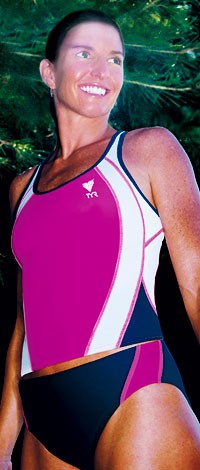
Now athletic companies have stepped up their offerings in this area and many are producing a range of “multisport” clothing for women that is functional, but also stylish, incorporating bright colors, feminine silhouettes and a wider selection of sizes for different female body shapes.
Among those offering specific triathlon clothing are large firms such as Speedo, Tyr and Danskin, as well as niche players, including DeSoto, Zoot, Sugoi and Flower Sports.
“As triathlons have grown in popularity, there are more options in apparel,” said Wendy Ingraham, a professional triathlete who heads Tyr’s multisport division and oversees its triathlon apparel. “This year, we are offering 57 multisport styles and we have enlarged our selection with more bodies and colors.”
Craig Brommers, vice president of marketing at Speedo, said, “We first introduced triathlon-specific clothing in 1996, but this season we have reinvigorated our triathlon products with a wider selection. The market potential has continued to grow, specifically on the women’s side, and we think this is a great opportunity.”
USA Triathlon, the official governing body for the sport, said about 150,000 people participate in sanctioned and nonsanctioned races each year. The triathlon became an Olympic sport for the first time at the 2000 Summer Games, which also has helped its popularity.
Ironman USA sponsors five triathlons in the U.S. The Ironman races, considered the pinnacle of triathlons, consist of a 2.4-mile swim, a 112-mile bike ride and a 26.2-mile run, all in succession.
“Our company didn’t exist in the U.S. until 1999, and we have seen tremendous interest in our races,” an Ironman USA spokesman said. “We keep adding new races and they fill up right away. All of our races are full already for this year.”
The popularity of triathlons is attributed to growing interest in extreme sports and in fitness activities in general, as well as the special nature of an activity that incorporates three different elements.
Related Articles
You May Also Like
While the sport is still male-dominated, the Ironman series and the races in general have seen increased interest among women. In 1999, about 15 to 18 percent of Ironman participants were women, and that figure has increased to 25 to 30 percent, according to Ironman USA.
While there are no reported statistics for sales of triathlon gear, industry experts estimate total annual sales of triathlon-related products, including bikes and apparel, at $100 million.
Danskin started sponsoring its women’s-only mini triathlon series 16 years ago and has seen the popularity of these races soar, said Maggie Sullivan, the company’s vice president of sports marketing and director of the triathlon series. Danskin this year is holding eight races in cities across the country, catering to women who have never before done a triathlon. Last year there were more than 21,000 entrants. The series, which kicks off this year in Washington on May 15, is the company’s biggest marketing event.
“The triathlons are very important to us on a number of levels,” said Carol Hochman, Danskin’s chief executive officer. “Our mission is to make every woman feel she can do something for herself. We are not a company that is about professional athletes. This is about setting and accomplishing personal goals. We feel these races have come to define who Danskin is and what we do, and it is something our entire company gets involved in.”
Danskin sells a range of apparel for the triathlons, including one-piece wet suits, tank tops and shorts that sell for about $45 to $80. The products are sold at the expo held on-site the day before the triathlons, as well as at local retailers in the race locales, Sullivan said. This year, the offerings have been pumped up with colors such as a bright orange and light blue.
Triathlon clothing generally incorporates some elements of apparel used in each of three sports, with a focus on fabrics that don’t absorb much water and dry fast, such as polyester and Lycra spandex blends. Many styles use mesh for ventilation. Triathlon bottoms generally have a light padding that is similar to what is in traditional bike shorts, but is smaller and more flexible, as well as grippers or elastic to hold the shorts in place. Many triathletes wear a wet suit over other tri-shorts and support tanks, and some companies now make one-piece suits that are worn for the entire race and incorporate elements of padding and wicking into the garment.
Many of the big sporting goods companies don’t offer specific triathlon apparel. Nike and Adidas sell clothing that can be worn for each of these activities, but not specific triathlon lines, according to spokeswomen at those firms. Reebok sponsors athletes and some triathlon races, but doesn’t make specific triathlon apparel.
Tyr has seen sales of its multisport category grow by 15 percent each year for the past few years. This year, it is offering its largest selection yet, Ingraham said, with a selection that has been brightened with colors such as hot pink, orange and blue. Among the silhouettes are a fitted tankini and a wrap skirt; the products retail for about $50 to $60.
DeSoto, based in San Diego, has long offered women’s triathlonwear, but this season is the first in which it has broken out women’s.
“We used to match the men’s colors, but now we are offering a complete women’s line with special colors for women, and things that will look good on the rack and appeal to women’s sense of style,” said Emilio DeSoto 2nd, the company’s founder and president.
For its new triathlon line, Speedo has incorporated its Fastskin FS II technology that was first introduced at the 2004 Summer Games in Athens. Brommers said Speedo also is testing new triathlon-specific fabric it hopes to get into stores for fall.
The bulk of triathlon apparel is sold in small specialty sport stores, and also online and through catalogues, according to companies in this arena. B&L Bike & Sports, a store in San Diego, has carried triathlon apparel for about six years, said buyer Jeff Rowe, who added that brands such as DeSoto, Tyr and Flower Sports are strong sellers for women.
DeSoto said he believes big chains don’t carry much triathlon apparel because “it is technical product that is often higher priced and requires more of an investment up-front from the stores.”
Susan Otcenas, founder and president of Teamestrogen.com, a seven-year-old online seller of biking and multisport clothing, noted that larger-sized triathlon clothing has been a boon for her business.
“The shorter distance races are less intimidating and more average-sized women are participating,” she said. “Having larger sizes makes these races approachable for more women.”