
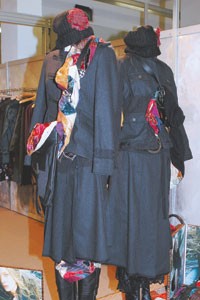
MILAN – Luxury styles pushed the 59th edition of Modaprima forward as the organization eyes a brighter future under new management.
The midpriced fashion and accessories fair, held last month, showcased fall 2006 collections. The show’s weak turnout – 100 exhibitors and 1,800 visitors, compared with 108 exhibitors and 3,613 buyers a year ago – was indicative of the show’s need for a revamp. The show organizer, Efima, recently announced it had outsourced Modaprima’s management to Florentine trade show heavyweight Pitti Immagine.
Modaprima director Agostino Poletto said Pitti Immagine is expected to boost the event’s creativity and innovation quotient.
“Some research will be carried out to evaluate what buyers and exhibitors want more from the show, but we expect new spaces dedicated to trends and information will be included in next May’s edition,” said Poletto.
He added exhibitors were content with the new changes – which would be key in ensuring a more concrete future for the show.
Many executives who exhibited at the event agreed that a facelift could prop up the fair’s attendance.
“Modaprima isn’t going as well as other fashion fairs, so we hope the changes will be a positive thing,” said Stefano Scarselli, commercial director at Florence-based knitwear company Mehari.
On a positive note, Angelo Mele, owner and designer of outerwear company Angelo Mele, based in Puglia, praised Modaprima “because it attracts a lot of Japanese buyers and I have consistently gotten new clients through this fair.”
Others happy with Japanese buyer attendance included Alessandria-based cashmere knitwear company André Maurice.
“Japanese buyers like our cashmere products because there is a mix of the classic and fancy knitwear,” said chief executive Andrea Scaliotti.
Scaliotti said his line’s sweaters, including modern, deep V-neck styles with ruffles and overprinted tunics, as well as scarves in fine knits, also were appreciated by American buyers seeking something different.
Since changing the product mix to 80 percent cashmere two years ago André Maurice has had yearly double-digit sales growth, Scaliotti added.
Cashmere and boiled wool were key fabrics for Mehari’s sophisticated collection of embroidered coats with oversized collars, Fifties-style chocolate dresses with matching knitted jackets and reversible taffeta violet and blue evening coats.
Related Articles
You May Also Like
Dressed-up pieces also fared well at Beatrice B. Product manager Morena Bragagnolo said she favored ivory and chocolate knee-length skirts for next winter, matched with wool gauze knits and felted wool gray and brown blazers. Rose embroidery made its way onto frayed cotton jackets and on the front of white woolen skirts. Beatrice B’s silhouette was finished with beads – resin baubles that were baked with newspaper pages and pieces of textiles inside them. Bragagnolo said midpriced fashion’s flirtation with luxury looks was expected to spiral the company’s sales to $15.2 million, a 10 percent increase from 2004.
Accessories were also important at Qubha, which presented a line of grommet-studded cocoa totes with dangling heart straps.
“For us, next season it’s important to mix an elegant piece with a sporty one,” said Qubha sales manager Donatella Incerti, who said best-selling pieces include an olive cotton jacket with grey elbow patches, a fine mohair yellow sweater and a gunmetal gray silk satin skirt.
A combination of chic and casual also was used in Angelo Mele’s outerwear -such as the biscuit-colored down coats with crocodile leather pockets and fox-trimmed hoods. Other padded nylon jackets had detachable knitted wool collars and cuffs. Retail prices start at $139 for a washed-leather aviator jacket and run to $627 for a three-quarter-length shearling.
“It’s important for us to style our line with a mix of different fabrics,” said Mele. “At the end of the day, it gives a better price for an Italian-made product.”