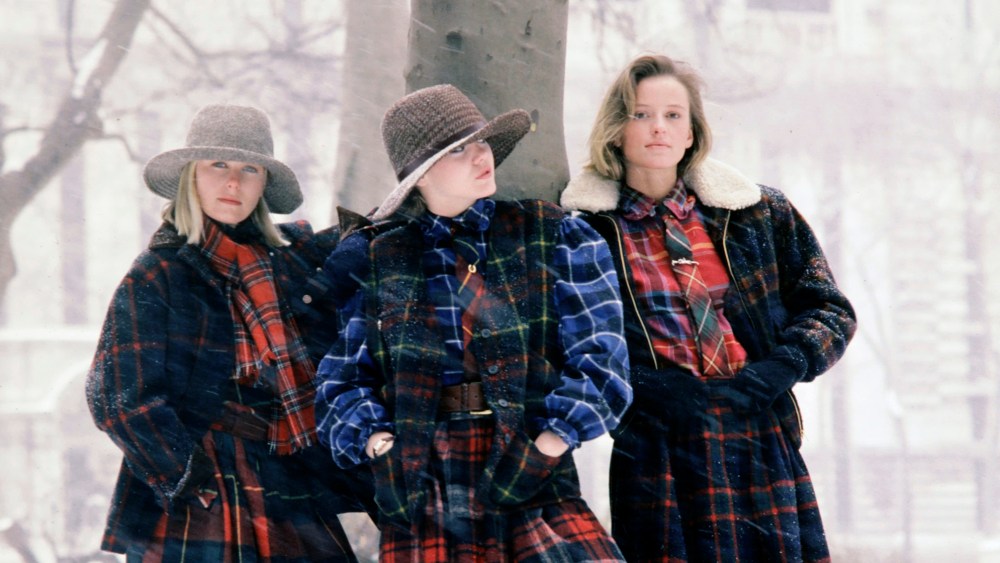
From WWD’s 115 years of fashion industry coverage, a look at tartan’s enduring influence and inspiration through the decades.
1920s
Fashion was already “mad for plaid” when WWD notes the rise in tartans as a coming fashion trend in its “Wool and Coats” column, describing: “…Donegal rugs made of pure wool…soft, fleecy…with the coziness and smartness of a coat…inspired in colorful plaids as spirited as Scottish Tartans with soft swinging fringe,” as inspirational for far-flung trips. The imported fabric and any reproduction — thread by thread — were authenticated, moving beyond home furnishings fashioned in wraps and coats.
Related Articles

1930s
You May Also Like
In this decade, Broadway was a powerful stage for fashion marketing. WWD praised EGOT Helen Hayes’ (1900 to 1993) costumes in “Mary of Scotland,” highlighting the costumes as “extremely chic — complete with a tartan plaid shawl draped over one shoulder,” noting the male actors wearing tartan as well. Retailers responded, with Neiman Marcus — renowned for its marketing — promoting tartan clan fabrics in 1938 in its Dallas flagship windows.
1940s
Always keeping the industry informed, WWD highlights “Tartan” as a trending term in its column “Words— in Fashion, Their Use and Ancestry,” describing it as “…plaids which in general are of Scotch in inspiration and coloring, applied interchangeably with Clan plaid refers to any fabric in this design.” During the decade, tartan plaids steadily grew popular among college girls, especially in the red and green combination available in American designs.
1950s
WWD observes the resurgence of tartan fabrics as a young Queen Elizabeth II ascends the throne. A royal favorite, the fabric is exhibited in replica at Courtaulds Ltd. in London in 1953, while Pendleton Woolen Mills continues to expedite the trend in their iconic separates, fueling tartan’s popularity in back-to-school and holiday retail beyond the decade.
1960s
The fashion for tartan declines slightly in the 1960s, but remains attractive in the young junior market, led by traditional kilts, worn for everyday wear. WWD notes the success of Denver’s May-Daniels & Fisher in-store shop, “The Kilt Clan Ltd.,” New York retailer British Sportswear Ltd., and American designer William “Bill” Blass. Blass’ Black Watch tartan topper and straight pants for evening, illustrated in WWD, set the tone for tartan’s luxury moment a decade later.
1970s
Fabric innovation gives tartan an opulent appeal as it takes center stage at Ms. Dior. The collection, designed by Philippe Guibourgé, shows his tartan wool shorts highlighted in WWDs “Americans abroad…the big buy: Paris” review. By decade’s end, London and Paris newcomers Vivienne Westwood and Jean Paul Gaultier, respectively, contributed to redefining tartan, reshaping its presence in counterculture fashion. In America, it emerges as a favorite in the fall collections from Anne Klein, Perry Ellis and Ralph Lauren.
1980s
WWD’s review of countless fashion shows note the fabrics arrival in the luxury market — from Yves Saint Laurent’s Lesage beaded cardigan in Paris to fluid silk blouses at Valentino in Rome. Tartan plaid’s growing popularity is also seen in sleepwear and loungewear, remaining a holiday favorite.
1990s
Tartans make a bold comeback, on and off the runway. WWD crowns Isaac Mizrahi the “King of Tartans” for his tartan-everything collection. Europe sees John Galliano and Alexander McQueen twist tradition with a rebellious edge — McQueen’s “Highland Rape” puts tartan at the center of his celebrated fashion storytelling. Hollywood also fuels the trend with blockbuster movies “Braveheart” and “Clueless,” with Alicia Silverstone’s vivid yellow tartan suit defining the pattern’s ‘90s moment.
2000s-2010s
Beyond its royal patronage and cultural resonance, tartan, offered in a range of colors, prints and patterns, remains a fall favorite. While many designers have embraced tartan over decades, Ralph Lauren has kept its contemporary appeal alive. His knack for preppy style and quintessential American sensibility transforms tartan’s fall arrival into the centerpiece of the holiday season.
Today, tartan remains elevated as a timeless, covetable wardrobe staple.