
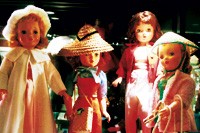
NEW YORK — For a woman who started sewing Red Cross dolls on the kitchen table of her Lower East Side walk-up in 1923, Madame Alexander sure didn’t scrimp on fashion.
The woman who was born Beatrice Alexander Behrman went on to build an army of stylish dolls. Queen Elizabeth II’s coronation in 1953 called for a collection of 36 dolls that was so authentic that the fabric for the dolls’ robes was bought from the same mill that provided the coronation mantles.
Now, to mark its 80th year in business, the company is opening its doors to the public for the first time and giving visitors a glimpse of Americana. From her signature doll Cissy’s ballgowns to miniature designer dresses, visitors to the doll maker’s new “heritage gallery” in its Harlem factory get an eyeful, including dolls wearing outfits designed by Donna Karan, Jessica McClintock and other Council for Fashion Designers of America members.
A frustrated fashion designer whose parents nixed her plans to accept a scholarship in Paris, Alexander always eyed her dolls’ clothes with great detail. Her stepfather ran the first doll hospital. Yardley’s decision to use her fashionable Cissy doll in its ads was a crowning moment for her, said Daun Fallon, Madame Alexander’s vice president of design.
The brand’s namesake made a point of keeping up with current trends, news events and happenings, Fallon said. In one display case, a doll inspired by Olympic skater Sonia Henie sports gold-sequined skates. In another case, a 1936 Fortune magazine article details how Alexander’s Dionne quintuplet dolls bolstered her business.
One display case houses her Three Little Pigs dolls, which she licensed from Walt Disney in 1933. The company continues to work with Disney, designing miniature dolls for McDonald’s Happy Meals, such as Jasmin from “The Little Mermaid.” Her one regret? Not securing the license for Shirley Temple. Alexander managed to do that for Jane Withers, Temple’s devilish counterpart, said Fallon.
Not all of her translations were so well received. In the early Sixties, after taking the liberty of creating a “Jacqueline” doll that strongly resembled the-then First Lady, Alexander received a “kind” letter from the White House suggesting a name change to “Jackie,” a spokeswoman said. And so it was.
Related Articles
You May Also Like
Throughout her career, Alexander — who died in 1990 — never lost sight of her fashion designer aspirations. In the salad days of her business, she handmade the dolls’ clothes herself. When their attire became more elaborate in the Forties, the outfits were made in the Garment District and then delivered to the company’s Fifth Avenue office to be assembled. The gold medal award she received from the Fashion Academy in 1951, which is on display in the gallery, was a prized possession, the spokeswoman said.
Occasionally, Alexander would spare no expense. As the creator of the original “Eloise” doll, the company made four $20,000 “Eloise” dollhouses for FAO Schwartz, complete with Aubusson rugs, gold-leaf detail and a working elevator. The toy retailer will have a modified version of Madame Alexander’s factory in its Fifth Avenue store when it reopens next week and shoppers will be able to watch their customized dolls being made.
Upstairs in a design office, two stowaways — a towel-clad doll complete with bathtub and “Psycho” shower curtain and a Tippi Hedren-looking character covered with birds — hint at Alexander’s sense of humor. The company even produced a Lucille Ball doll inspired by the “I Love Lucy” grape-stomping episode. Alexander was less lighthearted about her employees’ handiwork and would often hover over seamstresses and rip out stitching that did not meet her exacting standards.
She fancied herself the inventor of pantyhose, though she never received recognition. Tired of her dolls’ droopy leggings, she suggested sewing them to their underwear. Alexander was known to be a bit of a prude, insisting no doll leave the building without underwear, a company spokeswoman said.
Alexander also held her chauffeur to task. In a typed list of commandments, she advised him: “A black coat — cotton or nylon — is preferred for all indoor work except serving.”
He also was meant to be seen, not heard. “Refrain from conversation with Madame or other passengers unless spoken to. Don’t volunteer conversation at any time.”
She was gentler with her company’s staff, which swelled to 600 in its heyday in the early Eighties, often referring to them as “darling” and spending the better part of the workday with them. In the Fifties, she asked them if she should make African-American dolls and then took their advice to do so.
Longtime employee Greta Schrader said, “She is a person who was always with her workers. She would say, ‘I need you and you need me. If you work for me, you get a college education.’ And she would let us leave at three.”