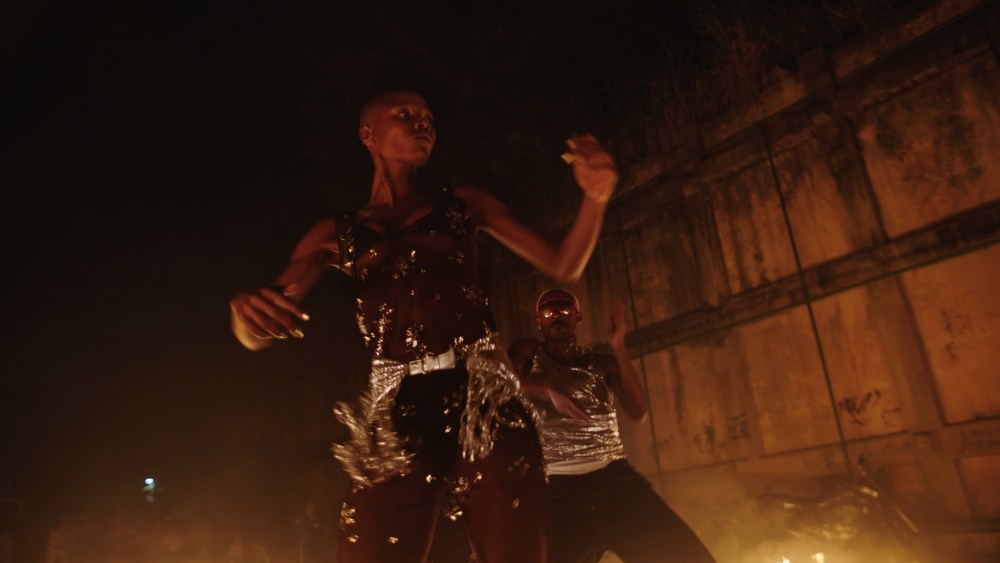
GOOD VIBRATIONS: Rabanne’s signature metal mesh seems in its element as Brazilian funk dancers shimmy their shoulders and flick their feet at lightning speed.
To launch its high summer collection, the Puig-owned fashion house tuned into the hip-hop-influenced music genre from Rio de Janeiro, and went to the scene’s epicenter, the Rocinha favela, yielding a high-energy film and striking images of its motorcycle stunts, beauty rituals and party people.
This week, Rabanne descended on Brazil‘s second largest city for a cocktail reception with retailer NK, which recently opened a shop-in-shop in São Paulo, and a campaign unveil and perfume launch at Hotel Nacional Rio. (The perfume is Million Gold for Her, which was first launched in France and later the U.S.)
Related Articles
For the still campaign, Rabanne conscripted Rio-born photographer Melissa da Oliveira, 25, to capture the energy of the Rocinha favela.
You May Also Like
She said her goal is to exalt Rio’s urban life “as a reference for what is fashion, what is style and what is elegance. I’ve always tried to express that in my own work — how everyday life in the favela reflects beauty and even a kind of futurism.”

Emmanuel Cossu, who has directed music videos for the likes of Gesaffelstein and Dua Lipa, created short and long videos and said he encountered “a vibrant collision of fashion, rhythm and soul.”
It took a village to create the content, including 20 dancers, several DJs and some 50 talents involved in Rocinha’s weekly funk balls.
While overall creative direction was by Julian Dossena, who has led the house since 2013, a new creative studio called Sunbelt is credited with the creative concept for the campaign.
Sunbelt is the brainchild of fashion entrepreneur Alexia Niedzielski, perhaps best known as cofounder of System magazine. She said its goal is to help global brands tell “culturally rooted, emotionally real stories through fashion.”
Rabanne noted that its late founder, Spanish fashion maverick Paco Rabanne, established a record label in the ’80s that had a roster of funk artists. Around the same time, he opened Black Sugar, a nightclub in the Saint-Germain-des-Prés neighborhood of Paris, dedicated to funk and Afro-Caribbean music.