
Marithé and François Girbaud are back. The couple’s namesake brand, founded in 1968, reached its peak around 1995-1996, with sales of about $400 million — $250 million of which was in the U.S., where the brand was licensed to VF Corp. Their signatures were innovative washes, high-tech treatments and baggy cuts, sported by brand ambassador Jennifer Beals who made the “Flashdance” look famous. In that sense, they were pioneers of hip-hop style. But the company was losing steam since the 2008 economic downturn.
“We got bogged down in structures that were too heavy for us,” Marithé said.
They filed for the equivalent of Chapter 11 bankruptcy protection in 2012 and the company was ordered to liquidate Nov. 5, 2013.
Now, nearly two years later, the founders have resurrected the brand under a new operating company, Mad Lane — a nod to their “out-of-the-box” way of thinking and new distribution channel, and to Proust’s delicacy, the madeleine.
The Girbauds started this venture while she was based in Paris and he in Los Angeles. Mad Lane launches with around 50 pieces labeled Marithé + François Girbaud, including denim made in Tunisia, knitwear from Italy and stretch fabrics from Portugal. Outerwear is in the works, too.
The Girbauds will market the collection exclusively via direct selling in France; Belgium is also on the table. They invite their customers — 50,000 currently, from their former database — to register online for private sales.
“We’ve reinvented ourselves four times over [in] our career, maybe more,” said François, speaking from California. “We use Mad Lane as a vehicle to approach a new mode of distribution.”
He recently collaborated separately with designers Justin Kern and Stephanie Danan, of the Los Angeles-based women’s brand Co on a four-piece raw denim capsule collection that was presented during New York Fashion Week in September.
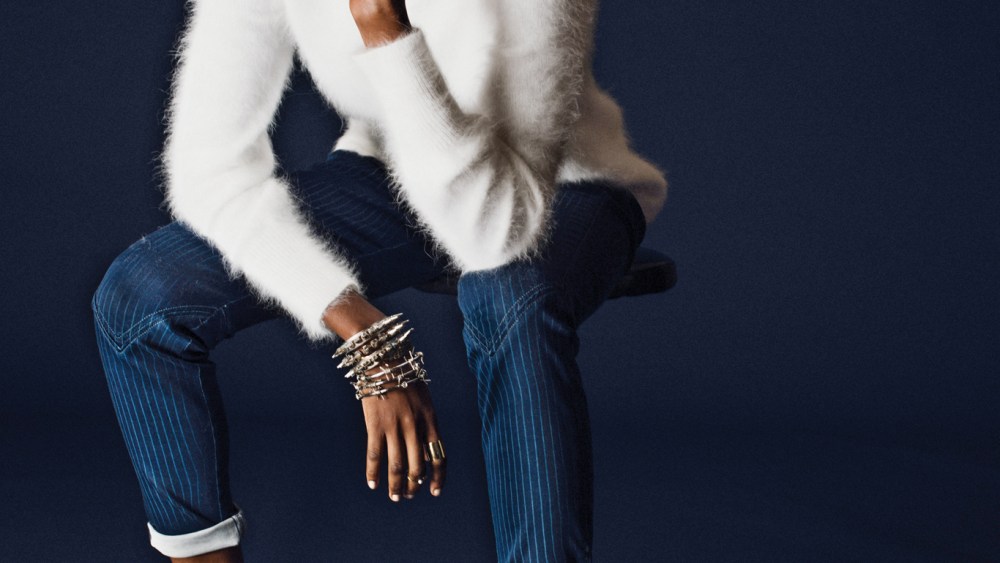
Findings from his research into denim will be visible in the new Girbaud pieces, including clean, urban cowboy boot-cut jeans with broken pin- stripes and “X Bracket” jeans with a houndstooth pattern, both made with Wattwash laser treatment, a Marithé + François Girbaud trademark.
“Marithé + François Girbaud was a good mix of design, research and innovation,” said denim designer Adriano Goldschmied, a longtime friend of the duo.
Before a four-day Paris private sale in Saint- Germain-des-Prés, starting Nov. 4, WWD caught up with the Girbauds, who shared advice gleaned from 50 years in the business.
1) Do What You Want
“We met with investors [after filing for bankruptcy], but I preferred to build a collective made of people who worked with us. They’re in their 30s and 40s. We all have equal stakes,” explained Marithé. “We are self-financed, [which gives] us funds to manufacture clothes. We are insubordinate people. We have always done what we wanted to do. Being locked in a company doesn’t work [for us].”
“We started our business in the Sixties. We were living in a hippie community in Mazamet [in the south of France], and now we’re in a collective,” François noted.
2) Protect Your Name
“A company or a product has a shelf life, but your name — you’ve got to live with it all your life,” François said.
The duo’s other ventures, which are no longer operating, included leather specialist Compagnie des Montagnes et des Fôrets and Maillaparty knitwear. Even though the company filed for bankruptcy, they kept their Marithé + François Girbaud name, which they are using in the new endeavor, they noted.
3) Go On The Road
“I don’t want to work with stores anymore. Boutiques led us to take directions that we wouldn’t have taken,” Marithé said. “When the record industry felt the blow of digital, artists started to go on the road again, looking for their fans. We’ve always been a bit rock ’n’ roll. We want to create proximity [to the customers again]. We organize sales in pop-up locations. I arrive with my merchandising, my dressing rooms and my environment.”
Customers purchase tickets online for a time slot to ensure smooth foot traffic.
“It’s important for customer service to receive them well,” Marithé said.
People are alerted of the sale dates via e-mail, SMS or social networks. They have about 35,000 fans on Facebook. She also invites guest artists to participate. For the upcoming “tour,” such designers are New York-based Douglas Ferguson, French ceramic jeweler Claire Hecquet Chaut and Alpachura, which specializes in felt hats made in Ecuador.
4) Be Clean
“I strongly believe in Made in the USA. That’s why I chose to live in Los Angeles. I collaborate with U.S. Garment [the Vernon, Calif.-based laundry]. People are very much ‘awake’ here,” said François, who continues researching Wattwash for water conservation. “Water is
a precious resource for us all and not in endless supply. It should be saved for vital needs.”
He said he had a wake-up call in 1989, when the Berlin Wall fell. As he watched crowds wearing all kinds of jeans, he realized how harmful they were to nature.
“How could we have been so ignorant? We added increasingly corrosive components. We pioneered stonewash denim. Therefore, we
were responsible for river pollution. We wanted to wash with stones and water, but we went overboard,” he said. Since then, the executive has been aggressively researching clean alternatives.
5) Don’t Do Collections or Shows
The Girbauds opted for “wardrobes” instead. “We aren’t far from the Uniqlos [and other fast-fashion chains] in that we constantly reinject new products,” François said.
“I’ll save novelties for the private sales and sell on our Web site the basics,” added Marithé, revealing the label’s e-commerce platform is set to launch in the first half of 2016.
Prices will be in line with those of a few years ago, with jeans ranging from 190 euros to 280 euros, or $216 to $318 at current exchange, and knitwear running up to 1,000 euros,or $1,135.
While the duo staged grandiose shows in the past, including at Paris’ Carrousel du Louvre and in New York, runway presentations aren’t planned for Mad Lane’s lines. “Shows are too surreal,” Marithé said.
6)Live in Separate Countries
The Girbauds know something about lasting relationships, since they have been together for 50 years — apart.
“We have most often been living in separate countries or continents. At one point, François was in Italy and I was in France; I was in Japan [working with Itochu Corp. on the brand’s development there], while François was in the U.S. We’ve been in Switzerland…We would always meet each other somewhere, like rubber bands,” explained Marithé.
“Men and women aren’t meant to live under the same roof,” added François. “Yes, apparently, it works.”