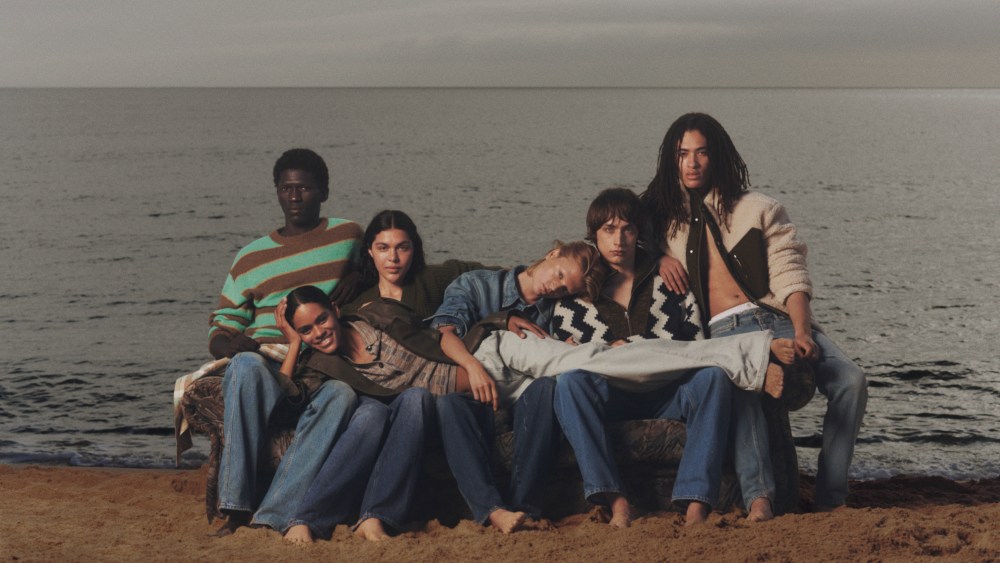
Closed, the contemporary German fashion brand rooted in denim, is opening its next chapter with a new visual identity — and bigger growth ambitions.
The rebrand of the Hamburg-based firm extends to its logo, packaging and color palette, with yellow selected for carrier bags, delivery boxes and some store elements.
Timed with the release of the fall 2023 collections, the changes extend to the photography used across all channels and will gradually seep into its network of freestanding stores, now numbering 43.
Related Articles

“We felt it was time to modernize (the branding) a bit, and bring it up to speed with the product,” Closed co-chief executive officer Gordon Giers said in an exclusive interview, noting that its 25-year-old logo of vaguely military stencil lettering “was not representing the sophistication of the product we’re doing.”
You May Also Like
Starting Tuesday, Closed’s Instagram account will be wiped clean and repopulated with its new-look imagery, allowing its customers to “experience a new vibe,” according to Giers.
“It will be gradual,” he said. “We’re trying to be a bit louder, a little bit bolder and a little bit more exciting in our visual language, without compromising the sophistication that we’re always trying to bring.”
While Closed considers itself a contemporary brand with accessible pricing, its Made in Italy jeans retailing from 190 to 500 euros, the new visual identity slyly incorporates luxury codes to reflect how the brand has gradually been trading up in recent years.
Photographer Alexandre Haefeli captured the fall 2023 collections on a beach at sunset, with Margherita Moro acting as stylist.
Closed conscripted Stockholm-based creative agency Acne to develop its new logo, which incorporates the 33-degree angles that are a key feature of its signature X-shaped jean pockets. The logo lettering will also appear scattered as a new type of monogram on some garments and accessories.
Giers said yellow walls in some of its boutiques, including its Zurich location and a pop-up last year in Los Angeles, foreshadowed its official adoption of a shade connoting its “warm,” reassuring and solar attitude.
The overhaul comes amid sunny times for the privately held firm, which has logged 15 percent annual growth the past five years. Giers cited solid business in its core German-speaking markets, the United States, and key European countries including France, Italy, Switzerland and The Netherlands.
Closed is now gunning to achieve annual revenues of 200 million euros within the next five years, up from the current 130 million. Today it employs around 200 people.
Giers noted the brand has yet to enter Asia in earnest, which it plans to beginning in 2024, and it spies additional opportunities in multiple regions via wholesale channels, with close to 1,000 doors already generating about 45 percent of its revenues.
Closed opens only one or two boutiques a year, depending on opportunities, with a refurbished and expanded Munich boutique slated to be unveiled in early September.
In tandem with the corporate rebrand, Closed is plotting some collaborations with brand ambassadors and is hosting a series of “community dinners” in cities including Berlin, Copenhagen, Paris and Marseille.
Giers acknowledged that Closed has been propelled by fashion’s renewed interest in all things ’80s and ’90s, when pop-culture icons including Michael Jordan, George Michael and Tupac Shakur donned Closed’s distinctive jeans with their so-called armrest pockets positioned for easy entry.
The X-pocket jeans, invented in 1981 by Closed cofounder François Girbaud, now accounts for as much as half of its denim business, with a pedal-pusher model currently gaining heat.
Giers noted that denim, primarily bottoms, represents about half its business, with womenswear accounting for 70 percent of volume and menswear the balance. The brand also makes footwear and accessories.
Closed has been producing all its denim clothing in Italy since it was founded in 1978 by French designers Marithé and François Girbaud. The designers sold the company out of bankruptcy in the early ’90s to two Hamburg-based businessmen — Günther Giers and Hans Leplow. In 2001, the company was taken over by Giers’ son Gordon and his high-school chums Til Nadler and Hans Redlefsen. The three are co-CEOs.