The Hungarian Countess Louise J. Esterhazy was a revered — and feared — chronicler of the highs — and generally lows — of fashion, society, culture and more. It seems the Esterhazy clan by nature is filled with strong opinions, because WWD Weekend has now been contacted by the Countess’ long-lost nephew, the Baron Louis J. Esterhazy, who has written from Europe to express his abhorrence of numerous modern fashion and cultural developments. The Baron’s pen is as sharp as his late aunt’s and here is his latest column on the not-always-warm summer season.
Related Articles
Passing through England the other day, one couldn’t help but notice the building anticipation for what the Brits like to call their “summer season.”
You May Also Like
Now, many of us may chuckle at the inherent oxymoron of putting the two words “British” and “summer” in the same sentence. What they call summer the rest of the Northern Hemisphere would more equate to living under a somewhat damp washcloth. But, needs must and in spite of the generally atrocious weather, they all go just a little bit loopy come this time of year — and like everything in that country, they have been celebrating their “summer season” for centuries, since the Regency Era, to be precise.
In the U.S., be it East or West Coast, one knows full well when summer has arrived. It unofficially “starts” on Memorial Day and “ends” on Labor Day. Those are the immutable book ends of summer and some will just not be budged, regardless of what the sun is doing outside. The Generalquartiermiester (aka, the German wife) and I were staying with old friends in their gorgeous Connecticut house just a few days before Memorial Day. Even though Memorial Day was just hence, the swimming pool cover stayed resolutely on, despite the days being gloriously balmy. No, one “opens up the pool on Memorial Day and that’s that.”
The other sartorial rule I like about these two American punctuation marks of summer is that, according to some ancient Preppy guide, a man can go without socks for the duration, but heaven forbid you go sockless before or afterward. (Although for some unfathomable reason, several years ago it became fashionable among a certain subset of male trend followers for them to go without socks all year long, no matter winter’s frigid temperatures and accompanying frozen toes; moi, I will stick to summer.)
Up and down America’s seaboards, there is no end of summertime communities and old clubs that have long seasonal summer traditions, mostly around sporting events. But the American diary for a truly die-hard socialite needing to be seen at the right place could start off by attending the Kentucky Derby at Churchill Downs, where by long tradition vast amounts of mint juleps are consumed and ladies get to sport the most ornate of hats.

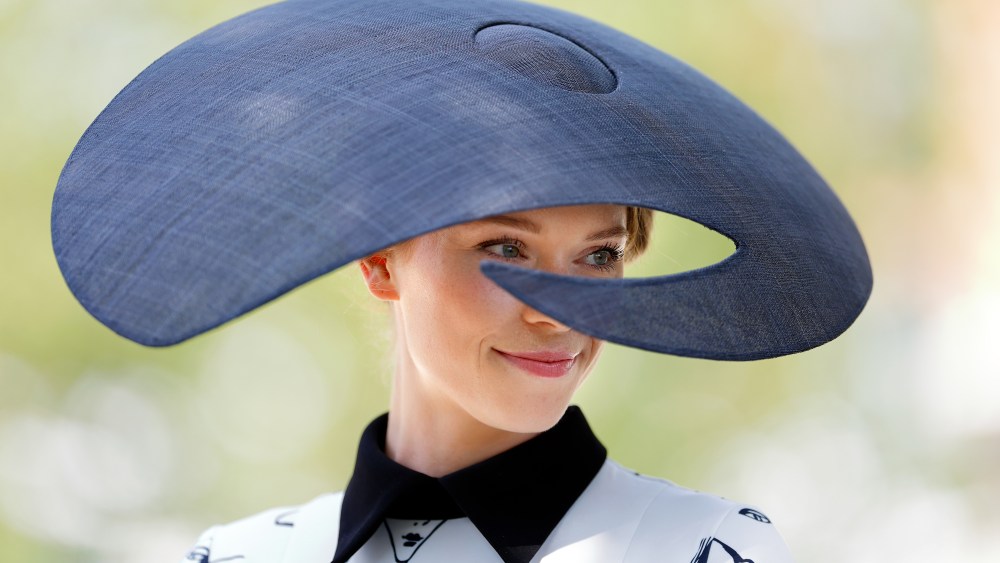
The closest the Brits get to being sartorially silly during their season is at June’s Royal Ascot week. There, on Ladies Day, some of the hats are truly bonkers. Men must wear a top hat and morning suits, which turns out to be hideously hot if the sun shines and as uncomfortable as the ladies’ high heels when the inevitable deluge hits the paddock. Like the summer’s Saratoga Races in upstate New York, started in 1863, much of the society crowd barely know the front of a horse from its derrière. They are there to see and be seen. I know of a young boy attending the nearby venerable boarding school of Eton who received the same letter every year from his father, who never once missed Royal Ascot, despite knowing or caring nothing for the “sport of kings.” It said: “In the event you intend on joining me at Royal Ascot, please ensure your top hat is polished.” Every year, the young lad wrote back: “Papa, as you know, I have never attended Ascot and don’t possess a top hat.”
Many society summer events are based around a sport, normally one that would be considered ruinously expensive for anyone remotely normal. Horse-related gatherings beyond Saratoga and Ascot include France’s magnificent Prix de l’Arc de Triomphe, at Longchamp. Now in its 61st year and with near record-breaking prize money, the helicopters come in so thick and fast one might be mistaken for thinking one is on the set of “Apocalypse Now.”
Polo, too, has become a summer fixture in the U.S. and England, and while people can debate the quality of various Connecticut, Florida or English tournaments, The Guards Polo Club in the grounds of Windsor Castle draws society because it has a lock-hold on the British royals turning out to watch, present a trophy and even occasionally participate, sometimes which includes a thrilling tumble to the ground.
Of course, die hard tennis and rowing fans will tell you that they attend Roland Garros, Wimbledon and the U.S. Open, along with Henley’s Royal Regatta, purely for the competitive brilliance on show. That may be more true of the U.S. and France, but in the U.K., again, the main emphasis falls upon the traditions of who is (and who isn’t) in the Royal Box; the strawberries and Champagne, and how to get access to Henley’s Stewards Enclosure on the river (note to self: wear a panama hat and some oddly colored striped blazer that is two sizes too small and looks as if one has stepped off the vaudeville stage in 1912).
Other crushingly expensive summer sporting gatherings include those in the sailing fraternity. Newport, R.I., the original home of the glorious America’s Cup, is not a place for those on a budget (and, alas, I am). The extreme exclusivity and snobbery at Cowes Royal Regatta week in England even made old Kaiser Wilhelm II feel so unwanted and insecure, it is said that it was one of the many reasons he hankered for war with England in 1914. Now, that is a summer sporting event to go down in history.
In the Hamptons, of course, the great, the good, the hedgies, designers and private equity tycoons gather every year for the Southampton Hospital Benefit, now in its 61st year. It’s black-tie (“tuxedos”), of course, but that’s OK because it is a party. (The Glyndebourne Opera season, started in 1934, is also black tie but that makes much less sense. After all, it’s opera, one eats a picnic on the lawn and must travel to and from the Sussex mansion by train, none of which cry out for a tuxedo to be worn.)
Many say the English summer kicks off with late May’s Chelsea Flower Show. This is really nothing more than a fancy demonstration of glorified gardening with ruddy cheeked green thumbers debating the merits of one long-Latin named dahlia or mallow over another. But the opening evening’s “private viewing” is chock filled with royalty, aristocrats and business and media plutocrats, most of whom don’t know a nettle from a nasturtium.
But, like so many of the fixtures of the “season,” that’s not the point, is it? It’s about looking fabulous and having a jolly time, come rain or shine — especially, in England, come rain. Party on.