
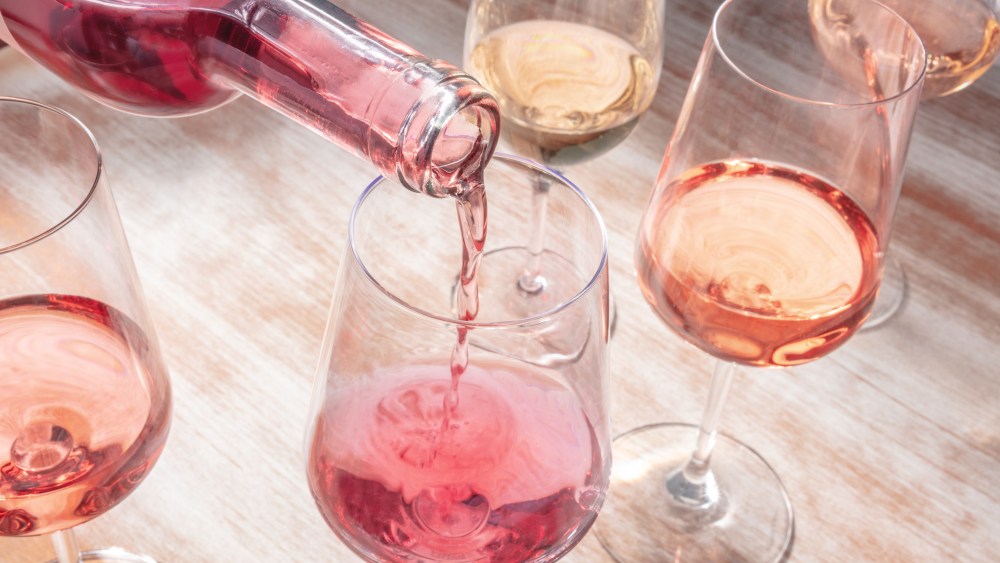
When the weather turns hot, nothing quite hits the spot like a chilled glass of rosé, preferably sipped alfresco with friends.
But with an array that goes from the palest hues to the most vibrant pinks, with production areas that go from the U.S. to Chile to Australia, via France, the largest single-country producer of the category, how to choose the right bottle?
The first thing to know about rosé wine is that for all its ubiquity and apparent ease, it is a wine worthy of all occasions.
Related Articles
“Rosé is that wine you can pull out when you’re not sure and you want something good,” wine professional and entrepreneur Crislaine Medina Andrade tells WWD Weekend, calling it the “secret weapon” that can turn even a last-minute gathering into an occasion — whatever the season.
You May Also Like
Long considered a summer-only tipple, with orders peaking in the warmest months before petering off completely by mid-October, rosé has “become a must, of equal importance to Champagne,” says Rosewood European sommelier Xavier Thuizat, who heads the team at Hôtel de Crillon and was voted best sommelier in France for 2022.
There’s no denying the phenomenal success rosé has been enjoying, being the only color and type of wine that’s been growing over the past seven to eight years, driven by strong U.S. demand, says Thuizat.
Celebrity association with rosé wines has also contributed to growth, with the Avaline appellation co-created by Cameron Diaz and the Mas de Cadenet estate, Brad Pitt’s Miraval estate, Madonna’s rosé production in Virginia and Mary J. Blige’s “Sun Goddess” range produced in Italy’s northeastern Friuli Venezia Giulia region.
“Among the 20- to 35-year-olds, it’s the only [alcoholic beverage] that has progressed,” he continues, noting that rosé’s characteristics make it an easier wine to digest, which helped its popularity.
Luxury groups and wine professionals certainly have caught onto its seasonless appeal. “Not having it [available] year-round is heresy,” posits Hugues Forget, director of cellars at La Grande Epicerie, the upscale grocery store of LVMH Moët Hennessy Louis Vuitton-owned Le Bon Marché Rive Gauche, especially as it is one of the rare wines that has made consumers comfortable in their choices, and the new generation doesn’t hesitate to break away from their parents’ wine choices by reaching for rosé and estates off of the beaten track.
CHOOSING THE RIGHT ROSÉ
Forget says that when picking wines from a list, remember that those hailing from Provence tend to be more delicate, those from the southeastern coastal area of the Côte d’Azur region tend to be more generous, and anything with the “IGP” label that marks a protected geographical indication are usually fun, affordable and accessible choices.
Color is also a good indicator of what the wine will be like, without giving any indication as to whether the wine will be dry or sweet. The darker the pink, the more body and stronger it will be. Delicate pinks can be expected to be fresh and fruity, with a refreshing side.
It’s always best to get expert advice when choosing any wines and don’t feel shy about asking questions or get scared off by connoisseurs. “If you don’t know anything about wine, there’s no point in talking 20 minutes about the grape,” quips Medina Andrade, although she feels that exchanges are the whole point of wine culture and are key to the overall experience.
According to Medina Andrade, your best ally is in your pocket — and it’s not your wallet. A clutch of apps is available to record tasting notes, help choose wines and build a collection, such as Vivino or natural-wine focused Raisin, which also offers bar recommendations.
Her top tip to build your knowledge of wines when drinking is to “pay attention to what you’re feeling. That’s how you’re going to create your [own] wine language.”
After that, with shelves after shelves of wine, “don’t think about it too much and go for something that attracts you. You have to choose from a point you feel comfortable with,” she says, be it a wine you’ve already tasted or a region that strikes a bell. “Whatever choice you make is a good point of departure.”
A rule of thumb while choosing a rosé wine as a summer refresher is to go for the most recent vintage on offer, preferably the previous year. “This summer, have the 2022 as it’s already too late for 2021 [vintages],” says Thuizat.
At the Hôtel de Crillon, the rosés that are a year older on the menu are meant to be paired with a meal — or drunk in winter, since they will have acquired more body and structure through a specific maturing process in oak barrels that impart spicier notes. “Denser mouthfeel is the sign of a more elaborate work” and a winter in a cellar, says the head sommelier.
Remember: As vintages age, the wine “will tire itself out, oxydize and ‘die,’ which means it will take a nutty flavor,” he explains.
Only a handful of wines can escape this. One is the Tavel estate in the Rhône Valley, which is double-pressed to extract tannins that allow it to age well thanks to a more powerful, structured juice. Another hails from the Bandol Terrebrune appellation, and its older vintages need to be on everyone’s bucket list, according to Thuizat, who described how the wine acquires new mineral notes after five years, a “miracle” owed to the chalky terrain on which the grapes are grown.
PAIRINGS WITH ROSÉ
Rosé wines are surprisingly versatile and can go from cocktail hour to after-dinner tipple. For Medina Andrade, kicking off an evening would call for a “nice and dry [one] that will let you go anywhere from there” and allow to build up the palate throughout the evening.
For Thuizat, combining the wine with Mediterranean fish like red mullet or sea bass is always a win, as are peppers. He also recommends ordering rosé with Iberico ham, where the marbled meat will be offset by a fresh, thirst-quenching drink.
Traditional warm-weather pairings will hinge on rosé’s refreshing facets, but Medina Andrade points out that raw dishes or oysters would benefit from the dash of condiment-like tartness.
Fruitier wines will do well in a picnic setting, such as the Instant Rosé IGP from the Château Maïme. Barbecues, on the other hand, will call for a fuller body and more structured wines like the Chateau de Sanne in the Luberon region, according to Forget.
Overall, “you shouldn’t have any hang-ups about rosé, it’s about moments of enjoyment,” he says, explaining that rosé has also become a trendy product with a growing premium segment.
HOW TO SERVE ROSÉ
What most people are looking for when it comes to rosé is a crisp, fresh sensation. Cooling the wine is therefore highly recommended, but not too much as “cold annihilates the aromatic,” cautions Forget.
And whatever you do, don’t just chuck a handful of ice cubes for a “piscine,” as the French call it.
“Ice will dilute the wine,” explains Thuizat, who says rosé’s undue reputation as a lowbrow wine, particularly in France, is “an immense injustice” given the precise timings required to hit the right notes for a great wine, whether it’s through maceration of grape skins or other methods.
Not only that but “to achieve the right aromatic [development] for a rosé wine, you need agriculture that is precise, respectful of nature so without chemical fertilizers,” he continues. If three weeks are necessary for a red wine’s initial steps, it’s only 48 to 72 hours for a rosé, and winemakers need to be alert to find the perfect point at which to move on to maturation.
In recent years, the infusion method (where grape skins are left in the juice to impart their color) has even grown, bringing more delicate vintages with “soul and personality [since] human hands have intervened less, leaving the fruit free to express itself.”
“You work with what you have in front of you,” says Medina Andrade diplomatically, feeling that a casual consumer could want to accelerate the feeling of freshness. For Forget, the answer to that question is akin to debates around whiskey and, in the end, “all tastes are in nature.” That said, if a rosé were too structured for one’s taste, an ice cube could help.
WHAT TO DRINK THIS SUMMER
For 2022 vintages, expect subtlety as it was a year where colorations remained light due to thicker skins. “Picture a very red strawberry that has a delicate taste,” says Forget.
Cuvée Saint-M, a Côte de Provence from Chateau Saint-Maur, a classified winery in Provence — “Prodigious in its freshness and elegance,” according to Thuizat.
Avaline — Thuizat named it as his professional crush, with a clean wine that is at once sapid and evokes the mineral qualities of the landscape around the estate.
Pumonte from the Alzipratu estate in Corsica — Thuizat feels “tomorrow’s greatest rosés will come from Corsica” and recommends this, alongside the IGP Île-de-Beauté from Sant’Armettu.
Tavel appellations from the Rhône Valley, either from Nicolas Renaud at the Clos des Grillons or Eric Pfifferling and his family at the L’Anglore estate — These natural wines left Medina Andrade touched.
“Rosé” by Alessandro Viola Winery in Sicily — It’s “that end-of-the night banger or even one to start the night” that is simply delicious, according to Medina Andrade.
M de Minuty — A solid choice for Forget, who finds the screen-printed bottles were a fun touch and perfect for a picnic.