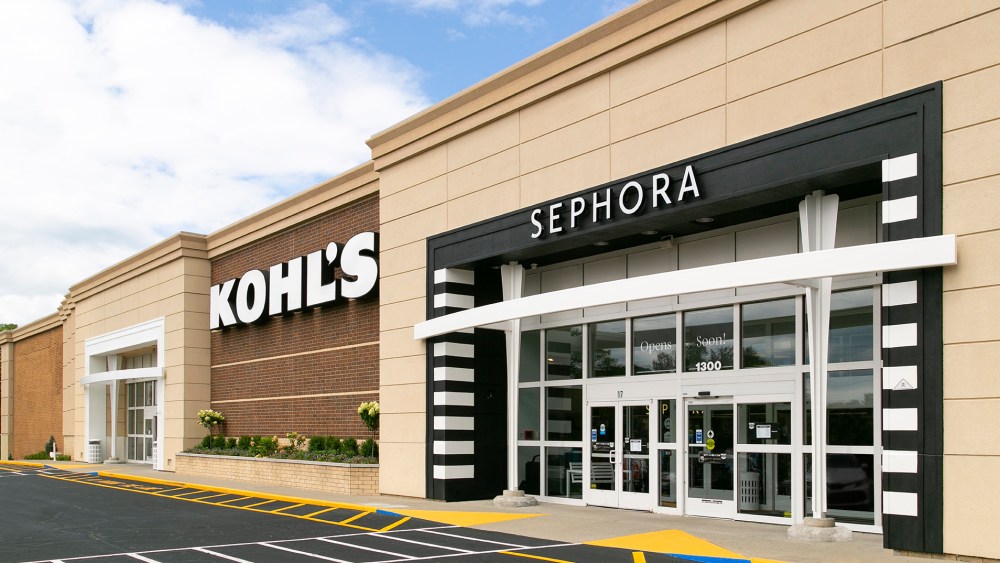
Kohl’s Corp. is picking its spots.
Private brands, petites, fashion and fine jewelry, opening price points and coupons are central to the value-oriented, family chain’s turnaround strategy — and there are signs the initiatives are starting to bear fruit.
For its second quarter, Kohl’s reported margin gains, expense reductions and merchandise improvements, and lifted its profit forecast for 2025. There were sales declines, though not as bad as expected. Net income at the Menomonee Falls, Wisc.-based family-oriented value chain rose to $153 million in the quarter ended Aug. 2, from $66 million in the year-ago quarter. Adjusted net income last quarter slipped to $64 million, or $0.56 per diluted share, from $66 million, or $0.59 per diluted share, in the year-ago period.
Related Articles
Whether the improved results were a flash in the pan or are sustainable remains to be seen. But two things are clear — Kohl’s is getting better at inventory management and there’s plenty more that needs to be done to lift the business out of its hole. Some possibilities to watch for:
You May Also Like
- Investments in stores to create an exciting, modern atmosphere that’s fun to shop, with greater localization of product, greater food offerings or coffee stops, flashier graphics and stronger community ties. As one accessory designer told WWD, “It feels like I’m walking into something stuck in the ’80s.”
- Continuing store closures, on top of the 27 revealed this year.
- Enhanced services taking advantage of Kohl’s stores being strategically situated closer to people’s homes than big malls, often in drive-up strip centers. Eighty percent of Americans live within 15 miles of a Kohl’s.
- A new roster of celebrity tie-ins through its Sephora partnership and private brands. Sephora is a growing business at Kohl’s and is expected to account for $2 billion in sales, though that means there’s been significant declines in traffic and revenues in other areas of the store considering total sales have been down.
Kohl’s needs a compelling marketing strategy to get more dollars from existing customers and telegraph what it stands for, and what makes it distinctive. In other words, the store must project a sharper brand identity, and double down on catering to low- and middle-income customers. It’s widely considered “mom’s store,” lacking sufficient youth appeal. It’s been tough for Kohl’s to find the right balance of the two. Yet Kohl’s needs to figure out how to broaden its appeal and generate greater traffic in its stores and online, without alienating its core customers.
The company has been “stuck in the middle” along with businesses like Macy’s and JCPenney, which appeal largely to middle-income and working-class families but have been squeezed by consumers trading down to off-pricers, dollar stores and outlets, or trading up to higher-priced specialty stores. Sales at Kohl’s hovered in the $18 billion to $20 billion range until plunging to $16 billion in 2020 due to the pandemic. Business rebounded the next year, but has been down since 2023. The stock price was as high as $55.67 in 2018, and as of Aug. 29 was at $15.06.
It does seem that executives have determined, at least to some degree, a roadmap to return to growth, after many seasons of national brand and private brand changes and trials and errors. Kohl’s has been overly dependent on big brands that are widely distributed at retail, yet there have been lessons learned. Some fresh and refreshed private labels in fashion and home like Sonoma, Lauren Conrad, Simply Vera Vera Wang and Flex are being offered. Sephora at Kohl’s has been a success, and the company maintains an attractive value proposition that could stand out further. The “Kohl’s Cash” program has been popular, typically offering $5 or $10 coupons on $50 purchases. The concept has been copied by other retailers.
In the ’80s, ’90s and in the early years of the new millennium, Kohl’s was among the fastest-growing retailers in the U.S. But most recently it has been hit from several sides, most notably stiffening competition primarily from Amazon, off-pricers and membership clubs as well as Walmart and Target. There’s also been a revolving door of chief executive officers, activist pressures and macroeconomic headwinds.

Michael Bender has been serving as interim CEO since May. He stepped down from his role as chairman but continues on the board of directors. Earlier in his career he served as president and CEO of Eyemart Express, president at the optical retailer, and held executive positions at Walmart, including chief operating officer of global e-commerce. Earlier he held senior positions at Cardinal Health Inc., Victoria’s Secret for L Brands and PepsiCo.
Much of Bender’s agenda for Kohl’s stems from the playbook of the former CEO, Ashley Buchanan, who was fired for engaging in vendor deals posing conflicts of interest. During his abbreviated tenure, Bender advocated for bolstering proprietary brands, restoring discontinued categories and deals on coupons within the private brand program, and putting more attention on fine jewelry, home decor, petites, impulse items and continuing to prioritize the Sephora beauty areas. Bender has sustained those initiatives. While a search is underway for a new CEO, there may not be much of a rush to find one if Kohl’s continues to show improved performances this year.
“During the second quarter, we started seeing progress in our women’s business as we invested back into proprietary brands, streamlined the choices in intimates and reintroduced the petites category,” Bender said during his second-quarter conference call with investors and industry analysts. “Now, while it’s clear that these efforts are beginning to resonate with our customers, we also recognize that this performance is not yet where we aim to be. Our entire team remains focused on enhancing the way we serve customers and over time returning the company to growth.
“Specifically, our lower- to middle-income customers remain the most challenged, while our higher income customers have proven to be more resilient,” Bender said. “These lower- to middle-income customers continue to prioritize value and are trading down into lower opening price point products. Several of our key initiatives are focused on delivering greater value to these customers through investing in our proprietary brands and adding more coupon-eligible brands. Our outlook for the balance of the year assumes the macroeconomic environment will remain challenged. However, our strong operating discipline and improved cash flow generation will continue to provide meaningful support to drive progress against our initiatives and build on the momentum from the first half of the year.”