MILAN — At a time of uncertainty for the fashion and luxury sectors — still feeling the pinch of economic instability, geopolitical unrest and tariffs — retail is facing disruption and change across geographies.
The days of near-complete e-tail dominance have given way to a renewed interest in the in-store experience and a need for retailers to reinvent the value proposition.
You May Also Like
That thread ran through the “Ne(x)t Retail: The Future of Multibrand Stores Between Continuity, Transformation and Made in Italy” summit, the second outing organized by Camera Buyer Italia, the country’s association gathering about 100 fashion and luxury retailers in the country boasting 600 doors overall.
Related Articles
“We are living in a time of great change. The question is not whether to change, but how to change,” said Maura Basili, president of the association which marks its 25th anniversary this year. “The market is evolving, generations are shifting, and consumers are increasingly seeking experiences, emotions and meaning. Boutiques are no longer just places of sale but cultural hubs that champion time, quality and attention to detail, standing against the superficiality of fast fashion.”
“This is why we need a new team spirit… if we remain confined within the boundaries of our certainties, we risk losing strength and vision,” she said.
Sharpening the retail offering is particularly crucial for department stores.
“The idea of selling a little bit of everything to everyone is dead — stores must decide who they want to sell to. The true competitors of, say, Galeries Lafayette will be Cheval Blanc, Netflix, and Club Med,” said Selvane Mohandas du Ménil, managing director of the International Association of Department Stores, or IADS.
“The department store of tomorrow will take on a different form than today’s, and I’m not sure if the department store of the future will even focus on retail,” he said.
To a different extent, independent multibrand retailers — which have enjoyed phenomenal growth in the past 10 years via online sales, but found themselves unequipped when waters started to get muddier — must embrace a similar approach and recognize the potential of forging diversified experiences.
“It is essential to rediscover the spirit of research and interpretation of contemporary times with a cross-cultural approach,” said Carlo Capasa, president of Camera Nazionale della Moda Italiana. “Back in the days, it was that very spirit that helped spread the Italian identity and lifestyle around the world. We must not lose this heritage, even as we look toward the future, experimenting with new stories, fostering new brands, and promoting innovation. We need to return to nurture research, to increasingly become culturally relevant places to ensure multibrand stores reclaim their central role in commerce,” he said.
Talking about her experience with 10 Corso Como, which she acquired in 2020, Tiziana Fausti said that she has channeled resources in keeping its cultural relevance alive.
“Perhaps I’m investing even more in that aspect [than retail] because it’s the most important driver… This is the attitude I want to carry forward and improve, because you can lure people out of their homes and in-store only when you offer them something beyond the simple act of purchasing. Fashion can no longer express itself simply by presenting objects; we need to find ways to create meaningful experiences,” she offered.

The recipe can vary slightly in form, but not in substance.
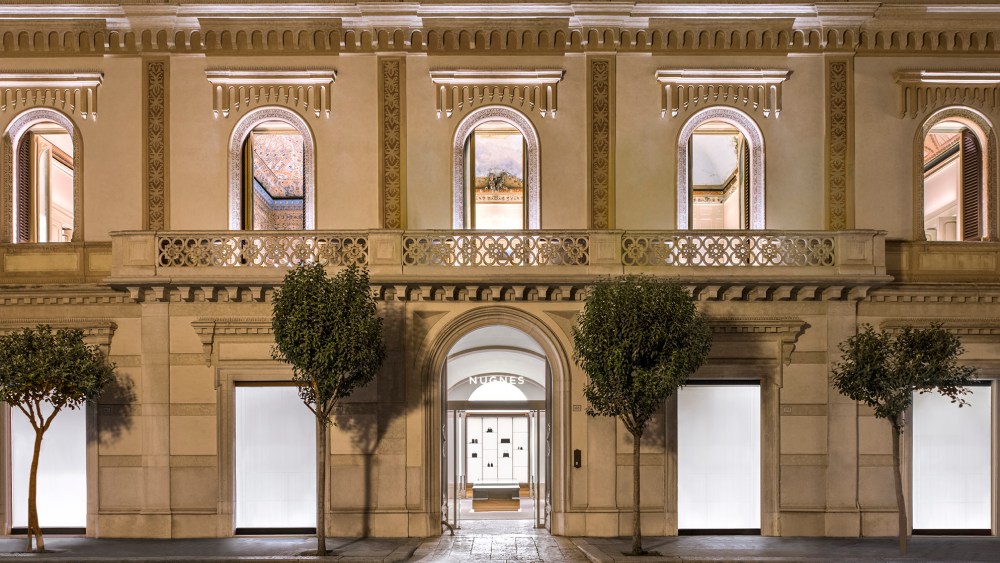
At Nugnes 1920, the multibrand retailer in Trani, in Italy’s Apulia region, president Beppe Nugnes said the approach has been inspired from the tailor workshop his family ran before the evolution to fashion retail.
“We are bringing that know-how and value — encapsulated in the moment and experience of clients trying on the garments at the atelier. We have sought to carry forward with this approach and these values, coupling them with the value brought about by the region Apulia where we are based, which has been enjoying increased international appeal,” he said.
For indie multibrand players, it’s also a matter of meeting their local customers’ demands, crafting a unique experience without chasing the one offered by monobrand boutiques.
Luis Sans, president of Santa Eulalia Barcelona, highlighted how in the current retail landscape for a first-tier city like the Spanish town, multibrands have an opportunity to foster local consumers, oftentimes grown disaffected by the flagship recipe, with waiting lines outside and pushy sales assistants.
“Above all, we must not forget the foundation of our business: our loyal customers, who are our true strength,” he opined.
There was a whiff of criticism in the air toward luxury brands for cutting ties or significantly scaling back their partnership with independent retailers as part of a widespread direct retail-centric approach the sector has seen in recent years.
“Some of these brands have stopped working with us, leaving us behind. We are searching for a way out of this tunnel,” Sans said. “We’ve all been discovering new brands that have helped us boost sales despite the decline in demand for the big luxury names. This is why, in the end, multibrand stores demonstrate a remarkable ability to adapt, constantly seeking new strategies,” he said.
Incidentally, these remarks were incidentally made the same day the European Union’s antitrust authority imposed fines on Gucci, Loewe and Chloé for anticompetitive pricing practices carried out by restricting the ability of their wholesale partners across the European Economic Area to set their own online and offline retail prices.
In very opinionated remarks, Brunello Cucinelli sent a positive message to his company’s partners in the audience. “I owe you so much, from Mr. [Gene] Pressman [of Barneys] who bought a handful of sweaters when we were exhibiting with a small booth at Pitti Uomo,” the designer and entrepreneur said.
“Multibrand stores are the true guardian of our brands. You help us understand whether a collection is contemporary or not, what does and does not appeal to you and your customers,” Cucinelli said. “When we experience even a small amount of success, no one dares to listen, but we must, because you are the ones who know how a brand will perform one or two years in advance,” he said.
“We must have the courage to admit that we chose to go direct-to-consumer, thinking we could be excellent manufacturers, outstanding retailers, and excellent at everything,” he said.
“You are the custodians of brands that have built incredible identities, thanks to visual merchandising. Your stores were synonymous with architecture and culture, and it was incredibly chic to work in your shops,” he said.
Antonio De Matteis, CEO of Kiton, concurred. “Multibrand stores are a beacon in the [fashion] world. There are brands claiming to sell 100 percent direct-to-consumer, but somehow they end up placing their products in multibrand stores through concessions. So, at the end of the day, companies like ours rely on you. What we need to do is work together; there’s no opposition,” he said.
Data in a PwC research note presented at the summit and titled “Trends in Luxury Fashion: Consumer Survey 2025” show that 34 percent of luxury consumers across demographics make their purchases in-store versus online channels, with multibrand retailers ranking second after the brands’ own flagships as the preferred shopping destinations.
About 28 percent of Gen Z and a whopping 40 percent of Gen X responders tend to choose the multibrand experience, while Millennials sit in between, with 24 percent of responders indicating indie boutique as their go-to.
As for the e-commerce, multibrand retailers still have a long way to go as their online platforms rank second in terms of adoption, with percentages under 20 percent across all demographics. The preferred web destinations are the brands’ own e-flagships. The research also highlights how client services and return policies factor in their choice to make a luxury purchase. This can be largely attributed to the e-tailers’ convenient policies that luxury consumers have come to expect across all touch points.
To this end, Cucinelli urged the independent players to tap into the online commerce without betraying their identity of exclusivity and desirability, subtly reprimanding those who embraced the gray market outright.
“Somehow, I’m convinced that these [additional] revenues are not really profitable. I would pay more attention to whom you sell to,” Cucinelli said.
Acknowledging the challenge in translating the concept store formula online, speakers recognized that is crucial to market their identity in the dotcom space.
“The web is a ‘worldwide window’,” said Lars Braun, CEO of Lars Braun’s Hamburg, a multibrand in Germany. “We need to fuel our identity on these channels too and that is only possible if you know your roots, finding space to always refresh your DNA in a journey of evolution rather than revolution, to avoid alienating our clientele.”
Panos Linardos, president of the RLC Global Forum, echoed, “The conversations [in retail circles] have evolved towards relevance, purpose, cultural alignment, authenticity rather than scale for scale’s sake.”