
Shopping centers for years have been monolithic, homogeneous buildings with the same racetrack layouts, the same food courts and the same singular purpose of selling products. But over the last few years, malls have morphed and adapted to the retail crisis that began in 2015.
The number of store closures peaked in 2017, but ripples from the more than 7,000 units that went dark as a result of bankruptcy, right-sizing and liquidation will continue to both challenge and present opportunities for REITs, mall owners and operators, developers and real estate brokerage firms, even as additional closures are planned this year.
Base rents for the overall industry rose 0.7 percent in the recent third quarter versus last year’s third quarter, the 27th consecutive quarter of increases, according to metrics provided to the International Council of Shopping Centers by the National Council of Real Estate Investment Fiduciaries. Occupancy rose to 93.1 percent from 92.8 percent in the second quarter, but net operating income declined 0.4 percent year-over-year, marking the end of a 26-quarter streak.
Related Articles
REITs, mall owners and landlords in key U.S. cities in 2019 will offer shorter leases along with more flexible terms and incentives such as contributions for store build-outs. In metropolises such as Manhattan, where in some neighborhoods supply continues to exceed demand, property owners will lease storefronts to a succession of pop-up shops. Growing digital native brands including the likes of QALO (jewelry and apparel centered on marriage, fitness and family), Bombfell (customized men’s wear), Fashion Nova (downtown Los Angeles style), and Bombas and Stance (socks) are seen opening more brick-and-mortar stores.
You May Also Like
“I see people doing one-year deals with nine-year options to renew or the right to end a lease after five years based on the threshold of sales,” said one retail broker, adding that on the positive side, “for landlords, it’s a great way to activate a space that’s been dormant.”
The 18 million-square-foot Hudson Yards mixed-used project on Manhattan’s far west side, with its Neiman Marcus-anchored shops and restaurants, and Nordstrom‘s women’s store on 57th Street, will activate in 2019 an additional 700,000 square feet and 320,000 square feet of retail space, respectively, at a time when Lord & Taylor’s Fifth Avenue flagship and Saks Fifth Avenue’s Brookfield Place women’s store are slated to close.
Fifth Avenue retail spaces such as Polo Ralph Lauren’s flagship at 711 Fifth Avenue could be broken up into smaller units if a single tenant isn’t found, along with Topshop’s flagship at 608 Fifth Avenue, which the U.K. retailer is reportedly looking to sublease. The stores could also be converted to ground floor office space or leased to tenants that provide services.
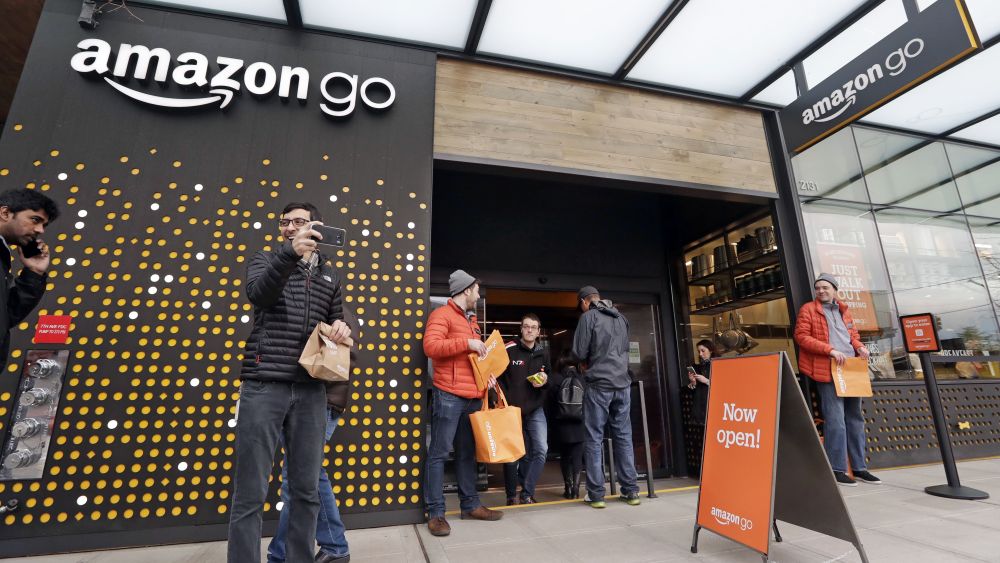
Retailers in 2019 will continue to adapt to an Amazon world — in which the e-commerce giant plans to open 3,000 cashier-less Go stores by 2021 — by more widely adopting technologies such as augmented reality for experiential retail and enhanced dressing room mirrors; artificial intelligence for sizing, personalization and promotions, and facial recognition for speeding up payment in stores.
While retailers such as Target and Kohl’s already have introduced smaller stores for urban areas and colleges, the box could shrink even further in 2019 as the need for cash wrap disappears and distribution systems become more automated, allowing ship from store staging areas to be smaller.
“People want authenticity, uniqueness and local flavor,” said ICSC president Tom McGee. “A lot of new brands tend to be local or unique and different, and that helps.”
Going local will gain popularity as concepts such as JLL’s Rose & Loon, which taps Twin Cities makers for products, are validated by foot traffic and sales. Nordstrom Local, which offers the retailer’s lauded customer service “closer to home,” and Macy’s neighborhood stores with self-service checkout and self-serve shoe sections are poised to expand in 2019.
Merger and acquisition activity will be strong in 2019 if concerns about rising interest rates, tariffs and political instability continue to shroud the retail industry. Shares of REITs and publicly traded retailers were widely considered undervalued in 2018, so this could be a banner year for takeovers. “Traffic and shopping are robust,” said PREIT chief executive officer Joseph Coradino. “This economic recovery has been so gradual.…As I think about our business and the situation in Washington, D.C., retail stocks have suffered and they shouldn’t have. We shouldn’t have been trading at the levels at which we’ve been trading.”
Unibail-Rodamco paid $24.7 billion to acquire Westfield in December 2017, and the French property group has said it’s planning “a progressive rollout of the world-famous Westfield brand to new markets.” Closer to home, Westfield and other mall owners are filling the need for flexible office space for the army of freelancers and tailoring mall offerings to their needs and schedules. “Coworking is amazing,” said Jean-Marie Tritant, U.S. president of Unibail-Rodamco-Westfield. “It’s a good addition to malls and something we’re considering bringing to [more] malls.”
PREIT’s newly opened 11,000-square-foot tech co-working incubator 1776 “is like a WeWork for retailers,” said Coradino of the facility at Cherry Hill Mall in Cherry Hill, N.J., adding, “1776 expands our customer base while at the same time offering great retail, dining experiences and services as amenities to the 1776-member population. We’re committed to bringing a unique mix of tenants to our portfolio to cement our place as a change agent.”
The high operating costs of physical stores and disappointing holiday sales will force some retailers to close stores in 2019. Henri Bendel parent Limited Inc. revealed the retailer will go out of business, and others expected to shutter units in 2019 include Gap, Christopher & Banks, Destination Maternity, The Children’s Place and Gymboree, which said it will close its Crazy 8’s chain and possibly reduce significantly the number of its signature stores.
The reverberations of the Sears Holdings’ retail train wreck will continue into 2019 as doubts continue to swirl over who might acquire the retailer. Hundreds of Sears units have closed, and hundreds more were sold to Seritage Growth Partners, the REIT created by Sears chairman Edward Lampert. There are still locations up for grabs, however.
A&G Realty Partners listed in a bankruptcy sale 94 Sears and Kmart leases and five ground leases, ranging in size from 40,000 square feet to 335,000 square feet. “Tremendous potential to obtain retail anchor space within desirable shopping centers and malls,” said a brochure distributed in December.
Many malls now see the departure of a Sears, Kmart or Bon-Ton store as a gift from the retail gods and chance to lease the space to a more relevant tenant or group of tenants. “In centers where we replaced department stores, traffic is up by double digits,” Coradino said. “The makeup of the mall has changed significantly. Five years ago, apparel retailers occupied close to 70 percent of the space. Apparel is now 45 percent, dining and entertainment, 25 percent, and heath and fitness, 10 percent and growing. We’re signing more and more tenants that provide services.”
ICSC’s McGee added that when he looks at the future, “We’ll have a lot more square footage dedicated to food and beverage and entertainment.”