
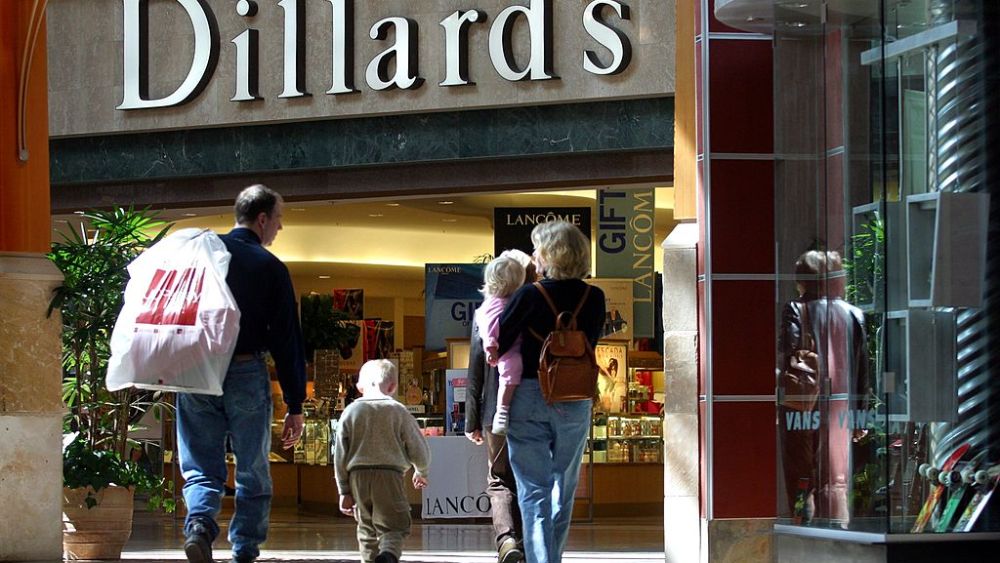
Dillard’s continues to hold its own.
The Little Rock, Ark.-based department store chain reported a rise in both net income and sales in the third quarter ended Nov. 1.
In the period, the company posted net income of $129.8 million, or $8.31 a share, up 4.2 percent from the $124.6 million, or $7.73, in the prior-year period. Total retail sales rose 3 percent to $1.4 billion from $1.36 billion in the 13 weeks ended Nov. 2, 2024. Comparable-store sales also rose 3 percent.
Related Articles
Dillard’s also owns a construction business named CDI Contractors.
You May Also Like
By category, in its department stores, women’s apparel, accessories and lingerie, juniors’ and children’s apparel “increased significantly compared to the prior year third quarter,” the company said. Sales increased moderately in shoes, and “slightly” in home, furniture, men’s apparel and accessories and cosmetics.
The company does not host an analyst call but William Dillard 2nd, chief executive officer, commented: “We were happy to see sales strength continue through the third quarter, ending up 3 percent. We look forward to seeing and serving our customers this holiday season.”
For the period, retail gross margin was 45.3 percent of sales, up from 44.5 percent in the prior year. Inventory levels ended the quarter up 2 percent.
Looking ahead, Dillard’s has announced that it will close its 240,00-square-foot store at The Shops at Willow Bend in Plano, Texas, in January. Currently, the company operates 272 Dillard’s stores, which include 28 clearance centers in 30 states.
Neil Saunders, managing director of GlobalData, issued a note on Thursday on Dillard’s, giving it a solid thumbs-up for merchandising and execution. He wrote that the results should serve as a primer to other retailers, noting that numbers continue to “demarcate the department store as one of the few in its sector that’s driving growth. Admittedly, 3.3 percent growth in retail revenue isn’t blockbuster, but it is respectable. And as it is accompanied by a rise in margins, an uplift in profitability, and comparable sales gains, it shows that Dillard’s has a good grip on operations and is very well managed.”
He said the fact that the sales gains came across a number of categories, “underlines one of the things that makes the chain successful: it encourages shoppers to buy across multiple departments which enables it to enlarge the share of wallet it captures. In theory, this is something all department stores should be doing — but too many still fall short.”
He said the chain has “relatively strong levels of loyalty, especially from its middle-aged and older consumers, and it manages to drive good rates of repeat visits,” a factor he attributed to “good buying, constant range refreshes, an authoritative offer and pleasant store environments. Taken together, good execution on these things makes Dillard’s a destination that’s worth visiting.”
But it’s not just the older crowd that shops at its stores, Saunders said. Younger consumers are also attracted to some of the more fashionable labels the company has introduced, particularly in menswear.
He concluded: “While it is true that Dillard’s isn’t the most ambitious of retailers and would rarely be in the vanguard for initiatives such as agentic commerce, it more than makes up for this by strict adherence to the basics of retail. These things show through in everything from merchandising to customer service, and they make a genuine difference. This focus will continue to serve Dillard’s well in a choppy consumer economy.”